







A 400 kilogram sliding leaf does not care how strong your crew is. Pushing it along thirty meters of track strains backs and stalls forklift traffic at the worst moments of the shift. Press a button and the same leaf glides open, because the machine behind it works as one interlocked chain. The motor supplies torque, the control board sets the rhythm, the limit switches mark the stopping points, and the sensors hold veto power over all of them.
That interlock matters most when something drifts. Picture a night shift where a leaf that had been stopping short for weeks finally rams its stop block, because a limit switch slipped a little further every day. Failures like that rarely start in the motor. Every door we ship leaves with a signed inspection report covering opening speed, noise and insulation resistance, and the drift behind that failure shows up on our test bench long before it reaches a buyer.
The Drive Path From Motor to Leaf
Every industrial sliding door opener turns electric rotation into horizontal travel along the same path. A motor, either a brushless DC unit or an AC induction machine, generates the raw torque. A reduction stage multiplies that torque and drops the speed to a level a heavy leaf can tolerate. From there, a transmission built from chain, belt, or gear elements carries the motion toward the leaf itself. A sliding-door operator manufacturer’s component breakdown lists exactly this stack, from motor through transmission down to the leaf attachment.
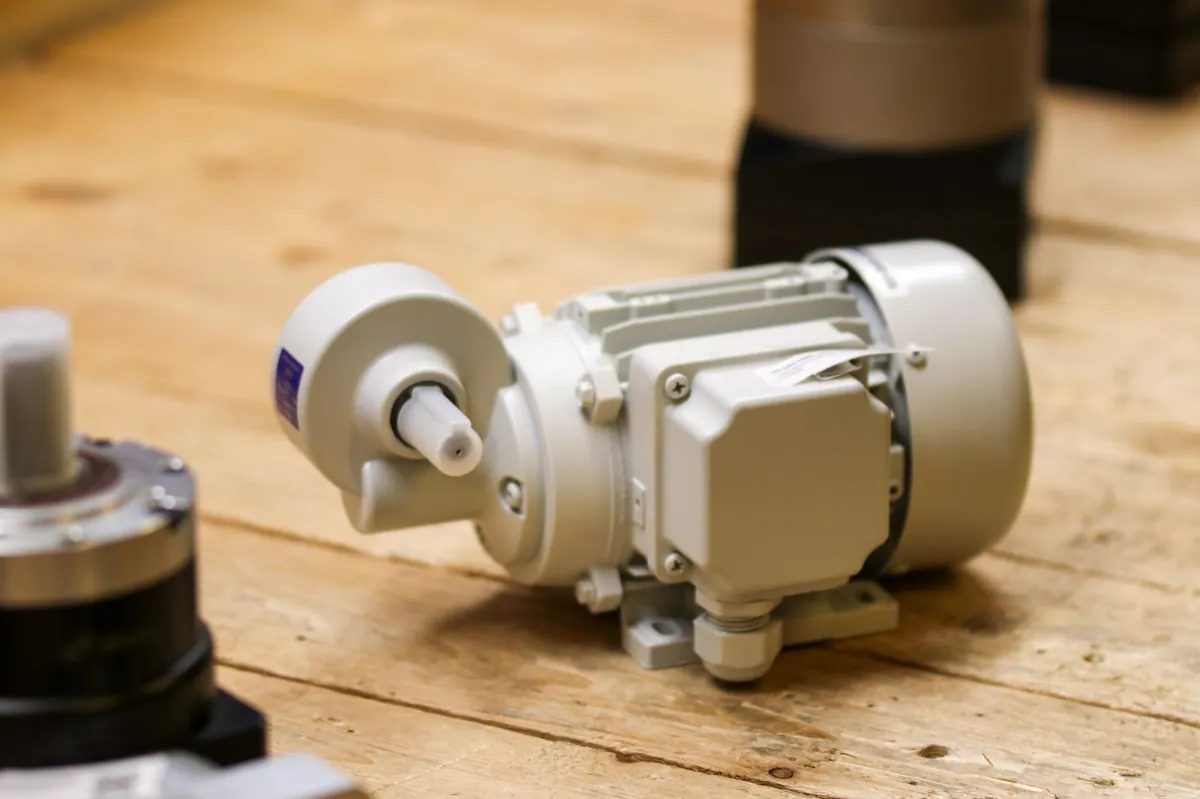
One linear-actuator manufacturer describes the conversion step in plain terms. Motor rotation enters a lead screw, a belt, or a rack and pinion, and leaves as a straight push or pull on the leaf. A limit switch ends the travel once the leaf reaches its learned position. Whatever the brand on the cabinet, this rotary-to-linear step is where most sizing mistakes surface later.
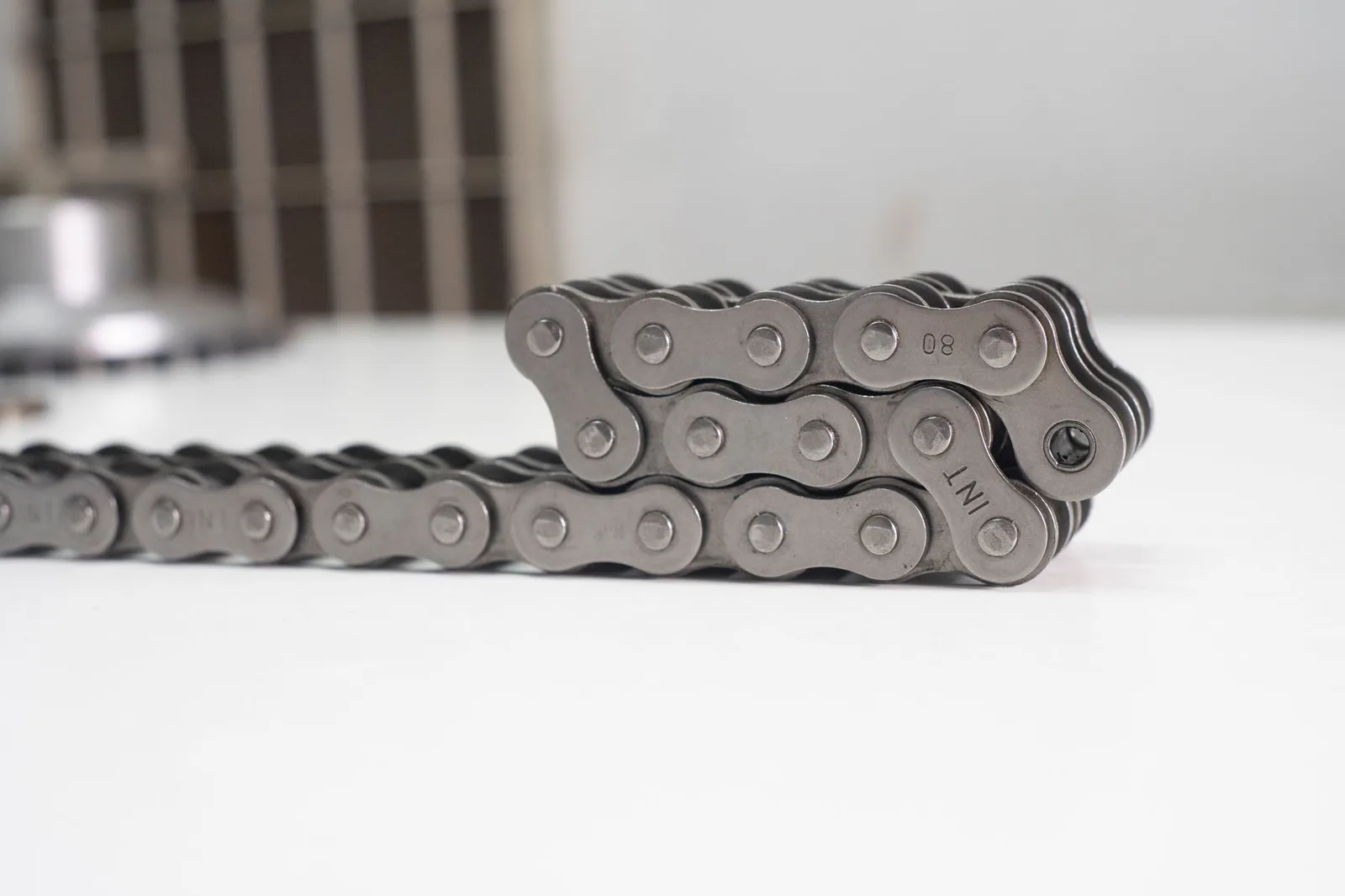
Choosing between chain, belt, and gear drives is a load and noise decision rather than a fashion one. A gate-operator manufacturer’s technical page draws the same three lines we draw with our own customers. Chain drives carry the biggest loads, belt drives run quietly, and geared transmission holds the tightest position accuracy. The table below condenses that comparison for the door weights a plant is likely to face.
| Drive Type | Load Capacity | Noise Behavior | Best Fit |
|---|---|---|---|
| Chain | Highest, suited to heavy leaves | Audible rattle under load | Warehouses and heavy industrial leaves |
| Belt | Moderate loads | Smooth and low noise | Noise-sensitive production areas |
| Gear rack | High loads with precise control | Moderate | Doors needing accurate positioning |
Rack hardware itself comes in grades, a distinction a gate-mechanism manufacturer’s technical page draws in the same terms we use with buyers. Its hardened steel racks serve heavy leaves above 1000 kilograms, where softer tooth profiles would wear fast under constant load. Nylon-coated steel racks trade some load capacity for quiet running, which suits offices and other noise-sensitive surroundings. The distinction follows door architecture too, because an industrial sliding door opener on a suspended leaf usually drives through chain, while racks appear more often on ground-track sliding gates. For a buyer, the rack grade is a line worth checking on the drawing, not an afterthought under the motor.
Match the transmission to the duty profile before anything else. A door that serves production and shipping traffic all day needs a drivetrain built for constant torque, while a rarely used fire path can ride a lighter specification. Duty also decides maintenance intervals, because a drivetrain that works twice as hard wears twice as fast. Write the daily movement count into your specification and hold suppliers to it.
The final link deserves as much attention as the motor itself. A carriage or connector bolted to the leaf pulls through the track, and any misalignment there multiplies wear backward through the whole path. We check alignment among track, carriage, and leaf hangers before we discuss motor ratings at all. A chain fighting a crooked carriage wastes torque and hammers its own sprockets. Straightness, in our experience, buys more reliability than an oversized motor ever will.
What the Control Board Does
When you press the button, the control board runs a fixed sequence. It checks sensor status first, then ramps the motor and watches the current draw as the transmission starts to move the leaf. Limit feedback tells the board when the leaf has arrived, and the door parks in dwell until the next command. An obstruction or overload flips the script, calling for reversal or a shutdown alarm instead of travel. One operator manufacturer describes this trigger-to-travel sequence as the core operating process of the system.
Think of the board as the shift supervisor of the door. It takes the order, sets the pace, and overrules the motor whenever a sensor reports trouble. Modern boards add fault self-checks and overload protection on top of that supervisory role, catching electrical problems before they strand a leaf mid-track. The hardware behind this is modest, a microprocessor and a bank of relays, but the sequencing logic is what separates a door from a moving wall.
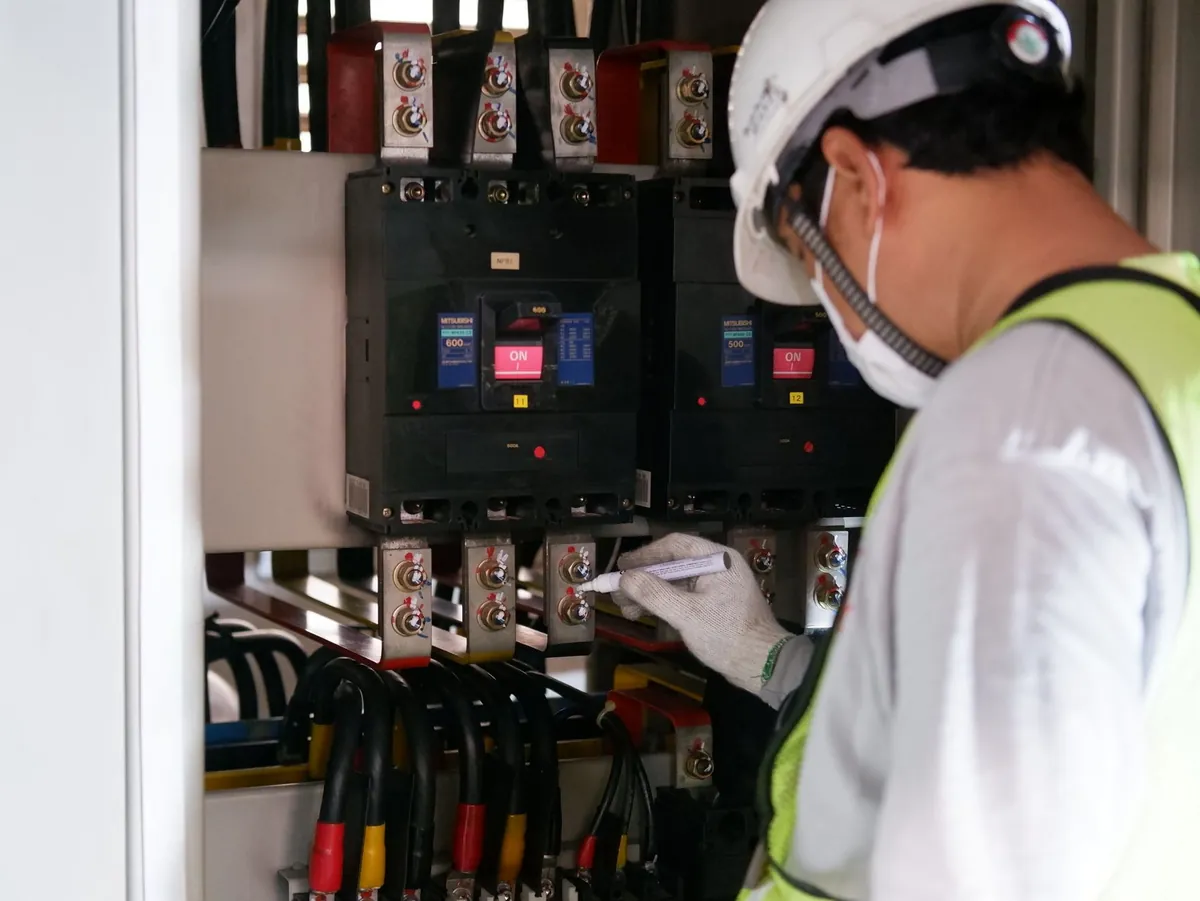
Heavy leaves punish crude starts. Our practice, not a standard clause: we specify variable frequency soft starts on heavy sliding doors, because gently ramped torque keeps carriage, track, and hangers out of shock loading. The same logic applies at the end of travel, where controlled deceleration protects the learned limit position from overshoot. Our smart operators add WiFi, Bluetooth, and RS485 connectivity inside IP65-rated enclosures, and we cover app-based control and monitoring in a separate guide.
A gate-mechanism manufacturer’s engineering page describes what that ramp looks like across a full cycle. The drive runs through three segments, a gentle acceleration away from rest, a steady cruise through the main travel, and a soft stop laid down just before the limit. Speed managed in that shape removes the dynamic loads that hammer gear teeth and shear mounting bolts, the failure mode behind many rattling installations. On a long track the cruise segment does most of the work, while a short opening lives almost entirely inside its ramps. Ask whoever supplies your industrial sliding door opener to show the speed curve rather than the top speed, because the curve is what your hardware will feel.
The board also decides which accessories can talk to the door. Push buttons, badge readers, and building management systems all land on its inputs and communication ports. That is what turns a bare motor drive into one node in a controlled traffic flow. Keep the wiring diagram open when you plan those connections, because retrofitting ports on a crowded board rarely goes cheap.
One more habit protects the board itself. Dust, moisture, and voltage spikes kill more controllers than age ever does, which is why the enclosure rating matters at selection time. An IP65-rated cabinet keeps wash-down spray and airborne dust out of the electronics. Mount the cabinet away from heat sources and the board will outlast the paint around it.
How the Door Knows Where to Stop
A door that cannot find its stopping point is a hazard with a motor bolted to it. Mechanical limits use physical stop blocks and cam-actuated switches that trip at the end of travel. Electronic limits read position from hall sensors or photoelectric detection instead, which allows finer adjustment and automatic travel learning. Many industrial operators combine both, letting the electronics handle daily stops while the mechanical stop stands as the last line of defense. Both families report to the control board, which is why a sensor fault can freeze a perfectly healthy motor.
Travel learning is the commissioning step buyers most often underestimate. The control board walks the leaf slowly to each end, records both positions, and stores them as its mental map of the track. Re-run the learning routine whenever you change speed settings, replace the leaf, or service the transmission. A door whose map no longer matches its track will correct you at the worst possible moment.
Limit hardware itself splits by construction, a difference a gate-mechanism manufacturer’s engineering page puts in plain terms. Sealed magnetic reed limits switch without physical contact, so the dust and grime that coat a busy track never foul the contact faces. Mechanical lever limits stay simple and visible, a cam the leaf nudges at the end of travel, which makes them easy to inspect and adjust. Either design returns its position to the control board, and that signal is what triggers the final deceleration and stop. A reed unit that goes quiet usually means a wandering magnet rather than a dead switch, which is why the diagnosis below still starts on the mechanical side.
Our practice, not a standard clause: when a door stops short or over-travels, diagnose mechanical causes before electronic ones. A loosened stop block or a shifted magnetic scale explains most drift cases we service. Drift develops gradually, which is exactly why it survives casual inspection. The checks take minutes and follow a fixed order.
- Confirm that mechanical stop blocks and cam fasteners are still tight.
- Verify that the magnetic limit scale or sensor bracket has not shifted.
- Run a full-speed pass and watch for overshoot past the learned position.
A collision like the night-shift scene at the top of this article usually traces back to skipped checks such as these. The stop block is not a brake and should never catch a leaf at full travel. Work the three checks into scheduled maintenance rounds and the block stays where it belongs, as the final backup behind a controlled stop.
Sensor Types and Safety Requirements
Sensors on a sliding door split into two families with opposite jobs. Trigger sensors, such as microwave radar and infrared detectors, ask the door to move. Safety sensors, such as infrared pairs across the opening, watch for anything the moving leaf could strike. When a safety sensor objects, the control board reverses the leaf or halts it, and that veto is not negotiable.
Reversal on resistance is the second safety layer, and it is backed by force limits rather than by good intentions. European standard EN 12453 caps the forces a powered door may exert on a person, and CEN and CENELEC maintain the standard at the European level. Our operators are engineered around those force limits, while the door assemblies themselves carry CE certification under EN 13241. For a buyer, the practical move is to ask for the declaration of conformity rather than a brochure claim.
A perimeter-gate installation guide we cross-checked insists that commissioning verify every safety device one by one, and that discipline transfers directly to industrial sliding doors. Photo eyes, anti-pinch edges, emergency stops, and the manual release each need a live test at handover, not a visual glance. Train the crew who will actually use the door on manual operation during a power failure. An operator who has never released a door will not learn the skill during a blackout.
How a blackout plays out depends on which power supply sits behind the motor. A DC unit on battery backup keeps traveling through the outage, while an AC machine leans entirely on its manual release. Put both scenarios into the commissioning script, one powered pass on backup supply and one hand movement on the release. The door that rehearsed both stops being a mystery when the lights go out. Neither rehearsal costs the crew more than a few minutes during a quiet shift.
A bypassed safety sensor does not fail quietly. It fails the first time someone stands in the opening. Treat any jumpered photo eye as a stop-work finding and log it at handover.
Sizing the Opener to the Door
Sizing starts with two numbers from your own door schedule, the leaf weight and the travel speed your operation needs. Add the friction of the track and the wind load the leaf will see, and the required drive torque falls out of that arithmetic. An undersized unit overheats on morning traffic and crawls through the rest of the day. A grossly oversized one wastes capital and stops the leaf harshly at the limits. Share the door data sheet with the manufacturer early, because weight, speed, and duty shape the entire drivetrain.
Our practice, not a standard clause: keep the three equipment domains separate. An industrial sliding door opener, a sliding gate opener, and a pedestrian automatic door operator are built around different leaf weights, speeds, and safety priorities. Buyers who cross-shop between the domains usually regret it within the first season of service. The table below shows where we draw the boundaries.
| Attribute | Industrial Sliding Opener | Sliding Gate Opener | Pedestrian Door Operator |
|---|---|---|---|
| Typical load | Heavy industrial leaves | Perimeter gates outdoors | Light pedestrian leaves |
| Drive choice | Chain or gear rack | Gear rack with track wheels | Low-noise belt |
| Safety focus | Force limits and reversal | Outdoor weather protection | Clamping force limits |
| Control priority | Travel learning and manual release | Weatherproofing and IP rating | Fast, safe person flow |
Power supply choice shapes how the door behaves when the mains drop. A commercial gate-motor supplier’s selection guide notes that 24V DC motors support soft starting and stopping and connect straight to backup batteries or solar panels. That direct feed keeps the door usable through a blackout, which matters on sites without generator cover.
AC motors deliver the stronger torque the heaviest leaves want. The trade-off shows up during a power cut: keep one running with a large inverter, or reach for the manual release instead. We match that choice to the site rather than to the catalog. A plant with generator backup answers it differently than an unpowered outbuilding.
Duty cycle is the other number buyers skip. The same selection guide grades gate motors by working frequency, with apartment-class units rated for about 60 to 80 percent duty. Commercial and industrial models sit at the top of that scale, built for continuous duty at 100 percent and cooled by their internal gearing to survive nonstop cycling. Those tiers come from the gate market, yet the logic transfers, so match an industrial sliding door opener to your daily cycle count the same way. For scale reference, gate-operator market catalogs commonly bracket capacity from 500 to 2000 kilograms and from 800 to 4000 kilograms, a magnitude check rather than a door specification.
Residential equipment is its own separate case. A garage opener lifts a light sectional panel overhead, while the units in this article push heavy leaves sideways under different control and safety logic. We explain how a residential garage door opener differs in a dedicated guide. Comparing the two on motor size alone misses everything that actually matters.
Header clearance is the other early decision on the building side. When space above the opening is tight, compact motor options for tight headers change which drivetrain geometry remains possible. Measure the pocket, the header, and the side room before you commit to a drive type, because the track layout you choose constrains every later service decision.
Need an Operator That Matches Your Door and Duty Cycle?
Tell us your door size, cycles per hour, and control preferences, and we will pair the right motor, gearbox, and safety features.
What Fails and How to Prevent It
Most service calls on an industrial sliding door opener trace back to three culprits rather than to dead motors. Each failure carries a signature, and learning those signatures turns emergency calls into scheduled maintenance. The factory test report that ships with our operators records speed, noise, and insulation resistance, which gives your team a baseline for comparison. When the door starts sounding unlike its baseline, one of the three sections below is usually the reason.
A Loose or Stretched Drive Chain
A stretched chain announces itself before it fails. You will hear clatter at start-up, feel jerky motion in the leaf, and in advanced cases watch the sprocket skip teeth under load. Tension and lubrication belong in scheduled maintenance rounds rather than in emergency visits. A chain that skips under load also hammers the carriage, so the repair you postpone often turns into two repairs.
Limit Switch Drift Over Time
Limit drift develops gradually, which is exactly what makes it dangerous. A leaf that stops slightly short today will overtravel months later if the magnetic scale or the stop block keeps creeping. Re-learn the travel after any transmission service or speed change. The mechanical-first diagnosis routine from the limits section catches most of these cases within minutes.
Dirty or Blocked Safety Sensors
Photo-eye lenses live at floor level, where dust, freight traffic, and wash-downs all find them. A dirty lens first causes nuisance reversals, then dead zones where the sensor sees nothing at all. Clean the lenses during every maintenance round and test reversal with a target at ankle height. A blocked or bypassed sensor is a stop-work condition, not a convenience feature you can defer.
When something does break, support matters as much as design. Our door operators carry a 3-year warranty, servo motors 5 years, and door leaves 2 years. Warranty spare parts ship by DHL or FedEx within 5 to 7 days, which converts a breakdown into a scheduled repair window. Ask any supplier you evaluate to match that spare-parts commitment in writing.
Questions to Ask Before You Sign
A specification sheet tells you what an industrial sliding door opener can do on paper. The questions below decide what it will do inside your building. Ask them before the contract is signed, not after commissioning. Each one maps to a failure we have watched other buyers pay for.
Confirm Door Weight and Duty
Weight, travel speed, and daily traffic volume determine the drivetrain long before brand names enter the conversation. Give the supplier the real door data sheet, including leaf weight, wind exposure, and the number of movements your operation runs per day. Custom large doors are not a special case on our side, since we build from a single unit with no minimum order quantity. A supplier who asks for fewer details than these is guessing at your drivetrain.
Ask Which Documents Ship With It
Documentation is a commissioning instrument rather than a formality. Our shipments include an English installation manual, CAD installation drawings, and wiring diagrams for the electrical trade. Those three documents decide whether your local crew installs the door on schedule or waits for a specialist. Add the factory test report to the request while you are at it, so commissioning has a baseline to verify against.
Agree on Commissioning and Spares
Agree before signing on who tests the safety devices and how fast spare parts arrive. The commissioning walkthrough should verify photo eyes, safety edges, the emergency stop, and the manual release one by one. Confirm the spare-parts channel and its delivery window inside the contract itself. Our range of industrial door operators ships with the test reports and support documents described above. A purchase order that skips this paragraph usually pays for the omission during the first service event.
Frequently Asked Questions
How is an industrial sliding door opener different from a garage door opener?
A garage opener lifts a light sectional panel overhead. An industrial sliding door opener pushes a heavy leaf sideways through chain or rack drives, with travel learning, manual release, and stricter force limits as standard expectations.
What happens to the door when the power goes out?
You disengage the manual release and move the leaf by hand, which every operator should be trained to do in advance. Some control packages add backup power for continued powered travel.
Why does my sliding door stop short of the limit?
The usual causes are a loose mechanical stop, a displaced magnetic limit scale, or inertia overshoot at high speed. Check the mechanical parts first, then re-learn the travel positions.
How often should the drive chain be checked?
Put chain tension and lubrication into your scheduled maintenance rounds. Our operators carry a 3-year warranty and servo motors 5 years, with warranty spare parts shipping by DHL or FedEx within 5 to 7 days.
What safety standard applies to powered sliding doors?
EN 12453 sets the safety requirements and force limits for powered door systems, and our operators are built to comply with it alongside EN 13241 certification for the door assembly.
Can the opener integrate with access control systems?
Yes. Our smart operators support WiFi, Bluetooth, and RS485 connectivity in IP65-rated enclosures, so badge readers, push buttons, and building systems can trigger and monitor the door.