Procuring specialized entrance barriers for temperature-controlled environments is one of the most critical decisions in cold chain facility management. Facility managers and plant engineers who purchase doors based solely on clear opening dimensions and upfront purchase price frequently encounter severe operational problems. Within months of commissioning, poorly specified doors experience heavy condensation, frozen frames, compromised food inventory, and escalating refrigeration energy bills.
Mastering cold storage doors 101 requires understanding eight essential engineering pillars. These include temperature zoning calculations, traffic flow dynamics, structural thermal breaks, active defrost heating, life safety compliance, food hygiene metallurgy, total lifecycle economics, and pre-purchase verification checklists. In over two decades of engineering heavy-duty entrance systems and custom cold room doors, field engineering teams have evaluated thousands of facilities. Specifying the correct door configuration protects product integrity and maximizes long-term facility profitability.
1. Temperature Zoning & Thermal Barrier Calculations
The foundational starting point in cold storage door specification is calculating the temperature differential (ΔT) between the refrigerated space and adjacent areas.
Medium-Temperature Chillers (0°C to +10°C)
Chiller rooms utilized for fresh produce, dairy staging, and meat aging operate with moderate temperature differentials. These environments require polyisocyanurate (PIR) or polyurethane (PU) insulated panels with thicknesses between 75 mm and 100 mm. These panels deliver heat transfer coefficients (U-values) between 0.28 and 0.35 W/m²K. This thermal resistance effectively blocks conductive heat gain without adding excessive panel weight. Closed-cell foam cores maintain structural rigidity under constant temperature fluctuations.
Industrial Freezers and Blast Tunnels (-18°C to -45°C)
Sub-zero frozen storage warehouses (-18°C to -25°C) mandate 120 mm to 150 mm high-density PIR cores achieving U-values down to 0.14 to 0.22 W/m²K. High-pressure injected closed-cell foam with a density of 42 to 45 kg/m³ prevents internal ice formation within the insulation core. For ultra-cold blast freezers (-35°C to -45°C), panel thickness must increase to 150 mm to 200 mm. These assemblies incorporate vacuum insulation panels (VIP) to prevent thermal bridging under extreme temperature deltas.

2. Traffic Flow Matching & Kinematic Drive Systems
A frequent error in facility planning is selecting a door opening mechanism that cannot support daily operational traffic frequencies. When reviewing cold storage doors 101, matching kinematic mechanisms to traffic flow is vital for efficiency.
Low-Frequency Pedestrian Access (Under 50 Cycles Daily)
For laboratory walk-in chambers, restaurant cold rooms, and maintenance access points where traffic is low, manual hinged swing doors provide an economical solution. Specifying spiral cam-lift hinges raises the door leaf 12 mm during opening. This vertical lift prevents the bottom rubber sweeper gasket from dragging across the concrete floor, extending seal life significantly. Hinges manufactured from AISI 304 stainless steel ensure zero sagging over years of service.
Medium-Frequency Pallet Handling (50 to 200 Cycles Daily)
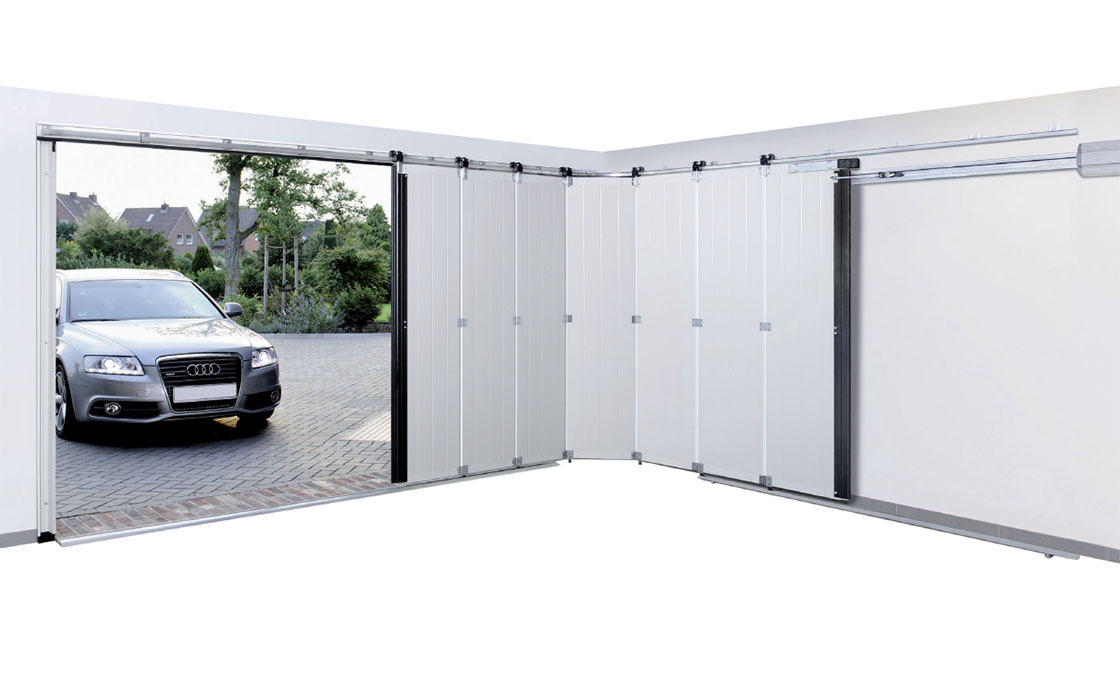
For main warehouse storage bays handling pallet jacks and reach trucks, automated horizontal sliding doors represent the industry benchmark. Sliding doors travel parallel to the wall, preserving valuable clear floor space. Engineered 45-degree drop tracks lower the panel 10 mm vertically and press it 8 mm inward during the final closing stroke. This dual-axis movement guarantees hermetic perimeter sealing while eliminating gasket friction during horizontal transit.
High-Frequency Forklift Corridors (Over 200 Cycles Daily)
High-throughput cold chain distribution hubs require high-speed insulated roll-up doors operating at velocities between 1.5 and 2.5 m/s. Rapid opening speeds reduce open-door duration by up to 70%, dramatically cutting refrigeration compressor workloads and preventing evaporator coil icing. Advanced zip-guide tracks provide automatic self-repair capabilities if accidental forklift impacts dislodge the flexible insulated curtain.
Need Engineering Guidance on Cold Storage Door Specifications?
Send your facility opening dimensions, operating temperature delta, and traffic flow patterns to the technical engineering team for custom door sizing and factory direct pricing.
3. Thermal Break Frameworks & Anti-Sweat Engineering
Specifying a thick door panel is useless if the perimeter frame creates an uninsulated thermal bridge that conducts heat directly into the refrigerated enclosure.
Structural PA66 Polyamide Insulating Bars
Cold room door frames feature extruded 6063-T5 aluminum jambs separated by 24 mm to 34 mm structural polyamide (PA66 GF25) thermal barrier strips. This mechanical barrier isolates the warm exterior aluminum casing from the sub-zero interior extrusion. Polyamide exhibits a thermal conductivity of only λ = 0.30 W/mK, cutting conductive heat transmission by over 160 times compared to solid aluminum profiles.
Condensation Elimination Under High Humidity
In humid food processing environments (75% to 85% relative humidity), uninsulated metal frames cool below the ambient dew point, causing persistent sweating and mold growth. Polyamide thermal breaks maintain exterior frame temperatures within 1.5°C of ambient room temperature. This temperature stability eliminates condensation without requiring energy-intensive frame heating in medium-temperature chillers, protecting building envelope integrity.
4. Active Perimeter Defrost Heating Systems
When operating temperatures drop below freezing, active perimeter heating is mandatory to prevent ice accumulation and gasket tearing. Understanding frost prevention is a cornerstone of cold storage doors 101.
Self-Regulating Semiconductor Heating Elements
Sub-zero freezer doors embed self-regulating electric heating cables producing 25 to 35 Watts per linear meter. These cables run inside dedicated aluminum channels along all four frame jambs and beneath the floor threshold plate. The semiconductor core automatically modulates heat output based on local temperatures, keeping gasket contact surfaces at +5°C to prevent moisture freezing.
Dual-Circuit Redundancy and Floor Threshold Heating
In mission-critical pharmaceutical and blast-freeze facilities, specify dual independent heating circuits with automatic changeover relays. If the primary heating cable fails, the secondary backup circuit activates instantly. This redundancy prevents catastrophic ice lockup and eliminates emergency downtime, ensuring continuous cold chain compliance.
5. Life Safety Compliance & Pressure Equalization
Operating sealed refrigerated chambers introduces severe pressure differentials and human safety risks governed by strict international standards.
Photoluminescent Emergency Inside Release Hardware
Workplace occupational safety regulations (EN 179 and OSHA) mandate that all walk-in refrigerated rooms feature an internal mechanical release mechanism. A solid stainless steel push rod extends through the insulated door leaf to an interior glow-in-the-dark luminous knob. Pushing the knob overrides external padlocks instantly, allowing trapped personnel to escape safely during an emergency even in total darkness.
Heated Bi-Directional Pressure Relief Ports
When warm air enters a cold room during transit cycles and cools rapidly, internal air volume contracts, creating a vacuum of 200 to 500 Pascals. Bi-directional heated pressure relief valves equalize interior and exterior air pressure at ±25 Pa differentials. This pressure equalization prevents door vacuum-lock and protects insulated wall panels from structural deflection.
6. Food Hygiene Standards & Cladding Metallurgy
Facilities handling perishable food, seafood, or pharmaceuticals must select door cladding materials capable of withstanding aggressive daily sanitation routines.
Marine-Grade AISI 304 vs Food-Safe Plastisol
In wet meat processing facilities subject to daily high-pressure chemical washdowns, specify marine-grade AISI 304 or 316 stainless steel face sheets and hardware. In dry ambient storage warehouses, pre-painted galvanized steel with 120-micron food-safe plastisol coatings provides durable corrosion resistance at lower capital cost. Both materials resist aggressive cleaning chemicals and acidic food residues.
Crevice-Free Hygienic Design and Antimicrobial Coatings
Hygienic cold room doors feature smooth, crevice-free panel profiles and seamless multi-chamber EPDM gaskets. This seamless construction prevents organic residues and bacteria from accumulating in frame recesses, ensuring compliance with strict HACCP and FDA food safety regulations. Snap-in gasket retainers allow rapid disassembly during deep sanitization cycles.
7. Total Cost of Ownership & Preventative Maintenance
A comprehensive understanding of cold storage doors 101 involves calculating the 10-year Total Cost of Ownership (TCO). The initial equipment purchase price accounts for less than 25% of total operating lifecycle costs.
Refrigeration Energy Loss and Compressor Protection
High-performance cold storage doors with thick PIR cores (U ≤ 0.18 W/m²K) and dual-bulb EPDM gaskets reduce conductive and infiltration heat gain by over 80%. This thermal integrity cuts continuous refrigeration power consumption. It also prevents compressor short-cycling, extending cooling equipment life and lowering facility maintenance budgets.
Preventative Maintenance Cadence and SOP
Facility managers should enforce a structured maintenance schedule. Perform daily visual gasket checks and conduct quarterly dollar-bill compression tests. Inspect heating cable resistance monthly. Lubricate mechanical track rollers twice per year using -50°C NSF-H1 food-grade synthetic grease to maintain smooth kinematic operation.
8. Pre-Purchase Engineering Checklist: 10 Critical Steps
Before issuing purchase orders for commercial cold storage doors, facility managers should verify the following 10-point technical checklist:
| Checklist Item | Engineering Verification Parameter | Target Specification Standard |
|---|---|---|
| 1. Operating Temperature Delta | Measure difference between room and ambient | 75 mm PU for chillers; 120-150 mm PIR for freezers |
| 2. Daily Cycle Frequency | Audit hourly and daily traffic counts | Hinged (<50), Sliding (50-200), High-Speed (>200) |
| 3. Structural Clearances | Verify sideroom and overhead headroom | Width + 500 mm sideroom; 600 mm headroom |
| 4. Thermal Break Integrity | Verify non-conductive frame isolation | 24 mm to 34 mm PA66 GF25 polyamide barrier |
| 5. Perimeter Heating Cables | Check anti-frost heating specifications | 25 to 35 W/m self-regulating cable + threshold heat |
| 6. Gasket Elastomer Rating | Review polymer glass transition temp | Multi-chamber virgin EPDM (-55°C Tg rating) |
| 7. Life Safety Compliance | Ensure anti-entrapment hardware | EN 179 / OSHA photoluminescent emergency release |
| 8. Pressure Equalization | Verify air volume pressure balancing | Heated two-way pressure relief valve (±25 Pa) |
| 9. Impact Protection | Check physical barrier placement | 150 mm steel bollards + 5m radar activation |
| 10. Food Safety Hygiene | Verify cladding and surface washdown | AISI 304 stainless steel or 120μm Plastisol |
Workplace occupational safety standards enforced by the Health and Safety Executive and manufacturing guidelines from ISO mandate audited maintenance and emergency release testing on all commercial refrigerated entrance doors.
9. Engineering Consultation for Custom Cold Storage Doors
Applying the principles of cold storage doors 101 enables facility managers to specify robust, energy-efficient entrance barriers tailored to exact operating requirements. Reviewing thermal insulation values, traffic velocities, and structural clearances prior to factory ordering prevents costly operational downtime.
Need technical assistance specifying cold storage doors?
If you are designing a new refrigerated warehouse or upgrading existing walk-in freezer doors, the technical engineering team is available to review your clear opening dimensions, temperature requirements, and traffic cycles to provide a fully optimized cold storage door solution.
Frequently Asked Questions About Cold Storage Door Procurement
What is the most critical factor when buying cold storage doors?
Matching the insulation core thickness (75-150 mm PIR) to the temperature delta and ensuring structural polyamide thermal breaks are the most critical factors.
Why do cold storage sliding doors require drop tracks?
Drop tracks lower the door 10 mm vertically and 8 mm inward in the final closing stage to compress gaskets hermetically without dragging across the floor.
When should a facility manager choose high-speed roll-up doors?
High-speed doors (1.5-2.5 m/s) are recommended for openings with over 200 daily forklift cycles to minimize open-air duration and reduce energy loss.
Are heating cables mandatory on all commercial freezer doors?
Yes, 25 to 35 W/m perimeter heating cables are mandatory on sub-zero freezers to prevent frame moisture from freezing and tearing rubber gaskets.
What safety release mechanism is required for walk-in freezers?
Workplace safety standards mandate an internal photoluminescent push-to-release rod that allows trapped personnel to escape even if locked externally.