








Picture a buyer with a types chart pulled from a supplier blog. The chart lists strip curtains and rapid roll doors under “swinging door types”, so the purchase order follows the chart line by line. On site, the crew finds no hinge to mount and no arc reserved for the leaf to sweep. The order went wrong at line one, because the chart itself classified products that are not swing doors at all.
We run into the leftovers of such charts from the factory side. In our practice, when two doors of different types leave our line, both are measured on the same test bench. Both are documented in the same signed factory report format covering opening speed, noise, insulation resistance and appearance. Type differences mean nothing until they are measured the same way, and that is the standard applied to every industrial swing door type in this article.
What Counts as an Industrial Swing Door
A swing door is a hinged leaf that pivots on a vertical axis. The leaf sweeps an arc through the opening, so the layout must reserve clear floor space on both sides of the frame. Hold on to that single criterion, because it decides what belongs in this category and what does not. A product without a hinged leaf can still be a good industrial door, yet it is not a swing door. Get the definition wrong and every later decision inherits the error, from the frame budget to the hardware schedule.
Two products from those confused charts fail the test quickly. A strip curtain hangs from a header track and parts when something pushes through. A rapid roll door coils up around a barrel above the opening. Neither has a hinged leaf, so neither belongs in any honest list of industrial swing door types, whatever the chart label claims.
Inside the family, three motions cover everything. A single leaf swings one way through the opening. A double leaf pairs two leaves on one frame, while a double action leaf swings both ways and returns to center. Build and compliance then split the family further into insulated, hygienic, fire rated and corrosion resistant versions.
Single Leaf Swing Doors for Personnel Traffic
The single leaf is the workhorse of all industrial swing door types. It suits personnel doors, hand cart routes, equipment rooms and any narrow opening where one person controls the passage. Daily wear lands on one hinge set, one closer and one stop, so hardware quality decides the service life more than leaf design does.

Pedestrian routes also carry accessibility duties. Under the 2010 ADA standards, a swinging door must provide a minimum clear width of 32 inches (815 mm). The width is measured between the face of the door and the stop, with the leaf open 90 degrees. Openings deeper than 24 inches need a clear width of 36 inches (915 mm).
Build the leaf from galvanized steel skins 0.4 to 1.5 mm thick over a PU foam core, the standard build across most industrial swing doors. Then finish the surface with powder coating in a standard RAL color. A kick plate at trolley height protects the skin where carts cut corners.
Double Leaf and Unequal Pair Doors
Wider openings raise the first question about double leaf industrial swing doors: equal pair or unequal pair? An equal pair puts two leaves of the same width on one frame, and both leaves usually carry equal duty. An unequal pair combines a narrow active leaf with a wide companion leaf, and that split is what makes the type interesting.

In our practice, the unequal pair serves two levels of traffic in one opening. People push the active leaf all day for routine passes, which keeps the swing arc small and the effort low. When a pallet truck needs full width, the latch releases and both leaves swing together.
Order the active leaf with the heavier hardware, since it carries most of the daily duty. Coordinate the latching so one motion releases both leaves, and check that the open pair does not block an adjacent aisle. Where daily traffic rarely needs full width, an equal pair with a matched set of closers is the simpler buy.
Double Action Traffic Doors for Two Way Traffic
A double action traffic door swings in both directions and returns to center after every pass. Spring hinges store the energy of each swing and bring the leaf back to the closed position without a separate closer. That motion fits corridors where two streams of people and carts move against each other, which no other entry in the industrial swing door types list handles as well.
Configuration matters more here than in any other swing type, and the short list below covers the items we check on every traffic door order.
- Spring hinges rated for the leaf weight and the duty level of the corridor
- Impact plates on both faces at trolley and kick height
- Vision panels set high enough to survive daily bumps
- Center line gaskets that meet evenly so the closed seam stays tight
Traffic doors earn their keep at shift changes and canteen rush hours, when the corridor carries people in both directions at once. A one way leaf forces a stop and a swing back, while a double action leaf keeps both streams moving. The corridor itself still needs width for the arc on each side of the opening.
One limitation deserves a full stop. A double action leaf cannot serve as an exit route door unless it also satisfies the inside opening rule covered later. Use the type for traffic control, not for regulated escape routes, unless the hardware passes the same checks as any exit door.
Insulated Cold Storage Swing Doors
Cold storage turns every swing door into a thermal component. The leaf carries a thick PU foam core, and the seal system does the real insulating work. When the leaf closes, gaskets compress against the frame and along the meeting stile. Insulation makes this one of the heaviest industrial swing door types, so hinge sizing and closer power follow the weight.
Failure starts at the edges, not in the core. Hinge side seals wear first because the leaf drags across them through the last degrees of closing. Threshold ice loads the bottom gasket every time the leaf lands. We cover the repair points in our guide to where cold room door hinges and gaskets fail first.
Seal performance is a maintenance topic as much as a purchase topic. Compression set develops over years of cold service, so put gasket inspection and hinge adjustment on the same maintenance schedule.
Consistency across types is our own benchmark here. In our practice, every insulated leaf leaves the line only after the same bench test that every other type passes, and the signed factory report travels with the door. For a buyer comparing an insulated leaf against a plain steel one, that shared measurement is the only fair basis for a decision.
Which Door Type Matches Your Traffic and Layout?
Share your floor plan, throughput, and temperature zones, and we will match single or double leaf, hand of swing, and frame hardware to each opening.
Hygienic and Cleanroom Swing Doors
Food plants, pharmaceutical lines and packaging halls judge industrial swing doors by the surface, not by the skeleton. A hygienic swing door presents a flush, easy-clean face with rounded corners, so nothing traps residue and every wipe reaches the whole panel. Vision panels let supervisors see through without opening the leaf into a controlled zone.
Stainless steel is the natural skin choice, with SS304 covering most washdown zones. Where the door meets an airlock, pair the swing leaf with interlocks so only one door of the airlock opens at a time. For a deeper walk through the compliance details, see our guide to cleanroom steel swing doors for GMP compliance.

Hardware deserves the same hygiene logic as the panel. Choose hinges and handles without hidden pockets, and specify gaskets that survive your cleaning chemicals rather than the cheapest rubber on the shelf. A door that cannot be cleaned quickly will fail an audit long before its structure wears out.
Fire Rated and Exit Route Swing Doors
Two different jobs hide under one heading. A fire rated swing door protects a compartment, while an exit route swing door moves people out of the building. The two jobs share one rule set, and the rules are strict because lives ride on them.
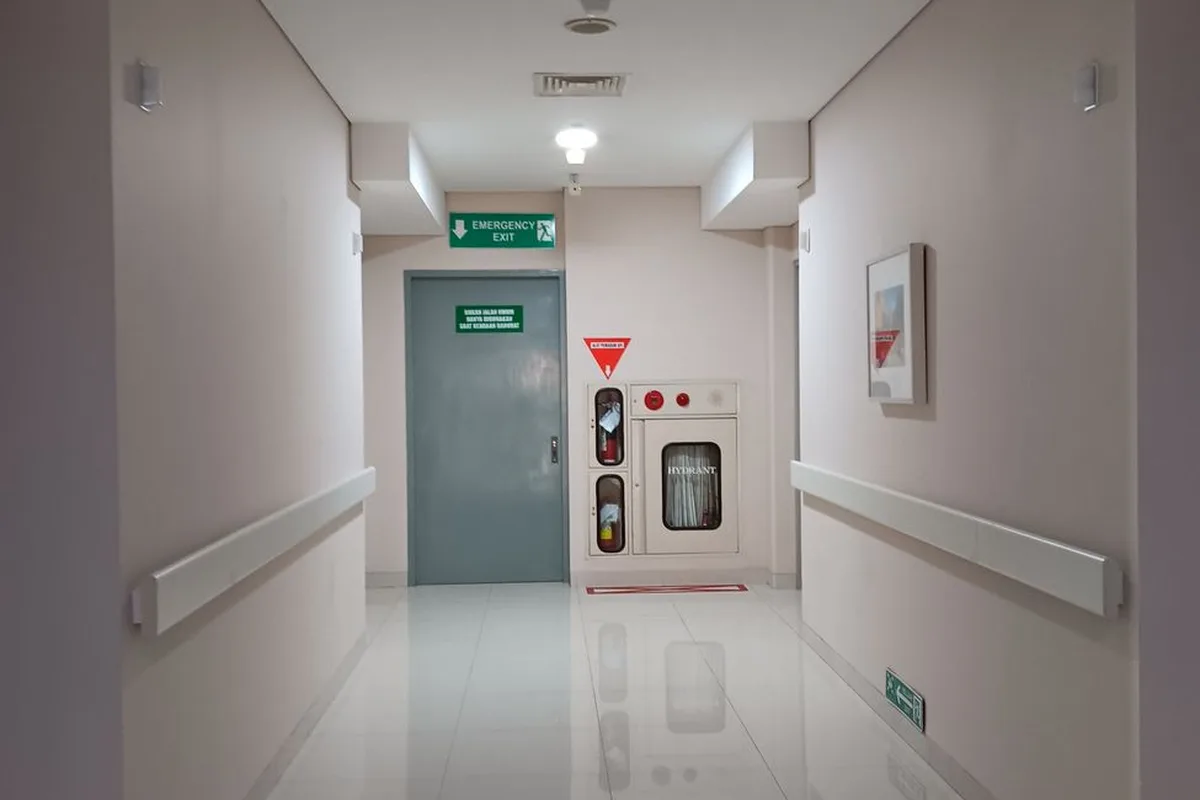
US code is explicit on both points. Under 29 CFR 1910.36(e)(1), a side-hinged exit door must be used to connect a room to an exit route. The same part requires that exit route doors be openable from the inside at all times, without keys, tools or special knowledge (1910.36(d)(1)).
An exit route door must never be modified with hardware that blocks opening from the inside. Padlocks, bars, chain arrangements and after-market bolts all fail this test, no matter how well they secure the door against entry.
Fire ratings add a second layer of specification. An EI60 or EI120 target describes a capability, not a certificate sitting on a shelf. Each fire rated swing door assembly is verified per project against EN 1634-1 test requirements, with the leaf, frame and hardware treated as one tested unit. Ask any supplier for that project specific evidence before the order is placed.
Corrosion Resistant Swing Doors for Harsh Environments
Chlorides, not water alone, drive corrosion in industrial buildings. Electroplating shops, coastal plants, chemical stores and washdown zones attack plain steel skins through pinpoint pits that grow under the coating. Once a pit breaches the zinc layer, rust spreads sideways beneath the paint, and the panel looks fine until it suddenly does not.
Stainless steel answers the chloride problem in two grades. SS304 handles most humid and washdown service, while SS316 adds molybdenum for zones with chlorides or salt spray. Coastal sites sit closer to the SS316 end, while indoor washdown zones often run fine on SS304. Match the grade to the zone rather than defaulting to the higher alloy, because hardware, fasteners and hinges need the same attention as the skin.
Where steel skins stay in the plan, the finish system carries the protection. Hot-dip galvanizing followed by powder coating gives the baseline, anodizing suits aluminium leaves, and RAL matched coatings keep the door consistent with the rest of the plant. Specify stainless or coated hardware to match, since a bright SS304 leaf on plain steel hinges corrodes at the hinges first.
Choosing Between the Types Before You Order
Choosing between industrial swing door types is easier when every row carries a verdict. The table below compresses each type into the row you can act on. Read the last column first, because red lines cost the most when they surface after delivery. Then match the motion column to your traffic pattern before anything else.
| Type | Best fit | Motion | Build focus | Red line |
|---|---|---|---|---|
| Single leaf | Personnel doors, hand cart routes, narrow openings | One leaf, one direction, 90 degree arc | Galvanized steel skin, PU core, closer and stop | ADA clear width on pedestrian routes |
| Unequal pair | Wide openings with mixed people and equipment traffic | Narrow active leaf daily, both leaves for equipment | Active leaf carries the heavier hardware | Full double arc must stay clear |
| Double action | Corridors with heavy two way foot traffic | Swings both ways, spring hinges return to center | Impact plates, vision panels, center line gaskets | Never a default exit route door |
| Insulated cold storage | Cold rooms, freezers, chilled corridors, anterooms | Single or double leaf, one direction | Thick PU core, compressible gaskets, threshold protection | Seal compression and hinge side icing |
| Hygienic cleanroom | Food and pharmaceutical production zones | Single or double leaf, often double action | SS304 face, rounded corners, flush vision panel | Every surface must survive washdown chemicals |
| Fire and exit route | Fire compartments, stair enclosures, escape routes | Side hinged, opens from the inside | Leaf, frame and hardware verified against EN 1634-1 | Inside opening must never be blocked |
If the opening serves mixed traffic across a large plant, start from the wider range of industrial doors for plant and warehouse openings. Then check whether a swing type still fits the layout. A swing door needs its arc, and some layouts cannot spare the floor space. The swing family covers a narrower slice of that wider range, but it remains the right answer where controlled hand operated passage matters.
Tight layouts change the answer. Where the aisle cannot give up the sweep area, our guide on when a sliding door fits the opening better covers the alternative. Order your industrial swing door type only when the arc, the traffic and the red line all check out on paper.
Frequently Asked Questions
These five questions come up in almost every swing door project we quote.
Are strip curtains or rapid roll doors swing door types?
No. A swing door needs a hinged leaf pivoting on a vertical axis. Strip curtains hang from a track, and rapid roll doors coil around a barrel. Neither has a hinged leaf, so both fall outside this classification even when a chart groups them together.
Can a double action door serve an exit route?
Only if it meets the exit route rules. The route must use a side hinged door, and the door must open from the inside without keys, tools or special knowledge. Double action hardware can qualify, but never add anything that blocks inside opening.
Which type suits a cold storage anteroom?
An insulated swing door with a thick PU foam core and compressible seals. The anteroom limits warm air exchange, so keep the swing arc clear and plan regular gasket and hinge checks, because those parts fail first in cold service.
What is an unequal pair and when does it pay off?
An unequal pair combines a narrow active leaf with a wide companion leaf. People use the active leaf all day, while equipment moves need both leaves open. In our practice it pays off where pedestrian and full width traffic share one opening.
How is a fire rated swing door verified?
The rating target, such as EI60 or EI120, is verified per project against EN 1634-1 test requirements. The complete assembly, including leaf, frame, hinges and hardware, is treated as one tested unit, so ask for project specific evidence rather than a certificate number.


