Here is the uncomfortable math most comparisons skip: the dock leveler with the lower price tag is often the more expensive one to own. A mechanical unit can cost thousands less on day one, then quietly charge you back through spring adjustments, chain repairs, and slower turnarounds for a decade. Over a ten-year stretch, Rite-Hite estimates a mechanical leveler costs roughly six times more to maintain than a hydraulic one.
That gap does not make hydraulic the right answer for every dock, though. A small warehouse that ships twice a week has no business paying for hydraulics it will barely use. This hydraulic vs mechanical dock levelers comparison walks through operation, cost, maintenance, speed, and safety. It closes with a verdict table so you can match the right type to your traffic, budget, and maintenance capacity.
The Real Difference: One Button vs One Chain
The two types solve the same problem — bridging the gap between the trailer bed and your floor — but the operator experience could hardly be more different. A hydraulic dock leveler raises and lowers its platform and lip with oil pressure, driven by a push-button station. The machine does the lifting, so one person runs the dock without breaking a sweat.
A mechanical dock leveler works on spring tension. The operator pulls a chain to release the hold-down, the deck springs up, and then they walk the platform down under their own body weight. Rite-Hite puts that walk-down force at 120 to 175 lbs or more, depending on capacity. Do that dozens of times a day and the leveler stops being a neutral tool. If you want the full engineering breakdown of the hydraulic cycle, we cover it in how a hydraulic dock leveler works.
Both types work within a similar window, typically around 12 inches below dock level to 12 inches above it, which covers most trailer bed variations. The difference is who supplies the energy. In a hydraulic unit, a motor and two cylinders do the work. In a mechanical unit, your operator is part of the drive system.
Cost Now vs Cost Later
On the invoice, the choice looks simple. Koke Inc. pegs the hydraulic premium at roughly 10 percent more upfront than a comparable mechanical unit. For a single door, that difference rarely breaks a capital budget, which is exactly why mechanical levelers keep winning purchasing decisions made on price alone.
The ten-year picture flips. Because a mechanical leveler keeps springs, hold-downs, and latches under constant tension, it needs regular adjustment and more part replacements. Rite-Hite’s estimate of a six-fold maintenance cost gap over a decade is the number to hold onto when you compare hydraulic vs mechanical dock levelers. Downtime has a price too: a dock waiting on a service tech ships nothing.
Warranty terms tell you how manufacturers price this risk. We back door bodies for 2 years and motors or operators for 3 years, extending to 5 years on servo motors. Warranty parts ship by DHL or FedEx within 5 to 7 days. Powered equipment carries the longer coverage for a reason: the failure-prone parts are the ones doing manual work, not the ones sealed behind a cylinder.
Maintenance: Springs and Latches vs Cylinders and Seals
Mechanical maintenance is a story about tension. The main lift spring, hold-down mechanism, lip latch, and hinge pins all wear against constant load. Winter makes it worse: springs contract in the cold and expand in heat, so the tension you set in July is wrong in January. Service manuals are blunt about the symptom — when a platform is hard to walk down, the lift spring tension has drifted too high and needs resetting.
Picture the January version of this. A driver is waiting, the deck will not drop, and your maintenance person is outside re-tensioning a spring at minus ten degrees. That scene, repeated across a fleet of doors, is where the six-fold cost estimate comes from.
Hydraulic maintenance is a different list: cylinder seals, hoses, and the oil itself. These items age slowly and fail visibly, so you service them on a schedule instead of chasing tension through the seasons. One rule applies to both types, and it is non-negotiable: before anyone works under a platform, the maintenance strut goes up and a secondary safety chain goes on. No leveler task is worth relying on hydraulics or springs alone to hold a plate of steel above a person.
Speed and Throughput on a Busy Dock
Throughput differences show up in the details nobody quotes. Trailers flex. When a suspension settles after loading or a reefer unit cycles, the trailer bed moves away from your floor level, and the platform needs repositioning. A hydraulic leveler self-adjusts to this trailer float automatically and keeps the lip in contact. That also prevents stump-out, where the lip loses support under the wheel path.
A mechanical leveler needs the operator each time: pull the chain, walk the deck down, seat the lip. At a two-shift distribution center running thirty trailers a day, those extra steps compound into real minutes per door. At a low-traffic dock, they barely register. This is why throughput, not technology preference, should drive the hydraulic vs mechanical dock levelers decision. The same hardware is efficient at one dock and wasteful at another.
Safety and Ergonomics Behind the Forklift
Much of the safety gap comes from eliminating the walk-down itself. Stepping onto a raised, partly supported deck is a slip and fall exposure, and pulling a chain all day adds bending and reaching strain to every cycle. Push-button operation removes the operator from the moving machinery and keeps their body weight out of the equation entirely.
Hydraulic designs add passive protections. A velocity fuse closes the oil line if pressure drops suddenly, so the platform cannot free-fall even with a failed hose. Both types also fall under ANSI MH30.1, the standard covering dock leveling device design, use, and maintenance. OSHA has also cited facilities for running levelers outside their working range or rated capacity.
Our view after years of building these systems is simple: features matter less than matching the machine to the traffic. A fatigued operator fighting the wrong equipment finds shortcuts no interlock can predict.
When a Mechanical Dock Leveler Still Makes Sense
Mechanical levelers are not the budget trap they appear to be in the paragraphs above — if your usage matches their design. They remain the right call in four situations. Docks that cycle only a few times a week fit them. So do facilities with a genuinely fixed capital budget, pits with no electrical supply, and leased buildings where a decade-long payback never arrives.
Their simplicity is the payoff. There is no motor, no oil, and no controls to troubleshoot, and a local maintenance tech can replace a spring or latch without specialized training. For a storage yard that unloads a truck on Tuesday and locks the dock until Friday, paying the hydraulic premium buys nothing back. Buy for your cycle count, not for the brochure.
When a Hydraulic Dock Leveler Is the Better Investment
The hydraulic case builds with every added shift. If your dock runs multiple shifts or handles heavy forklift traffic, push-button operation pays for itself. The same goes for docks shipping time-sensitive loads or leaning on a stretched maintenance team. The premium comes back as labor saved, uptime, and fewer emergency calls. Facilities planning to hold the building for ten years or more are the natural buyers, since that horizon is where the maintenance curve crosses the price curve.
Already running mechanical units on busy doors? Conversion is possible: hydraulic conversion kits retrofit existing pits, and we evaluate each pit case by case with no MOQ restrictions. The full upgrade math, including when retrofitting beats replacing, is in our guide to the benefits of upgrading to hydraulic dock levelers. For sourcing either type alongside seals, shelters, and doors, our loading dock systems line covers the complete pit package.
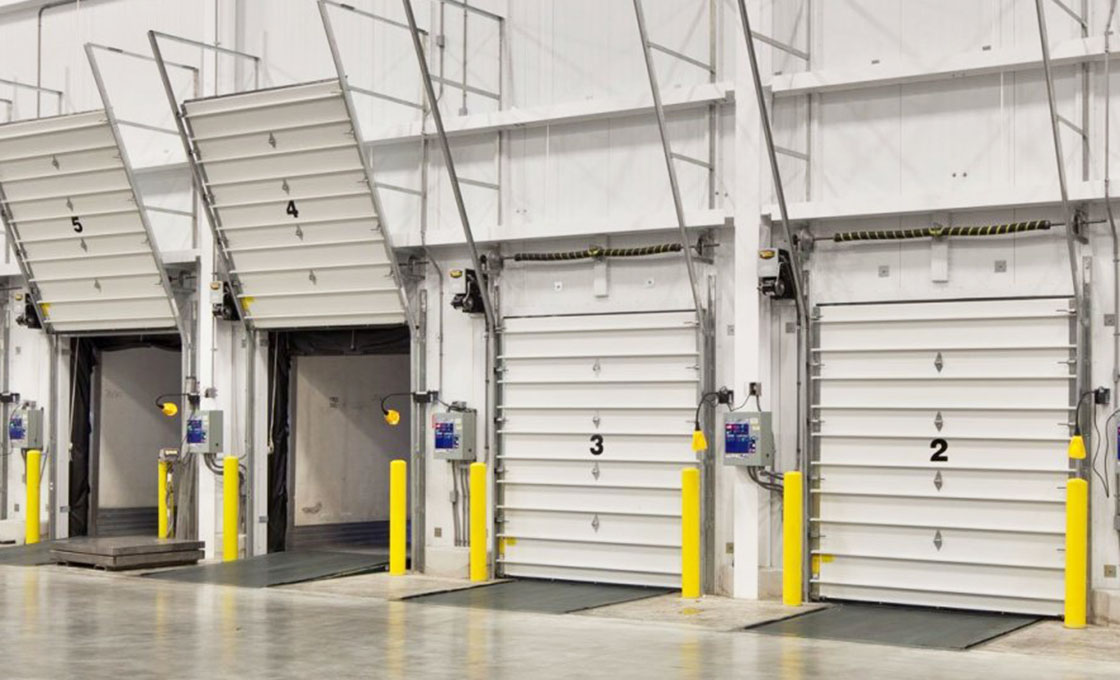
Side-by-Side: Which One Should You Choose
| Factor | Hydraulic | Mechanical |
|---|---|---|
| Operation | Push-button, one person | Pull chain plus walk-down |
| Upfront cost | About 10% higher (Koke estimate) | Lower |
| 10-year maintenance | Baseline (per Rite-Hite estimate) | Roughly 6x higher |
| Wear parts | Seals, hoses, oil | Spring, hold-down, latches, hinges |
| Trailer float | Self-adjusting | Manual repositioning |
| Power required | Yes | No |
| Free-fall protection | Velocity fuse | Spring and latch dependent |
| Best fit | High-volume, multi-shift docks | Low-traffic, no-power pits |
Now match yourself to a row. High dock traffic, heavy loads, or a stretched maintenance crew points to hydraulic, and the busier the door, the faster the premium repays itself. A tight capital budget with light traffic, no pit power, or a short building lease points to mechanical, where its simplicity is a genuine feature.
Mixed fleets are the norm, not a compromise. Many facilities run hydraulics on the two or three busiest doors and mechanical units on the rest. Pairing the leveler decision with the right industrial dock doors closes the remaining gaps at the opening.
The real failure mode in the hydraulic vs mechanical dock levelers debate is buying a high-cycle machine for a low-cycle dock, or the reverse. Judge each door on its own cycle count. That discipline, not brand preference, is what keeps ten-year costs down.
Frequently Asked Questions
Which lasts longer, a hydraulic or a mechanical dock leveler?
Hydraulic units generally outlast mechanical ones because fewer parts run under constant tension, as Koke notes. Actual life depends on cycle count and how well you follow the maintenance schedule.
How much more does a hydraulic dock leveler cost upfront?
Estimates from Koke put the hydraulic premium at roughly 10 percent over a comparable mechanical unit. Exact pricing depends on capacity, pit size, and options, so request quotes per door.
Can I convert a mechanical dock leveler to hydraulic?
Yes. Hydraulic conversion kits retrofit existing mechanical pits, and a supplier can assess pit condition, power supply, and traffic to confirm whether conversion beats replacement for your doors.
Do mechanical dock levelers need electricity?
No. Mechanical levelers run entirely on spring tension and operator effort, which makes them the default choice for pits without an electrical supply or for unpowered external docks.
What is walk-down force on a mechanical leveler?
It is the body weight an operator applies to lower the platform. Rite-Hite measures it at 120 to 175 lbs or more, which is why walk-down operation drives fatigue on busy docks.