
Industrial cold storage doorways represent the most critical thermodynamic boundary in any refrigerated facility. Every time a doorway opens, cold dense air cascades outward along the floor while warm, moisture-laden ambient air rushes in across the top of the opening. This continuous convective air exchange introduces immense refrigeration loads, causes heavy frost buildup on evaporators, and risks severe temperature excursions for stored inventory.
Traditional manual sliding doors often fail in high-throughput distribution environments. Heavy manual door leaves lead to operator fatigue, resulting in doors left propped open during busy loading shifts. Furthermore, flat sliding tracks and brittle rubber gaskets allow continuous air infiltration around door perimeters even when closed.
Next-generation smart cold room sliding doors eliminate these thermodynamic vulnerabilities through kinematic precision engineering. By combining drop-and-slide gravity track geometry, multi-chamber co-extruded EPDM gaskets, smart PTC heated frame breaks, and automated brushless servo drives, these systems deliver uncompromising temperature protection.
Why Cold Storage Doorways Lose So Much Cold Air
The thermodynamic forces acting across a cold room doorway are governed by air density differentials under ASHRAE Refrigeration Handbook principles. At -25°C, refrigerated air has a density of 1.39 kg/m³, compared to 1.20 kg/m³ for ambient air at +20°C.
This substantial density gradient creates a natural chimney effect across open doorways:
- Convective Infiltration Velocity: Cold dense air flows across the floor threshold at velocities up to 1.2 m/s, pulling warm external air through the upper half of the aperture.
- Latent Energy Load Spikes: Open doorways introduce 15 to 25 kW of latent refrigeration load per minute of open exposure.
- Moisture Condensation and Frost: Water vapor carried by incoming warm air immediately condenses upon contacting sub-zero wall panels and evaporators, forming thick frost layers that degrade refrigeration efficiency.
Minimizing total open duration and ensuring an airtight perimeter seal when closed are the two primary requirements for protecting facility energy efficiency.
How Drop-and-Slide Tracks Create an Airtight Seal
The cornerstone of modern cold room sliding door engineering is the Drop-and-Slide kinematic track rail system governed by EN 12426 air permeability standards. Unlike flat tracks where gaskets drag along surfaces, drop-and-slide tracks isolate lateral travel from gasket compression.
The system operates through an engineered dual-motion sequence:
- Frictionless Lateral Travel: During horizontal opening and closing, heavy-duty Delrin rollers travel along an overhead extruded aluminum track. The door leaf remains suspended 10mm away from the wall and 15mm above the floor, completely eliminating gasket friction and wear.
- Compound Drop-and-Inward Sealing: In the final 100mm of closing travel, the track features angled 45° ramps. Gravitational force guides the rollers down these ramps, dropping the door leaf 15mm vertically and 10mm inwardly against the frame.
- Hermetic Gasket Compression: The weight of the door leaf (often 120 kg to 350 kg) is converted into over 80 kg of continuous inward mechanical compression, sealing the perimeter airtight.
When opened, the initial motion lifts the door leaf up and away from the jambs, allowing effortless manual or motorized travel without dragging.
Multi-Chamber EPDM Gaskets & Ingress Defense Mechanics
Gasket performance defines the long-term airtightness of cold room door assemblies. Smart sliding doors utilize co-extruded multi-chamber EPDM (Ethylene Propylene Diene Monomer) synthetic sponge rubber formulated to maintain elasticity down to -45°C.
The gasket profile incorporates three functional zones:
- Dual Internal Air Dampening Chambers: Sealed internal hollow cores provide thermal dampening and absorb compression forces without permanent deformation.
- Triple Outer Sealing Wipers: Multiple exterior wiper lips create a tiered pressure barrier that blocks high-velocity air infiltration.
- Rigid Mounting Foot: A high-durometer base locks securely into an aluminum retaining channel, allowing rapid replacement without adhesives.
This engineered profile achieves Class 4 airtightness ratings, preventing air leakage even during atmospheric pressure fluctuations caused by forklift traffic.
Comparing Sliding Door Specs for Chillers and Freezers
The following engineering comparison matrix evaluates smart sliding door configurations across operating temperatures and facility requirements:
| Door Configuration | Operating Temperature | Core Thickness (PIR) | Thermal Transmittance U | Max Opening Speed | Frame Heating Specification | Airtightness Class |
|---|---|---|---|---|---|---|
| Medium-Duty Chiller Sliding | 0°C to +10°C | 80 mm | 0.26 W/(m²·K) | 1.0 m/s (Optional) | Unheated / Optional 20 W/m | EN 12426 Class 3 |
| Heavy-Duty Freezer Sliding | -10°C to -28°C | 120 mm | 0.18 W/(m²·K) | 1.5 m/s (Automated) | 35 W/m PTC Self-Regulating | EN 12426 Class 4 |
| Deep-Freeze & Blast Freezer | -28°C to -45°C | 150 mm (VIP Hybrid) | 0.12 W/(m²·K) | 1.8 m/s (High-Speed) | 45 W/m Dual Frame + Threshold | EN 12426 Class 4 |
| Gas-Tight Controlled Atmosphere | 0°C to +4°C (Fruit storage) | 100 mm | 0.21 W/(m²·K) | Manual (Cam-lock) | Unheated | Hermetic (0.00 m³/h·m²) |
Specifying the proper door thickness and heating capacity ensures optimal energy performance when paired with insulated wall panels and proper structural framing.
Integrated Thermal Breaks & Smart PTC Frame De-Icing Cables
In sub-zero freezer applications, door frame thermal bridging causes condensation to freeze on perimeter surfaces. This ice welds rubber gaskets to the frame, causing gaskets to tear when the door opens.
Smart cold room sliding doors solve this challenge through a dual-defense thermal break system governed by EN ISO 10077 standards:
Polyamide Structural Thermal Breaks
Extruded aluminum door frames incorporate 24mm continuous polyamide (PA66 GF25) insulating struts. These thermal breaks isolate external warm-side metal from interior sub-zero surfaces, reducing frame thermal conductivity by 90%.
Self-Regulating PTC Heating Elements
Integrated internal channels house self-regulating Positive Temperature Coefficient (PTC) heating cables delivering 35 to 45 W/m at 230V. PTC cables automatically modulate heat output based on ambient temperature, maintaining frame surfaces at +5°C without energy waste.
In blast freezers, a matching heated threshold plate embedded flush with the concrete floor prevents ice damming beneath bottom wiper gaskets.
Engineered Cold Storage Sliding Doors for Maximum Energy Efficiency
Protect critical freezer temperatures and slash refrigeration energy waste with RAXDOOR’s automated drop-and-slide cold room door solutions.
Smart Automated Motion Control: Brushless Inverters & Radar Activation
Automation transforms a passive insulated door into an active energy barrier. Modern cold room sliding doors utilize microprocessor-controlled synchronous brushless DC servo motors operating under EN 12453 functional safety standards.
Automated motion control delivers key operational advantages:
- Rapid Open-Close Cycles: Operating speeds up to 1.8 m/s reduce total doorway exposure time by 65% compared to manual sliding doors.
- Intelligent Microwave Radar: Overhead Doppler radar sensors differentiate between cross-traffic pedestrians and approaching forklift trucks, opening the door only when necessary.
- Integrated Safety Light Curtains: Multi-beam optical safety grids monitor the entire doorway aperture, reversing door travel instantly if an obstruction is detected without requiring physical contact.
- BMS Telemetry Integration: Integrated controllers log door cycle counts, open durations, and temperature alarms directly to facility Building Management Systems.
Monthly Maintenance SOP to Ensure Reliable Operation
To ensure long-term reliability and airtight performance, facility maintenance teams should execute this monthly inspection routine:
- Track and Roller Cleaning: Clear debris from overhead track rails and inspect Delrin rollers for flat spots or bearing play.
- Roller Bearing Lubrication: Apply food-grade synthetic grease (USDA H1 approved) formulated to maintain viscosity down to -40°C.
- Gasket Inspection and Conditioning: Wipe EPDM perimeter seals with food-grade silicone lubricant to preserve flexibility and prevent ozone cracking.
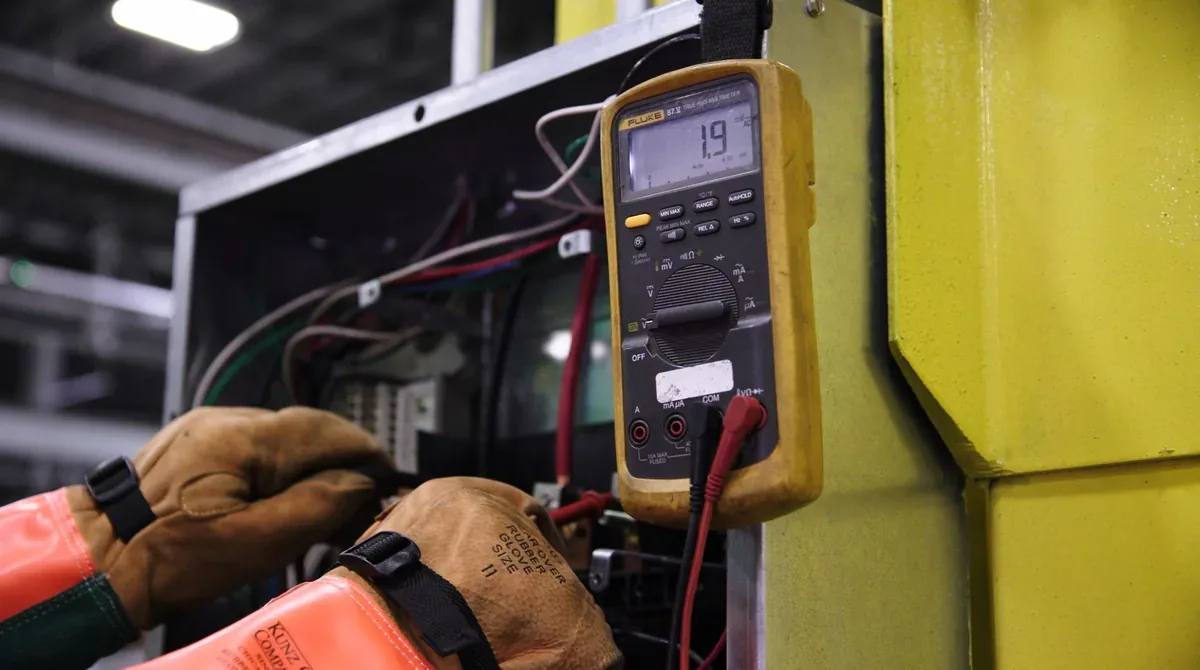
- Heater Circuit Continuity Testing: Measure PTC heater cable resistance using a digital multimeter to ensure proper current draw (target insulation resistance > 50 MΩ).
- Optical Safety Sensor Calibration: Test safety light curtains and bottom edge sensors to verify immediate reverse operation upon beam interruption.
Engineering Field Advisory
Never use petroleum-based lubricants or aggressive solvent cleaners on EPDM cold room door gaskets. Petroleum compounds cause rapid swelling, loss of elasticity, and premature gasket failure within sub-zero operating environments.
Frequently Asked Questions
How does a drop-and-slide door achieve a hermetic seal?
Angled track ramps guide the door 15mm downward and 10mm inward during the final closing travel, compressing multi-chamber EPDM gaskets with over 80 kg of force.
Why do freezer sliding doors require frame heaters?
Frame heaters maintain perimeter surface temperatures at +5°C, preventing condensation from freezing and welding rubber gaskets to the frame.
What is the recommended opening speed for automated cold room doors?
Automated cold room doors should open at 1.2 to 1.8 m/s to allow rapid forklift transit while reducing open-door convective air infiltration by 65%.
Can sliding cold room doors be used for controlled atmosphere rooms?
Yes. Gas-tight sliding doors with inflatable or heavy-compression mechanical gaskets achieve complete hermetic sealing for oxygen-controlled fruit storage.
How often should cold storage door gaskets be inspected?
Gaskets should be inspected monthly for cracks and lubricated with food-grade silicone grease to maintain elasticity at temperatures down to -45°C.