
When engineering modern commercial logistics and manufacturing facilities, project specifiers frequently overlook the structural door frame. Opting for low-cost carbon steel or standard galvanized perimeter framing often leads to premature corrosion at floor anchor points, noisy track vibration, and costly track binding. Within three to five years, rusted steel frames can force facility owners into disruptive, expensive masonry wall demolitions simply to replace corroded structural jambs.
Selecting the right structural framing material requires evaluating long-term corrosion resistance, dimensional tolerances, and building deadload. In over two decades of manufacturing commercial entrance equipment and architectural extrusions, field engineering teams have evaluated thousands of industrial installations. Specifying high-grade aluminium frames for industrial doors provides structural precision, thermal efficiency, and decade-long durability that far surpasses traditional steel alternatives.
1. Structural Load and Header Deflection Mechanics
Structural door frames must transfer dynamic operating forces directly into the building substrate. Extruded from 6063-T5 architectural aluminium alloy with a density of 2.70 g/cm3 (compared to 7.85 g/cm3 for structural steel), aluminium framing assemblies reduce overhead deadload by approximately 45%.
This dramatic weight reduction decreases mechanical stress on building lintels, precast concrete walls, and overhead steel trusses. Lighter framing simplifies crane rigging during installation and allows facility upgrades on older masonry structures where heavy steel assemblies would exceed structural load capacities.
Furthermore, reduced structural weight lowers the strain placed on counterbalance spring anchors and wall bracket mountings. Over thousands of operational cycles, lower deadload prevents fastener loosening in hollow cinder block or lightweight aerated concrete walls, ensuring the structural perimeter remains rigidly anchored for decades.
2. Long-Term Corrosion Immunity in High-Moisture Environments
Carbon steel frames rely on superficial galvanized zinc layers that rapidly degrade once scratched or penetrated by mounting bolts. In contrast, 6063-T5 aluminium naturally generates a continuous, self-healing oxide barrier.
Architectural aluminium frames treated with high-performance powder coatings easily pass over 1,000 hours of continuous salt spray testing under ASTM B117 standards. Aluminium frames remain completely impervious to structural rust in marine ports, food processing washdown bays, and humid chemical warehouses.
In facilities that utilize aggressive chemical cleaning detergents or high-pressure sanitizing washdowns, carbon steel framing requires continuous repainting to prevent rust bleed. Extruded aluminium side columns maintain structural purity without surface flaking, completely eliminating the risk of rust particulate contamination in food packaging cleanrooms and pharmaceutical storage bays.
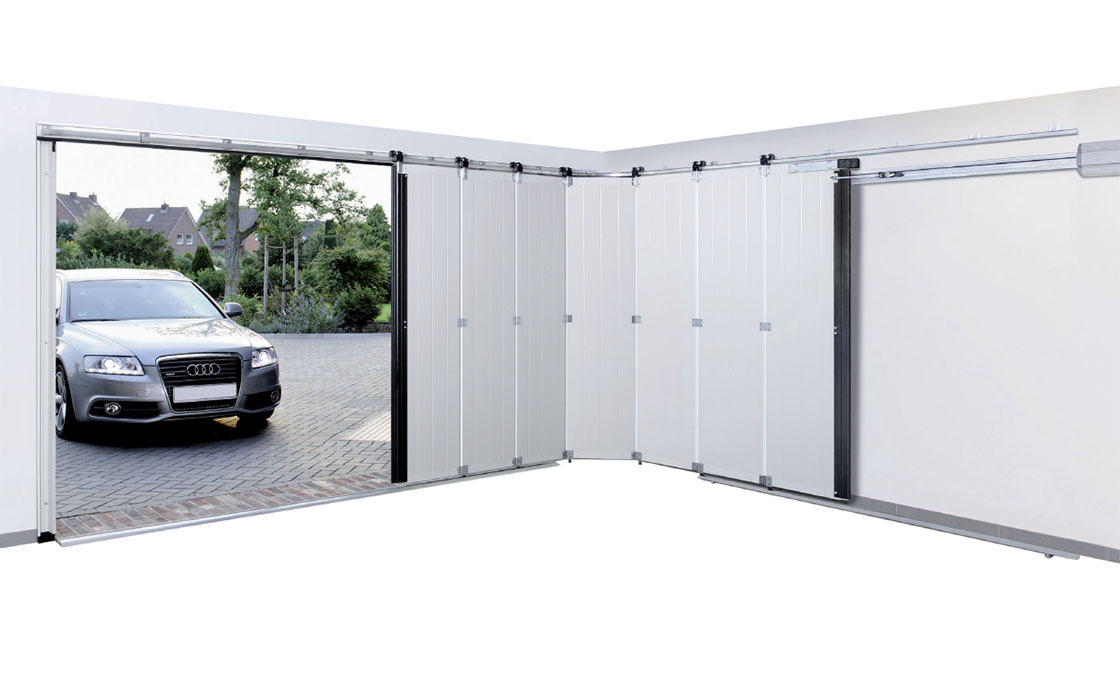
3. Thermal Break Engineering and Condensation Control
In temperature-controlled facilities, solid metal frames act as thermal conductors that transfer outdoor freezing temperatures indoors, causing severe moisture condensation and ice accumulation around door jambs. Advanced aluminium door frame profiles incorporate polyamide PA66 glass-fiber insulation strips.
These structural thermal breaks isolate interior and exterior aluminium faces, achieving overall frame U-values down to 0.33 W/m2K. Facilities eliminate winter frost buildup and save thousands of dollars annually on refrigeration and heating power.
By preventing moisture condensation along vertical side tracks, insulated aluminium framing protects floor surfaces from slippery puddle formation and icing hazard. This thermal barrier prevents electrical control boxes and optical safety sensors mounted on the door jambs from suffering internal moisture short-circuits.
4. Extrusion Precision and Roller Travel Acoustics
Welded steel frames often suffer from heat-induced angular distortion and seam irregularities during fabrication, causing roller chatter and premature hardware failure. Extruded aluminium framing holds tight dimensional tolerances within ±0.15 mm.
Precision-engineered guide channels ensure smooth, vibration-free roller travel that keeps operating noise below 55 dB. This precision track guidance significantly extends the operating lifespan of nylon rollers, counterbalance cables, and electric drive motors.
Seamless extruded profiles incorporate continuous internal channels for dual EPDM rubber seals and brush inserts. Because the internal channel geometry is extruded with exact consistency from top to bottom, weatherseals maintain continuous compression against the door curtain without snagging or uneven air leakage gaps.

Need Expert Sizing Guidance for Your Door Framing?
Send your clear opening dimensions, lintel headroom, and wall construction details to the engineering team for detailed specification guidance and factory-direct pricing.
5. Anchoring Best Practices: Preventing Galvanic Corrosion
When installing aluminium framing onto concrete masonry or carbon steel structural subframes, installers must prevent galvanic corrosion. When dissimilar metals touch in the presence of moisture, accelerated electrolyte degradation can occur.
Quality commercial installations employ 316-grade stainless steel masonry anchors paired with non-conductive neoprene isolation shims. This isolates the aluminium frame from direct contact with raw concrete alkalinity or carbon steel structural columns, ensuring lifetime joint stability.
Additionally, mounting holes drilled into the building wall should be injected with neutral-curing silicone sealant before driving anchor bolts. This creates a watertight barrier that prevents ground-level water from pooling around fastener threads, protecting both the building substrate and the frame assembly from hidden corrosion.

6. Total Cost of Ownership: 20-Year Comparison
Evaluating commercial door frames solely on initial purchase price ignores substantial long-term maintenance expenses. While raw carbon steel frames cost 20% to 35% less upfront, they require regular repainting and rust treatment every 3 to 5 years.
Over a 20-year operational lifecycle, aluminium frames for industrial doors eliminate rust remediation costs and deliver superior energy savings through thermal break isolation. Reduced deadload also cuts motor replacement frequency by over 30%, making aluminium the most cost-effective framing solution over the building lifespan.
| Lifecycle Parameter | Architectural 6063-T5 Aluminium Frame | Welded Carbon / Galvanized Steel Frame |
|---|---|---|
| Corrosion Upkeep | Zero maintenance (Self-healing oxide barrier) | Periodic sandblasting and repainting required |
| Manufacturing Accuracy | Tight tolerances (±0.15 mm extrusion precision) | Coarser tolerances (±1.5 mm welding distortion) |
| Structural Deadload | Lightweight (45% lighter, lower building stress) | Heavy (Demands reinforced lintel supports) |
| Thermal Performance | High (0.33 W/m2K with PA66 thermal break) | Poor (Thermal bridge causing surface frost) |
| 20-Year Total ROI | Lowest total cost of ownership | Higher lifecycle cost due to rust maintenance |
Quality directives from the ISO International Organization for Standardization emphasize factoring total lifecycle maintenance into commercial building envelope specifications.

7. Making the Right Structural Choice for Your Facility
Ultimately, specifying aluminium frames for industrial doors is an investment in long-term operational reliability and structural integrity. For coastal logistics hubs, food processing facilities, and modern commercial showrooms, aluminium framing eliminates rust maintenance and provides precision track alignment that extends total door system lifespan.
For heavy-duty exterior openings requiring extreme span widths, pairing heavy-gauge aluminium extrusions with internal steel stiffeners delivers the optimal balance of corrosion resistance and certified wind performance.
Evaluating frame specifications for an upcoming commercial project?
If you are comparing frame materials or need help calculating wind deflection limits for a wide opening, the engineering team is always happy to review your opening dimensions and verify structural deflection calculations to help you make an informed project decision.
Frequently Asked Questions About Industrial Aluminium Frames
How long do aluminium frames for industrial doors last?
High-quality 6063-T5 aluminium door frames provide a service life exceeding 20 years. Their self-healing oxide layer ensures frame jambs remain completely rust-free even in coastal and chemical environments.
Are aluminium frames strong enough for heavy commercial doors?
Yes. Heavy-gauge architectural extrusions with 2.0 mm to 3.5 mm wall thicknesses provide robust structural rigidity. For openings wider than 6 meters, internal steel stiffeners are added to achieve Class 4 wind ratings.
Do aluminium door frames stop winter condensation?
Yes. Thermal break aluminium frame profiles incorporate polyamide PA66 glass-fiber insulation strips. These strips isolate exterior cold temperatures, reducing frame U-values to 0.33 W/m2K and eliminating frost buildup.
How do aluminium door frames compare to steel in cost?
Aluminium frames have a 20% to 35% higher initial material price than carbon steel. However, zero rust maintenance, lighter motor loads, and longer hardware lifespans offset this initial gap within 3 to 5 years.
How do I prevent galvanic corrosion when installing aluminium frames?
Use high-grade stainless steel masonry fasteners and non-conductive neoprene isolation shims between the aluminium frame and carbon steel building framing or wet concrete.