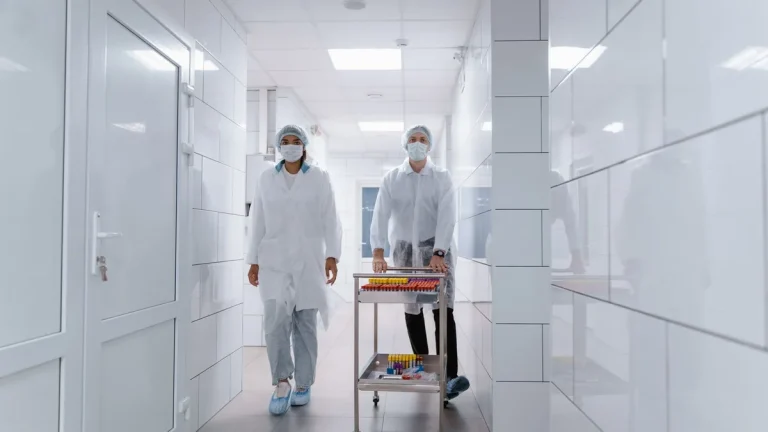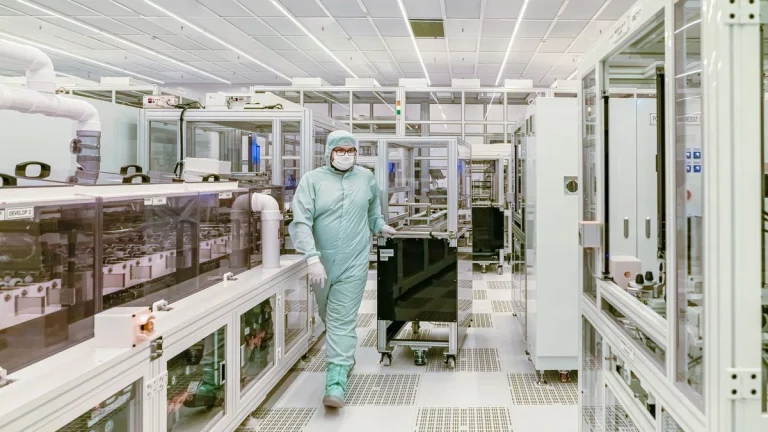
High-precision controlled environments across biopharmaceutical manufacturing, medical device packaging, and advanced semiconductor micro-fabrication rely on physical barrier integrity to prevent airborne particulate cross-contamination. Standard commercial architectural doors introduce horizontal ledges that accumulate settling particulate dust, friction-generating hinges that shed metallic particulates, and permeable gaskets that bleed differential room pressure. Effective clean room door selection requires balancing aerodynamic flushness, airtight pressure retention, chemical biocide resistance, and life safety egress codes.
Table of Contents
- Classifying Doorway Risks in ISO and cGMP Zones
- Door Layout: Swing vs Sliding vs High-Speed
- Stainless Steel 316L vs Solid Phenolic HPL
- How Gaskets and Drop Seals Retain Pressure
- Resisting Chemical Disinfectants and Cyclic VHP Cleaning
- Touchless Access Triggers and Airlock Interlocking Controls
- Cleanroom Door Selection and 10-Year TCO Comparison
- Select the Right Cleanroom Doors for Your Project
Based on our engineering team’s experience designing and manufacturing custom cGMP cleanroom door assemblies for Grade A aseptic filling suites, ISO Class 4 semiconductor lithography bays, and negative-pressure BSL-3 biocontainment laboratories, rigorous component evaluation prevents contamination breaches. We compiled this definitive engineering guide to examine the essential criteria, hardware mechanics, and total cost of ownership factors governing cleanroom door selection.
Classifying Doorway Risks in ISO and cGMP Zones
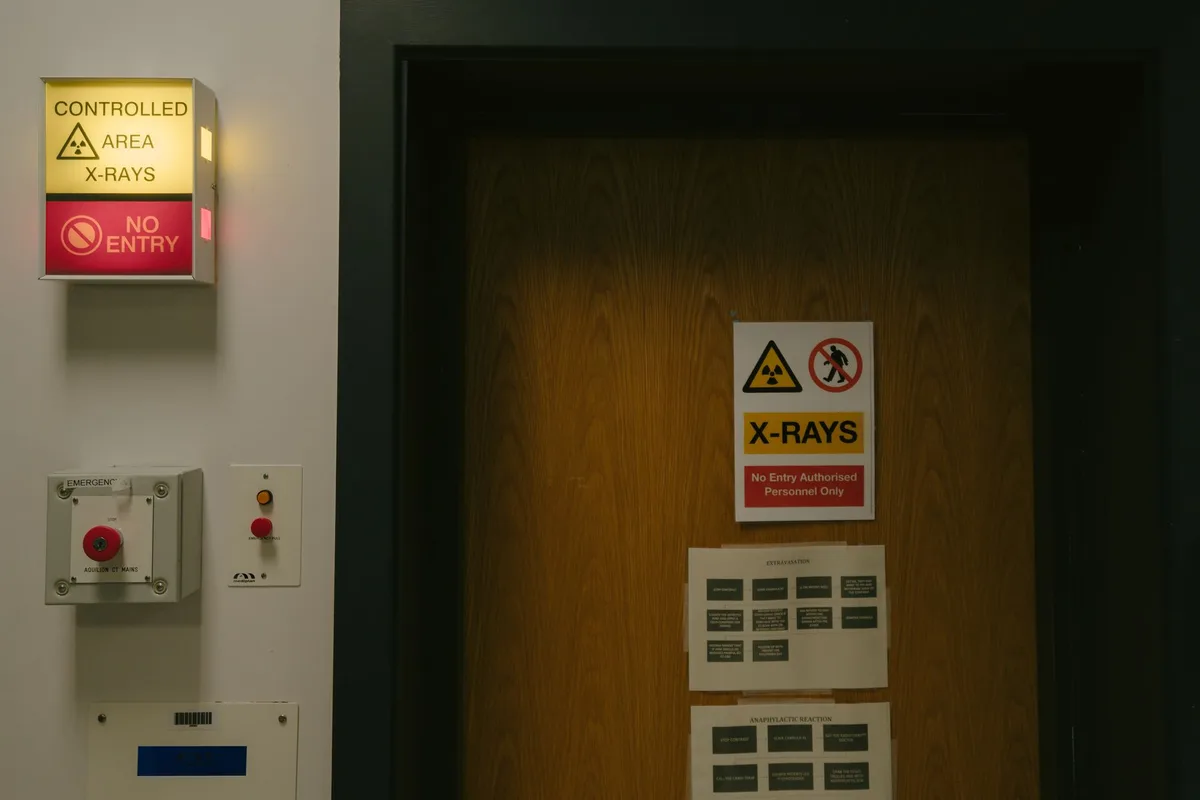
Doorway openings represent the primary vulnerability in cleanroom boundary containment. Understanding how air currents behave during doorway transit guides proper mechanical door specification.
“According to the ISPE Good Practice Guide for Controlled Environments, transient airflow turbulence during door transit causes up to 70% of room-to-room particulate migration if differential pressure recovery is not maintained within 15 seconds.”
Turbulent Air Flow Dynamics and Door Transit Particle Migration
Under ISO 14644-3 cleanroom test methods, doorway boundary containment is physically verified using localized smoke visualization airflow studies. High-speed recording cameras capture airflow velocity across the door opening, verifying that laminar airflow recovery occurs within 10 to 15 seconds after door closure.
- Smoke Test Protocol: Non-contaminating glycol fog injected at 1.0 m/s doorway air currents.
- Recovery Time Limit: Particulate baseline recovery under 15 seconds across ISO Class 5 suites.
- Differential Retention: Zero reverse air backdrafting into clean core zones.
When a conventional door swings open, the movement displaces air volume, generating localized low-pressure vortexes along the trailing edge. These turbulent eddies draw unclassified corridor air into the cleanroom envelope. Selecting smooth, coplanar door profiles with rapid soft-closing automation minimizes turbulent air displacement.
ISO 14644-1 Particulate Limits Across Cleanliness Classes
Door specifications must align directly with the maximum permissible airborne particulate concentrations defined by ISO 14644-1:
- ISO Class 4 to Class 5: Requires continuous flush welded 316L stainless steel surfaces, zero horizontal ledges, and non-outgassing silicone perimeter gaskets.
- ISO Class 6 to Class 7: Accommodates solid phenolic High-Pressure Laminate (HPL) or PVDF-coated aluminum profiles with concealed drop-down bottom seals.
- ISO Class 8: Permits modular aluminum-framed cleanroom doors with durable EPDM compression seals and mechanical interlocks.

Door Layout: Swing vs Sliding vs High-Speed
The interior core and external cladding determine the door leaf’s structural flatness, impact resistance, and fire separation rating.
Engineering Core Tip: For high-humidity sterile suites, specify non-combustible aluminum honeycomb cores. Aluminum honeycomb delivers superior shear stiffness and zero moisture absorption, preventing internal bacterial colonization.
Aluminum Honeycomb vs. High-Density Rockwool vs. Polyurethane Cores
Cleanroom door cores provide structural rigidity without adding excess weight that stresses hinge pivots:
- Aluminum Honeycomb: Ultra-lightweight hexagonal matrix delivering high flatwise compressive strength (>2.5 MPa) and zero organic outgassing.
- High-Density Mineral Rockwool: Class A1 non-combustible insulation providing certified 30 to 120 minutes of fire resistance (EN 1634-1 / UL 10C).
- Closed-Cell Polyurethane Foam: High-density injected PU foam delivering exceptional thermal insulation and acoustic dampening (Rw > 35 dB).
316L Stainless Steel Cladding for High-Sterility Pharmaceutical Suites
In high-seismic risk regions, cleanroom sub-frames must incorporate IBC (International Building Code) Category D through F seismic bracing. Heavy-gauge galvanized steel frame backing plates absorb lateral structural deflections without binding door leaves or jamming electronic drop-down seals.
AISI 316L stainless steel door leaves feature 1.2 mm to 1.5 mm thick face sheets with a sanitary #4 satin finish (Ra < 0.6 µm). The inclusion of 2.5% molybdenum prevents pitting and crevice corrosion under daily exposure to aggressive sporicidal sanitizers.
Solid Phenolic High-Pressure Laminate (HPL) for Heavy Impact Resistance
Solid HPL door skins (3 mm to 4 mm thick) are thermoset under intense heat and pressure, creating an ultra-dense, homogeneous surface. HPL resists severe cart, bed, and vessel collisions in hospital operating rooms and cleanroom staging corridors without denting or peeling.
Stainless Steel 316L vs Solid Phenolic HPL
Maintaining positive static pressure differentials between 10 Pa and 50 Pa requires continuous airtight perimeter sealing around all four sides of the door leaf.
Differential Pressure Alert: Installing static brush seals or porous foam gaskets allows pressurized clean air to bleed continuously, forcing HVAC blowers to run at full capacity and increasing cleanroom energy consumption by over 25%.
Multi-Blade Silicone and Non-Outgassing EPDM Gasket Engineering
The volumetric leakage rate through doorway perimeters is governed by the orifice flow formula: Q = C_d * A * sqrt(2 * ΔP / ρ). High-performance silicone multi-blade seals reduce the effective orifice leakage area (A) to near zero, maintaining 50 Pa static pressure while reducing make-up air HVAC energy consumption.
Door jambs incorporate CNC-machined gasket channels housing multi-fin extruded silicone or EPDM profiles. Silicone gaskets maintain elasticity across operating temperatures from -30°C to +80°C and produce zero volatile organic compounds (VOCs) that could contaminate optical or semiconductor processes.
Concealed Drop-Down Bottom Door Seals and Threshold-Free Transit
To eliminate raised floor sills that obstruct material transfer carts, cleanroom doors feature heavy-duty concealed drop-down bottom seals:
- Plunger Actuation: As the door reaches the final 10 mm of closure, an adjustable hinge-side actuator strikes the frame strike plate.
- Scissor Downward Drive: The internal mechanical scissor mechanism drives the silicone bottom seal downward with uniform force.
- Surface Compression: The multi-blade silicone gasket compresses 5 mm against the epoxy floor, sealing gaps up to 15 mm against 50 Pa static air pressure.
- Instant Opening Retraction: As the door opens, heavy internal return springs retract the seal 12 mm upward, preventing floor dragging and premature wear.
How Gaskets and Drop Seals Retain Pressure
Mechanical operating hardware in cleanrooms must operate without generating metallic friction dust or creating bioburden-trapping crevices.
3D Adjustable Concealed Stainless Steel Hinges Eliminating Friction Dust
Cleanroom sub-frames feature modular aluminum clip profiles engineered for rapid dry-installation into 50 mm, 75 mm, and 100 mm wall partition systems. Extruded frame members incorporate hidden internal wiring channels, facilitating concealed conduit runs for magnetic locks, position sensors, and touchless wave switches.
- Integrated Wiring Conduits: Internal wire raceways protecting low-voltage interlock cabling from physical damage.
- Telescopic Frame Adjustment: Compensates for slight structural wall thickness variances without exterior joint gaps.
- Double-Sealed Transitions: Continuous silicone caulking beads applied along frame-to-panel joints ensure zero air leakage.
Traditional knuckle hinges generate metallic abrasion dust as the door leaf pivots. Cleanroom doors utilize concealed 316 stainless steel hinges with integrated self-lubricating polymer bushings. These hinges allow 3-axis spatial adjustment (height, depth, and lateral alignment within ±2.5 mm) while remaining completely hidden when the door is closed.
Concealed Overhead Cam-Action Closers and Flush Hardware
Overhead door closers are fully recessed into the top frame channel or door leaf. Cam-action slide channels deliver rapid opening resistance relief and smooth, controlled latching force, ensuring the door closes completely against perimeter gasket resistance.
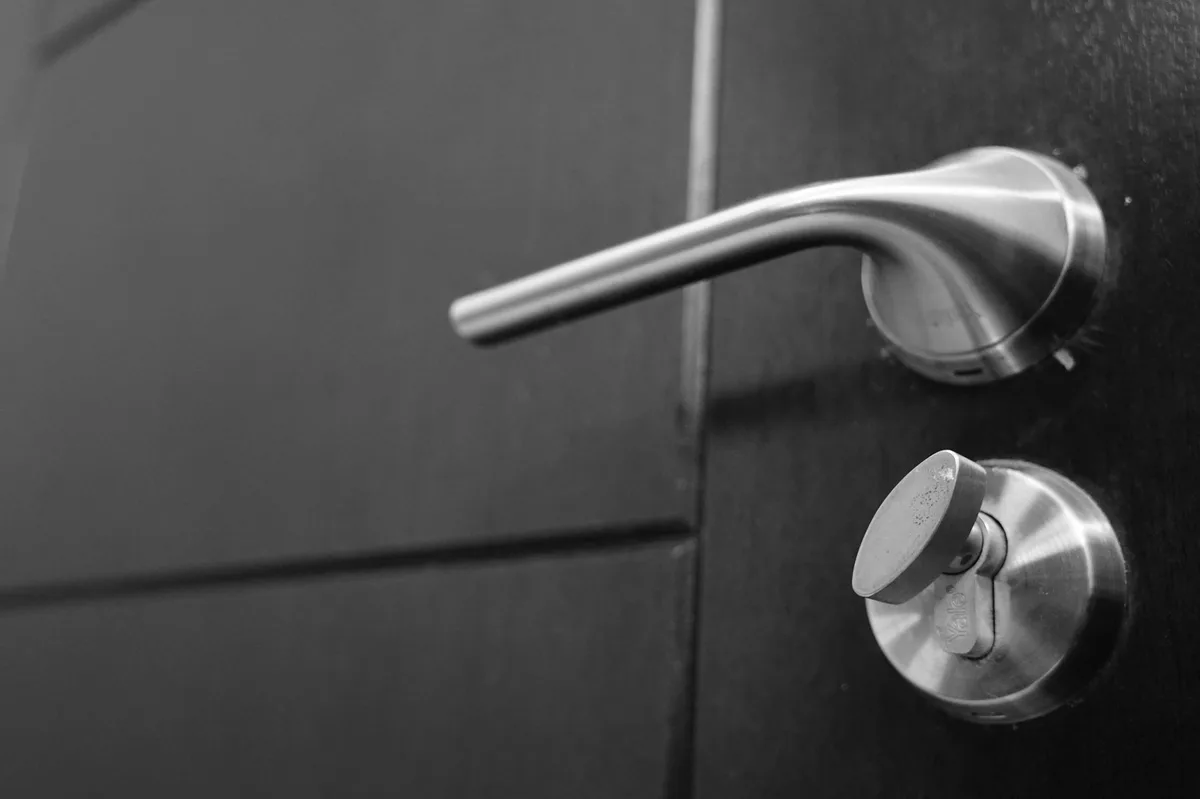
- Flush Pull Handles: CNC-recessed stainless steel flush handles eliminate projecting levers.
- Magnetic Roller Latches: Silent magnetic latching mechanisms eliminate mechanical latch bolt friction.
- Integrated Desiccant Sight Glass: Double-glazed flush vision panels with silica molecular sieves preventing internal condensation.
Resisting Chemical Disinfectants and Cyclic VHP Cleaning
In personnel airlocks (PAL) and material airlocks (MAL), electronic door interlocking prevents simultaneous opening between clean zones of different classifications.
Life Safety Mandate: All electronic airlock interlocks must incorporate fail-safe emergency breakout buttons wired into the facility fire alarm panel to drop magnetic lock power immediately during emergency evacuations.
Electromagnetic Shear Locks and Cascading Airlock PLC Automation
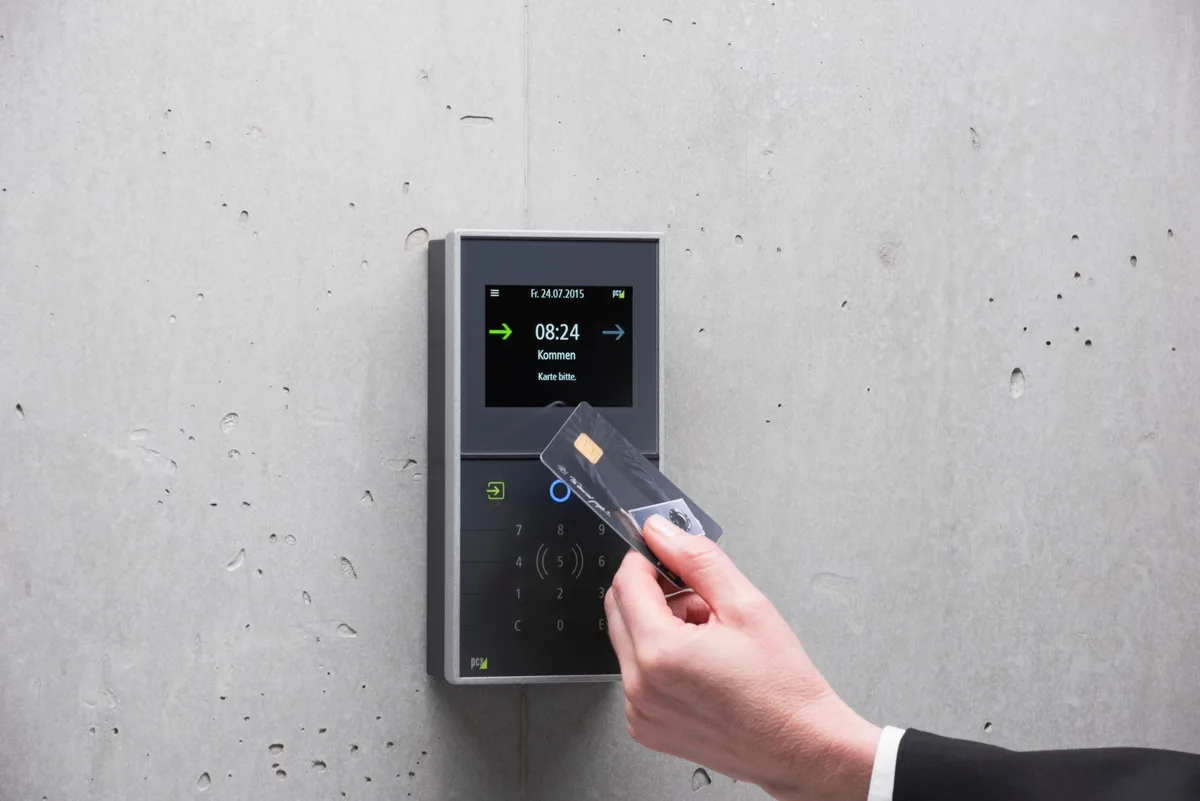
Integrated 24V DC electromagnetic shear locks (holding force >300 kg) secure airlock doors without external strike projections. The cleanroom programmable logic controller (PLC) enforces cascading access protocols:
- Step 1 (Door Unlock): Operator activates Door A via touchless optical sensor. Door B instantly energizes its electromagnetic lock.
- Step 2 (Airlock Dwell & Purge): Operator enters the airlock and closes Door A. An automated timer executes a 20-second HEPA air shower scrub.
- Step 3 (Door Release): Upon cycle completion, Door B status shifts from red to green, allowing access into the higher-grade clean zone.
Touchless Infrared Proximity Sensors and Life Safety Emergency Breakout
Optical wave activation sensors utilize modulated infrared beams with adjustable proximity thresholds between 50 mm and 400 mm. The sensor’s microprocessor filters out ambient fluorescent light flicker and reflection interference from stainless steel walls, ensuring reliable touchless triggering without false actuations.
- Detection Range: Adjustable from 50 mm to 400 mm for gloved hands or elbow gestures.
- Ingress Protection: IP65 sealed front face resisting high-pressure washdown and biocide sprays.
- Output Contacts: Form C dry relay contacts compatible with all commercial building automation PLCs.
Touchless infrared wave sensors allow gloved personnel to command door opening from 100 mm away without touching physical handles. Flush emergency override mushroom buttons adjacent to each doorway provide instant physical power disconnection.
Touchless Access Triggers and Airlock Interlocking Controls
Cleanroom door materials must endure aggressive daily biocide wipe-downs and cyclic gaseous decontamination without surface degradation.
Vaporized Hydrogen Peroxide (VHP) and Sporicidal Biocide Resistance
Automated bio-decontamination cycles expose door surfaces to VHP concentrations exceeding 1,200 ppm. High-grade 316L stainless steel and solid phenolic HPL withstand repeated VHP exposure without surface blistering, pitting, or color fading.
Electrochemical Passivation and Smooth Surface Ra Specifications
Prior to project shipment, all cleanroom door leaves undergo 100% factory dimensional coordinate measuring machine (CMM) inspection and positive-pressure decay sealing tests. Units are sealed in antistatic polyethylene barrier bags and packed into heat-treated ISPM-15 export wooden crates to preserve precision mechanical tolerances during international logistics transit.
Stainless steel door panels undergo ASTM A967 chemical passivation, removing free surface iron and forming a continuous chromium oxide passivation layer. Sanitary surface roughness is maintained at Ra < 0.6 µm, eliminating microscopic surface pits where bacterial spores can anchor.
- 70% Isopropyl Alcohol (IPA): Daily routine wipe-down sanitization.
- Sodium Hypochlorite & Peracetic Acid: Heavy weekly sporicidal cleaning.
- Chlorine Dioxide Gas: Cyclic whole-room gaseous sterilization.
Cleanroom Door Selection and 10-Year TCO Comparison
Evaluating long-term total cost of ownership (TCO)—including initial procurement, maintenance frequency, and air balancing energy costs—guides optimal door specification.
| Evaluation Dimension | Stainless Steel 316L Cleanroom Door | Solid Phenolic HPL Cleanroom Door | Standard Commercial Metal Door |
|---|---|---|---|
| Initial Capital Cost (CAPEX) | High (Premium Pharmaceutical Grade) | Moderate (High-Durability Standard) | Low (Non-Cleanroom Standard) |
| Surface Hygiene & Cleanability | Superior (Ra < 0.6 µm / Seamless Welds) | Excellent (Non-porous Phenolic Resin) | Poor (Exposed Fasteners & Ledges) |
| VHP & Sporicide Resistance | Maximum (Zero blistering under 1,200 ppm) | High (Resists standard biocide wipe-down) | Fails (Blisters and delaminates within 6 mos) |
| Mechanical Impact Resistance | High (1.5 mm rigid face sheets) | Maximum (Elastic solid resin core) | Moderate (Prone to denting and chipping) |
| Air Permeability (EN 12426) | Class 4 (<0.5 m³/h·m² at 50 Pa) | Class 4 (<0.5 m³/h·m² at 50 Pa) | Class 1 – 2 (High air leakage) |
| Expected Service Lifespan | 25+ Years | 20+ Years | 3 – 5 Years (Frequent cleanroom failure) |
| 10-Year Lifecycle TCO | Lowest (Minimal maintenance & HVAC savings) | Low (Durable corridor performance) | Highest (Frequent replacements & energy loss) |
Frequently Asked Questions About Clean Room Door Selection
What are the critical factors in clean room door selection?
The primary factors include ISO cleanliness classification mapping, flush coplanar surface integration, airtight perimeter sealing, chemical biocide resistance, electronic airlock interlock logic, and fire egress compliance.
How does core selection affect cleanroom door performance?
Aluminum honeycomb cores provide lightweight structural flatness and zero outgassing, mineral rockwool cores deliver certified fire resistance up to 120 minutes, and rigid PU foam provides thermal and acoustic insulation.
Why are concealed hinges essential in cleanroom doors?
Concealed hinges eliminate exposed pivot knuckles that generate metallic friction dust, allowing continuous 3-axis alignment while presenting a completely smooth, wipeable frame profile.
Can cleanroom doors maintain negative pressure in BSL-3 labs?
Yes. High-containment cleanroom doors utilize continuous multi-blade silicone gaskets or pneumatic inflatable seals to achieve zero-leakage hermetic isolation in negative pressure biocontainment suites.
How do drop-down bottom seals eliminate floor thresholds?
Concealed drop-down seals utilize an internal mechanical scissor plunger that automatically drives a silicone blade downward when the door closes and retracts it upward upon opening, allowing smooth wheeled cart transit.
Select the Right Cleanroom Doors for Your Project
Proper clean room door selection protects critical environmental pressure cascades, eliminates airborne particulate accumulation, and ensures regulatory compliance during cGMP and ISO audits. Specifying coplanar flush frames, durable 316L or solid HPL materials, and automated drop-down seals delivers decades of dependable sterile operation.
Our engineering division designs and manufactures custom cleanroom door assemblies engineered to pharmaceutical, biotechnology, and semiconductor specifications. Explore our cleanroom door systems or contact our technical specialists today to request architectural drawings, pressure test certificates, and project proposals.