A residential overhead garage door represents the heaviest mechanical system in modern homes. Weighing up to 200 kilograms, a functional door relies on interconnected components working in harmony. Understanding essential garage door parts & accessories is vital for maintaining smooth operation and preventing hardware failures.
This technical guide breaks down essential garage door parts & accessories across load ratings and maintenance schedules. Based on factory manufacturing standards across 24V DC belt operators, precision components deliver quiet operation below 45 dB. They ensure reliable performance across 25,000 continuous duty cycles.
Anatomy of a Garage Door: The Three Main Systems
When evaluating essential garage door parts & accessories, an automated sectional door functions through the coordination of three specialized engineering subsystems:
The Counterbalance Lifting Subsystem
The counterbalance assembly offsets the dead weight of the door curtain through mechanical energy stored in tightly wound steel springs. This system allows a heavy 150-kilogram door to feel practically weightless, requiring less than 5 kilograms of physical force to lift manually.
The Tracking and Articulation Subsystem
The tracking system guides the sectional panels as they travel vertically up the portal frame and transition horizontally along the ceiling. Heavy-duty galvanized hinges and precision-bearing rollers allow individual panels to articulate smoothly through curved track radiuses.
The Electromechanical Automation Subsystem
The automation system consists of the 24V DC electric powerhead, drive rail, wireless control electronics, and UL 325 safety reversal sensors. It automates portal cycling while protecting pedestrians, pets, and vehicles from entrapment hazards.

Essential Garage Door Hardware Specification Matrix
Review this comprehensive technical breakdown detailing primary garage door components, construction materials, expected lifespan ratings, and routine maintenance requirements:
| Component Name | Subsystem Role | Standard Manufacturing Material | Expected Cycle Lifespan | Maintenance & Inspection Schedule |
|---|---|---|---|---|
| Torsion Springs | Counterbalance Lifting | Oil-Tempered High-Carbon Spring Steel | 10,000 to 25,000 cycles (7-12 yrs) | Annual silicone spray lubrication |
| Lifting Aircraft Cables | Tensile Force Transfer | 7×19 Stranded Galvanized Steel Wire | 15,000 to 20,000 cycles | Semi-annual visual inspection for fraying |
| Guide Tracks (Vertical/Horizontal) | Panel Path Guidance | Hot-Dipped Galvanized Steel (2-inch) | 20+ years (Lifetime of door) | Wipe clean; keep track free of grease |
| Nylon Roller Wheels | Frictionless Movement | 13-Ball Bearing Sealed Nylon Tire | 15,000 to 20,000 cycles | Semi-annual bearing lubrication |
| Sectional Panel Hinges | Inter-Panel Articulation | 14-Gauge Heavy Galvanized Steel | 15,000 to 25,000 cycles | Semi-annual pivot point lubrication |
| 24V DC Belt Opener | Automated Powerhead | Brushless DC Motor + Steel Belt | 15 to 20 years | Check belt sag (6-8mm) & travel limits |
| Infrared Safety Photo-Eyes | UL 325 Obstacle Reversal | Hermetically Sealed Optical Transceiver | 10 to 15 years | Monthly 38mm wood block reversal test |
How Springs and Cables Do the Heavy Lifting
The counterbalance system performs the heavy lifting during every opening and closing cycle:
Torsion Springs vs Extension Springs
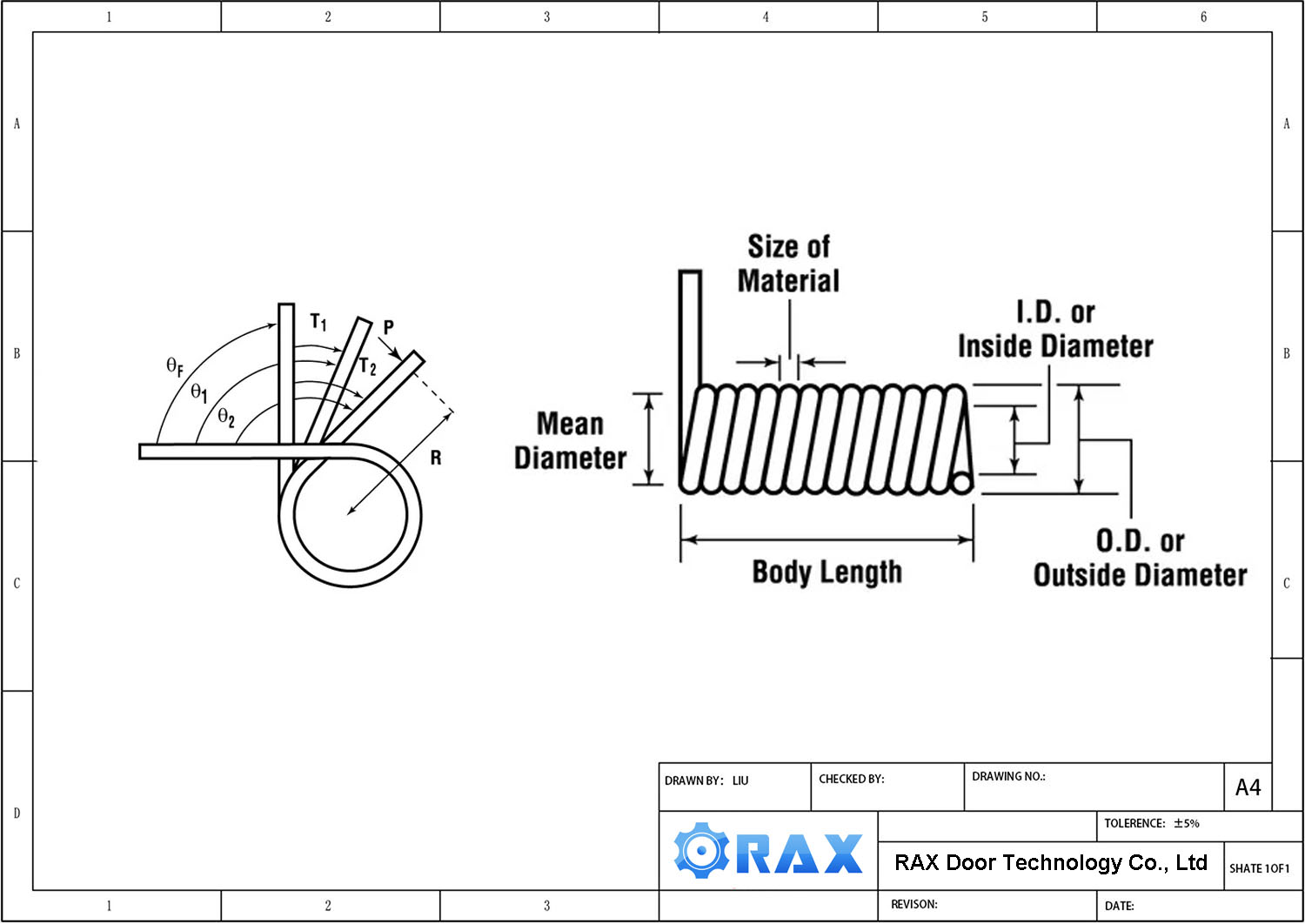
Modern residential doors utilize torsion springs mounted horizontally on a solid steel shaft directly above the door opening. When the door closes, the springs wind tightly, storing mechanical energy. As the door opens, the stored torsional energy unwinds, pulling the lifting cables smoothly.
High-cycle torsion springs are manufactured from oil-tempered carbon steel wire and engineered to ASTM standards. To determine appropriate spring wire diameters and cycle ratings based on door dead weight, consult our technical guide on aluminum rolling shutter weight.
High-Tensile Cables and Aluminum Drums
Lifting cables connect the bottom corner brackets to grooved cast aluminum cable drums mounted at each end of the torsion shaft. As the shaft rotates, the 7×19 stranded aircraft cable wraps neatly into machined drum grooves, ensuring balanced vertical lifting on both sides.
We manufacture heavy-duty 2-inch tracks, 14-gauge galvanized hinges, ASTM torsion springs, and whisper-quiet 24V DC belt operators. Direct factory export with certified hardware.
Tracks, Rollers, and Hinges for Smooth Travel
The tracking and articulation assembly ensures smooth, quiet panel travel across continuous duty cycles:
Galvanized Steel Tracks and Brackets
Residential systems utilize 2-inch wide roll-formed galvanized steel tracks. Vertical tracks mount securely to wall framing via heavy steel jamb brackets, maintaining strict 3mm vertical plumb tolerances. Horizontal tracks suspend from ceiling joists using diagonal angle-iron bracing, supporting door weight when open.
Sealed-Bearing Nylon Rollers
While basic doors use noisy unshielded steel rollers, premium systems specify 13-ball bearing nylon rollers. The durable nylon tire glides smoothly inside the steel track channel, reducing operating noise below 45 dB while sealed bearing races prevent dirt infiltration.
Graduated Gauge Hinges
End hinges feature graduated offset numbers (#1 through #5) that position rollers progressively further away from the panel face. This engineered angle ensures panels press tightly against exterior perimeter weatherstripping when closed, providing an airtight seal against wind and driving rain.
Smart Openers and UL 325 Safety Reverse Sensors
Electric operators provide automated entrance access while integrating multi-layered safety mechanisms:
Whisper-Quiet 24V DC Belt Powerheads
Modern residential operators utilize 24V DC brushless motors paired with steel-reinforced polyurethane drive belts. DC motors provide electronic soft-start and soft-stop ramping, eliminating mechanical jerking and reducing ceiling joist vibration transmission into living areas.
Active Infrared Reversal Sensors
Under UL 325 safety standards, all automated garage doors must feature active infrared photo-eye sensors mounted no higher than 150mm above the finished garage floor. If an object breaks the invisible optical beam while the door is closing, the motor logic board instantly reverses travel to full open within 500 milliseconds.
Weather Seals and Wind-Load Reinforcing Struts
Exterior environmental sealing and wind-load reinforcement protect garage interiors from severe climate exposure:
EPDM Bottom Astragal and Jamb Seals
The bottom panel features an extruded aluminum retainer channel fitted with a flexible EPDM rubber T-vinyl astragal seal. This bulbous weatherstrip conforms to uneven concrete slabs, blocking rainwater, windblown dust, and rodent infiltration.
Horizontal Wind-Load Reinforcing Struts
On wide double-car openings (16×7 and 18×7 feet), manufacturers install horizontal steel U-bar struts across panel interiors. These reinforcing struts prevent panels from sagging when resting horizontally along ceiling tracks and provide wind-load structural resistance against severe storm pressure.
Five Essential Steps for Preventative Hardware Maintenance
Perform this 5-point mechanical audit semi-annually to keep essential garage door parts & accessories operating at peak efficiency:
- Conduct Door Balance Test: Disconnect the electric opener by pulling the red emergency release cord. Lift the door manually to waist height (approx 1 meter). The door should float effortlessly without falling or snapping open.
- Inspect Cables for Fraying: Visually examine aircraft lifting cables near the bottom corner brackets. If broken wire strands or fraying are visible, replace both cables immediately.
- Lubricate Moving Metal Hardware: Apply specialized non-silicone garage door lubricant to steel rollers, hinge pivot pins, and torsion spring coils. Avoid applying grease to track channels.
- Test UL 325 Auto-Reversal: Place a 38mm solid wood block flat on the floor in the door path. Close the door via push button. Upon touching the block, the door must reverse instantly.
- Verify Structural Fastener Tightness: Use a socket wrench to tighten loose lag screws on vertical track brackets and operator ceiling drop hangers.
Always partner with an ISO 9001 certified manufacturer to guarantee certified hardware tolerances, precision spring engineering, and reliable export packaging. For installation procedures, read our garage door opener installation guide. To verify portal rough opening dimensions, review our guide on how to measure a garage door opening. To choose the right operator horsepower, consult our manual on how to choose a garage door opener.
Need assistance sizing replacement torsion springs, high-lift tracking assemblies, or 24V DC operators? Our engineering team provides complimentary hardware compatibility audits, spring calculation sheets, and OEM replacement sourcing.
Frequently Asked Questions About Garage Door Parts
What are the most critical garage door parts?
The most critical parts are counterbalance torsion springs, lifting cables, tracking rails, nylon rollers, and electric opener safety photo-eyes.
How often should garage door parts be lubricated?
Lubricate moving metal parts (hinge pivots, roller bearings, and spring coils) semi-annually using specialized non-greasy garage door lubricant spray.
Can I replace broken garage door torsion springs myself?
No. Torsion springs store extreme mechanical tension. Attempting DIY spring replacement without professional winding bars can cause catastrophic injury.
What is the difference between nylon and steel garage door rollers?
Nylon rollers with sealed ball bearings operate significantly quieter (below 45 dB) and require less maintenance than standard unshielded steel rollers.
How do I know if my garage door lifting cables need replacement?
Inspect cables for frayed wire strands, rust corrosion, or slack winding on cable drums. Replace frayed cables immediately to prevent sudden door collapse.