
How Cleanroom Door Access Control Works In GMP Facilities
Cleanroom door access control pairs credential readers with electromagnetic locking and the pressure-cascade interlock logic that decides when a leaf may actually open. The reader answers who; the interlock answers when. A system that treats these as separate purchases usually fails at the airlock, not at the server.
- How Cleanroom Door Access Control Works In GMP Facilities
- Choosing RFID Credentials By Security Level
- Where Facial Recognition Beats Fingerprint Scanners
- Wiring Readers Into Interlock And PLC Logic
- Electromagnetic Shear Locks And Holding Force Tradeoffs
- Designing Fail Safe Release And Fire Egress
- Audit Trails That Survive GMP Inspections
- Matching Access Combinations To Cleanroom Zones
- Frequently Asked Questions
Choosing RFID Credentials By Security Level
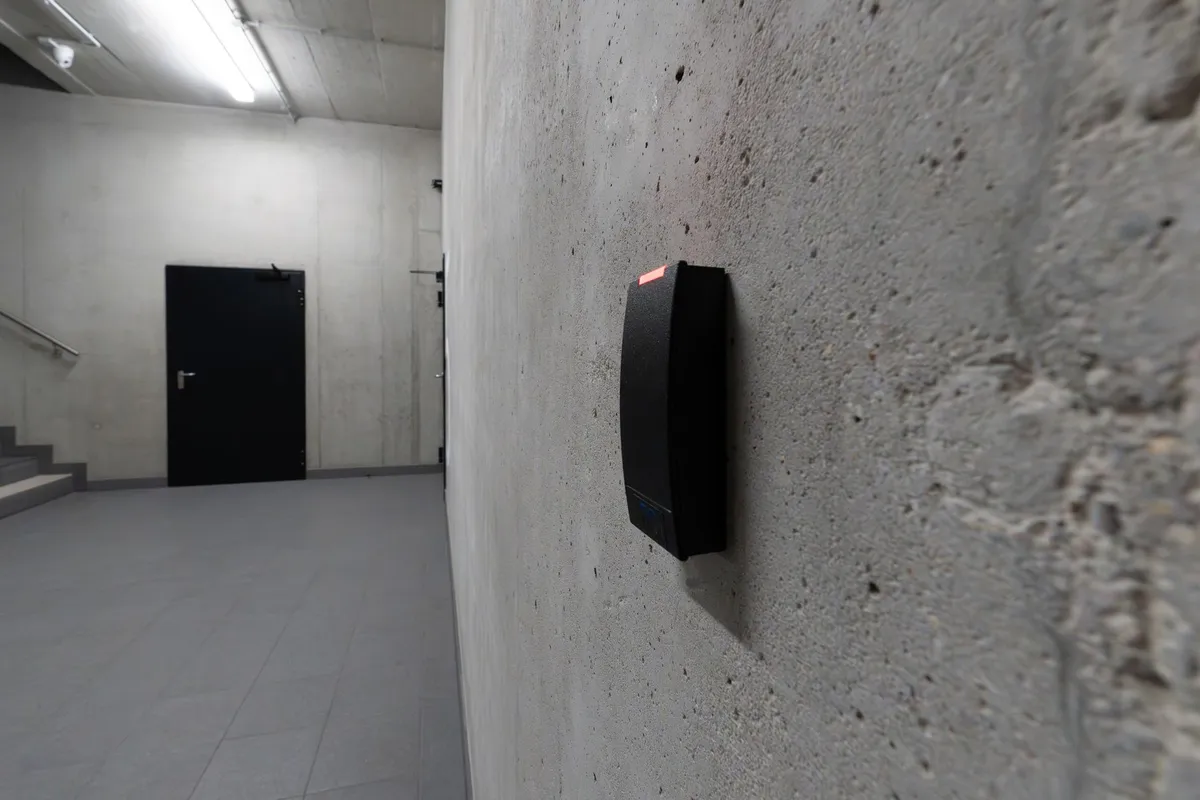
Radio Frequency Identification (RFID) is the default credential layer for cleanroom door access control because the reader never has to be touched with gloved hands. The operator presents a badge within the read field, and the door request travels to the controller. That said, RFID families differ sharply in how easily a card can be cloned.
Low Frequency (LF) 125 kHz transponders predate modern encryption and offer almost none. MIFARE Classic cards at 13.56 MHz improved convenience, yet published attacks have demonstrated cloned cards from these chips. MIFARE DESFire EV3 credentials answer that weakness with AES mutual authentication, so the card and the reader verify each other before any door logic runs.
For any classified zone under ISO 14644-1, treat DESFire-grade credentials as the sensible minimum and reserve legacy LF cards for non-critical stores. Cloning resistance matters more than read range inside a suite, because a copied badge defeats every downstream interlock.
| Credential Technology | Frequency | Clone Resistance | Best Fit |
|---|---|---|---|
| LF transponder | 125 kHz | None in practice | Consumables stores, ISO 8 staging |
| MIFARE Classic | 13.56 MHz | Weak, documented cloning attacks | Legacy sites pending migration |
| MIFARE DESFire EV3 | 13.56 MHz | AES mutual authentication | Gowning entry, ISO 5 to 7 suites |
| UHF tag | 860 to 960 MHz | Vendor dependent | Hands-free cart and pallet airlocks |
| BLE wearable | 2.4 GHz | Key rotation varies by vendor | Repeated door cycles per shift |
One more specification point: calibrate the antenna field so a badge in the adjacent corridor cannot trigger the wrong leaf. Long read range is a convenience at a pallet airlock and a liability at a gowning bench.
Where Facial Recognition Beats Fingerprint Scanners
A plastic card proves that a badge is valid, not that the person holding it is the badge owner. That gap is why biometrics earn their place at aseptic boundary doors. The choice of biometric, however, is narrower than most access control brochures suggest.
Fingerprint scanning, the most common biometric in general industry, fails twice inside a suite. Thick nitrile gloves distort the ridge detail a sensor needs, so enrollment is unreliable. Worse, operators would touch a shared glass surface immediately before gowning, which contradicts the entire hygiene model.
Facial recognition fits gowning areas because the camera never needs contact and works with a full hood, mask, and goggles. Enroll each operator while gowned so the stored template matches real working conditions. Require liveness detection as well, so a photograph held at the camera cannot pass as a face.
- The operator stops inside the camera frame outside the airlock.
- The infrared imager captures the face pattern and sends an encrypted template to the server.
- The server compares the template and returns a grant, which becomes a request to the door controller.
- The interlock logic, not the reader, has the final word on the release.
Iris recognition remains an option where security density must rise further, since some systems read the iris pattern through protective glasses. In practice, budget and enrollment time push most pharmaceutical projects toward face-first designs with card fallback.
Wiring Readers Into Interlock And PLC Logic
A reader in a cleanroom should never command a lock directly. The correct architecture routes every credential event to a Programmable Logic Controller (PLC), the same industrial computer that runs the airlock sequence. The reader issues a request, and the PLC answers with permission only when room conditions allow it.
The controller checks leaf position, occupancy of the airlock, and the differential pressure cascade between adjacent spaces. Regulators expect that cascade to be quantified: the FDA guidance on sterile drug products produced by aseptic processing recommends at least 10 to 15 Pa of positive differential between adjacent rooms of different classification, with pressure monitored and recorded throughout each shift rather than spot-checked. In a well-specified sequential interlock, a valid badge unlocks the first leaf, the leaf must close and trip its position sensor, and the controller then waits for the airlock pressure to recover toward its setpoint, commonly on the order of 10 Pa or more, before releasing the second leaf. If the differential drifts, the delay extends or an alarm fires instead.
A valid badge can still be refused during that recovery window, and that refusal is exactly what an auditor wants to see. It proves the security layer and the containment layer are one system rather than two.
This request-and-permit handshake is the same principle behind dedicated cleanroom door interlock systems, which our guide covers in depth. Keep the permission chain hardwired or on a protected industrial network rather than on the office IT LAN. When the reader and the PLC share one logic owner, no software shortcut can release a leaf that the pressure cascade cannot afford to open.
BMS Integration And Controller Hardware Selection
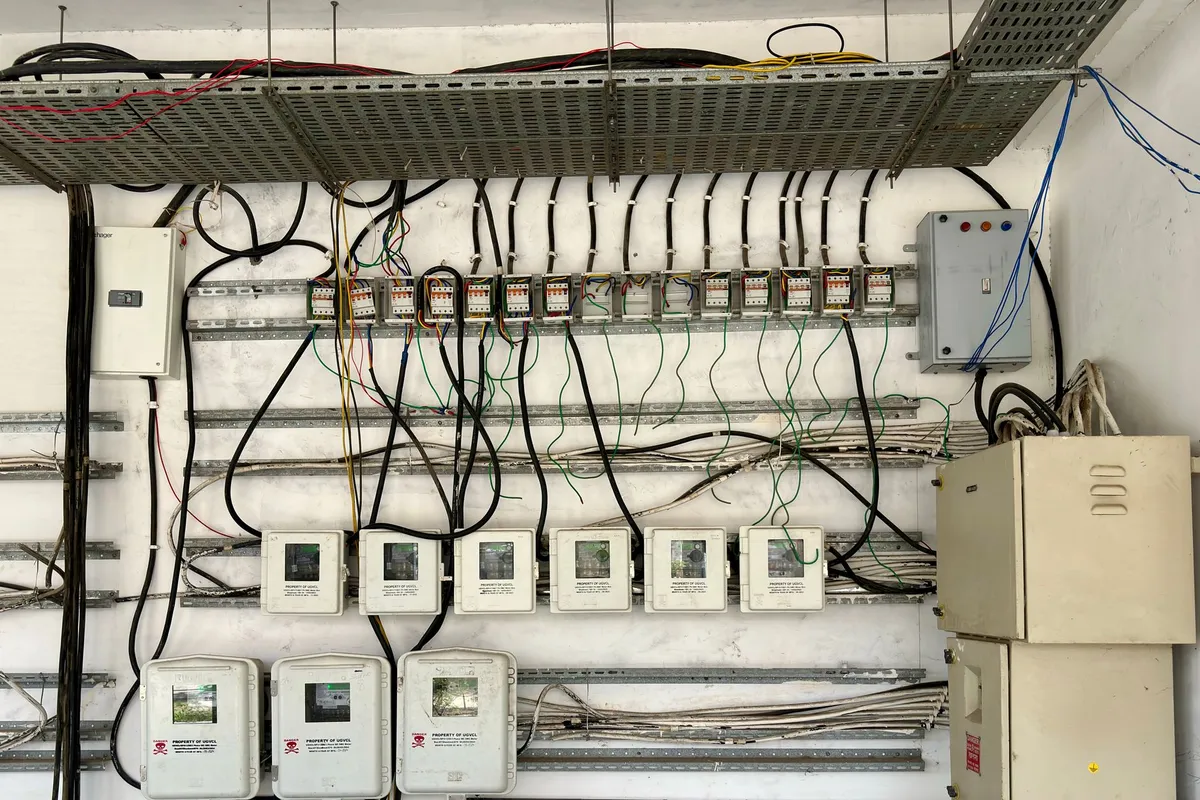
Door controllers that run as isolated devices create blind spots. Connecting them to the building management system (BMS) lets the facility read door status, cycle counts, fault codes, and interlock state through one interface. That data feeds preventive maintenance: a leaf approaching its rated cycle count gets serviced before it fails in a validated room, and an interlock fault surfaces on the same alarm screen as the HVAC fault that may have caused it.
Integration is usually a two-level affair. At the field level, readers talk to controllers over RS-485, Wiegand, or TCP/IP runs, with 12 to 24 VDC supplies typical. At the supervisory level, a gateway translates controller data into BACnet IP or Modbus TCP so the BMS can subscribe without touching the safety logic. The permission chain stays inside the PLC; the BMS observes and warns but never releases a leaf.
Hardware selection follows the room, not the catalogue. Specify controllers and readers with IP65-sealed housings and 304 or 316L stainless faceplates wherever disinfectant fogging or washdown reaches the door line, and size the event buffer for a realistic survey window, with units holding tens of thousands of events offline being common so a network outage never silences the log. Every surface that a gowned operator might touch or splatter should survive the same cleaning rotation as the doorset itself.
Electromagnetic Shear Locks And Holding Force Tradeoffs
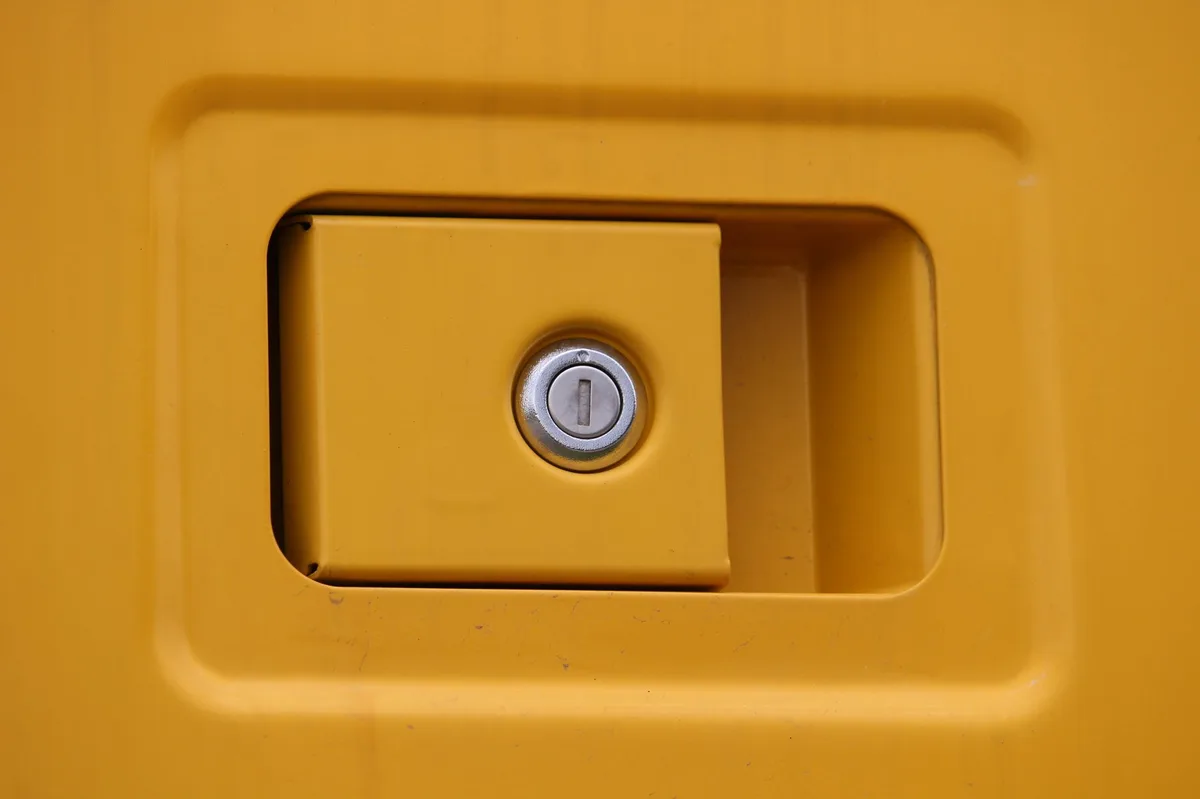
Two electromagnetic lock families dominate hygienic doorsets, and they behave quite differently in a washdown environment. A surface electromagnetic (mag) lock holds an armature plate by direct magnetic attraction and releases the instant coil power is cut. A shear lock instead pulls its armature into a vertical pocket, so the holding force transfers through the metal rather than through surface contact alone.
Holding force for either family is typically rated in the hundreds of kilograms, which is ample for a sealed cleanroom leaf. It is not, however, a substitute for the structural doorset or the wall panel it closes against. Specify 316L stainless faces and IP65-sealed housings wherever vaporized hydrogen peroxide (VHP) or sporicidal agents are in the cleaning rotation. Lock pockets and armature edges must stay crevice-free, or disinfectant residue will accumulate exactly where swabs are taken; our cleaning validation article walks through that compatibility work.
| Property | Electromagnetic Mag Lock | Electromagnetic Shear Lock |
|---|---|---|
| Holding principle | Direct surface attraction | Vertical shear engagement |
| Typical holding force | Hundreds of kilograms, varies by model | Similar ratings from a slimmer coil |
| Door leaf fit | Needs clearance for the armature face | Suits flush 304 and 316L leaves |
| Washdown exposure | Exposed armature plate | Recessed and easier to seal |
| Power cut behavior | Fail safe release | Fail safe release |
Whatever the family, the magnet must never become the only barrier between an operator and an aseptic suite. The interlock logic described above stays in charge of timing, and the lock only executes the decision.
Designing Fail Safe Release And Fire Egress
Any electromagnetic lock is fail safe by physics: cut the power and it releases. That behavior is a life-safety feature at every occupied door, because nobody may be trapped behind a locked leaf during an evacuation. It is also a containment risk, so the design has to respect both directions at once.
Feed the interlock and lock circuits from a UPS (uninterruptible power supply) or the facility generator, so a brief outage does not dump every airlock open at the same moment. Provide a break-glass emergency release on each egress side that cuts lock power and overrides the interlock instantly. Fire strategy comes first: occupants must be able to reach the exit route without presenting any credential, in line with the escape provisions the fire code applies to the building.
Where a boundary door must stay secured while still allowing escape, use a fail-secure electric strike on the outside and a free-exit mechanism inside. Every emergency release should reset automatically, re-arm the interlock, and write an event to the audit log. An egress feature that quietly stays bypassed is a finding waiting for the next inspection.
Audit Trails That Survive GMP Inspections
In a pharmaceutical facility, a door event is batch documentation. Regulators expect the access system to produce tamper-evident, time-stamped records of who entered which zone and when. The EU GMP rules for computerised systems in EudraLex Volume 4 set that expectation for European sites, and FDA-regulated sites answer to the equivalent electronic-records discipline of 21 CFR Part 11: controlled system access, secure audit trails, and records that cannot be edited without detection.
Three log fields do most of the compliance work.
- The authenticated identity, resolved from the credential or the biometric template, never from a shared badge drawer.
- The exact door and the direction of travel, so entry and exit events reconcile against room occupancy.
- The decision itself, including refused requests, together with the reason the interlock refused it.
Rejected attempts deserve equal attention to grants. A cluster of failed requests at one reader often signals a copied card, a stuck relay, or simply an untrained operator. Each of those has a different fix, and none of it is visible if the reader logs nothing but success.
Synchronize every controller clock to a single network time source with second-level accuracy, because a log that disagrees with the batch record by minutes invites questions. Retain the logs for at least as long as the batch documentation they support, which in most pharmaceutical quality systems means several years, under the same data-integrity discipline: restricted administrator rights, formal change control, and exportable formats an inspector can read.
Managing Visitor Contractor And Training Gate Access
Permanent badges solve the everyday case and nothing else. Auditors, service technicians, and validation engineers pass through cleanroom boundaries a few days per year, and issuing them long-lived credentials is a quiet security leak. Time-boxed mobile passes or single-use QR codes that expire on schedule, restricted to named doors, and logged under an escort rule keep the visitor route auditable without a badge drawer at reception.
The same controller can enforce qualification, not just identity. Link the access database to the training record so a credential stops working when gowning training, gown qualification, or a medical surveillance interval lapses; the door refuses politely and the log explains why. Some suites extend the logic to the garments themselves, where a tagged gown past its laundering or sterilization limit blocks entry, and to occupancy caps, where a zone that reaches its authorized headcount admits nobody new until someone exits. These gates turn the access system from a lock into an active part of the contamination control strategy.
Matching Access Combinations To Cleanroom Zones
No single credential suits every zone, so specify by combination: credential factor, lock family, and interlock behavior decided together. The doorsets these assemblies mount to are covered on our clean-room doors page, including 304 and 316L leaf platforms built for flush hardware.
- Best for aseptic filling and ISO 5 suites: facial recognition at the gowning entry with DESFire EV3 fallback and shear locks on interlocked airlock leaves. Not for high-frequency material routes, where repeated biometric stops stall the transfer flow.
- Best for ISO 7 buffer and support zones: DESFire cards with fail-safe electromagnetic locks under PLC interlock control, BMS-visible status, and training-linked credentials. Not for exterior perimeter doors, where a power cut would release the site boundary.
- Best for ISO 8 gowning and packaging areas: single-factor RFID with fast-release mag locks and anti-passback enabled. Not for highly potent product suites, where a shared or stolen card is a realistic risk.
- Best for pallet and equipment airlocks: UHF hands-free tags that read a moving cart without dismounting. Not for personnel doors, where a long read field invites tailgating.
Wherever a route mixes people and trolleys, split the doors rather than compromise one specification. A personnel airlock with biometrics beside a UHF equipment airlock costs less than retrofitting the wrong hardware later.
Frequently Asked Questions
Can fingerprint readers be used in cleanroom gowning areas?
Rarely. Thick nitrile gloves distort the ridge detail sensors rely on, and a touched glass surface conflicts with hygiene practice. Most suites specify contactless facial recognition at the gowning boundary instead.
What happens to electromagnetic locks during a power failure?
Standard electromagnetic hardware is fail safe, so a power cut releases the lock and keeps the escape route open. Feeding the circuit from a UPS or generator keeps interlocked airlocks from releasing all at once. That trade-off is deliberate and must match your containment strategy.
Which RFID cards resist cloning best?
MIFARE DESFire EV3 credentials with AES mutual authentication are the sensible minimum for GMP zones. MIFARE Classic and 125 kHz LF transponders have documented cloning weaknesses. Reserve those for non-critical stores while you phase them out.
Can the access system log both entry and exit?
Yes. Readers on both faces of the leaf enforce bidirectional authentication and let you reconcile occupancy against batch documentation. Free egress for emergencies stays independent of that logging.
How do you stop tailgating through an interlocked airlock?
Combine one-person airlock logic with overhead occupancy sensing that counts bodies in the doorway volume. An alarm fires when a door cycle registers more people than authorizations. Signage and visual discipline alone are not a control.
Should cleanroom door access control connect to the BMS?
Yes, at supervisory level only. A gateway over BACnet IP or Modbus TCP lets the BMS read door status, cycle counts, faults, and interlock state for preventive maintenance, while the release logic stays inside the PLC where the BMS cannot override it.
How long should cleanroom access logs be kept?
Keep them at least as long as the batch documentation they support, which in most pharmaceutical quality systems means several years. Store them under the same data-integrity rules: restricted admin rights, change control, and readable export formats.
RAX Door Technology builds cleanroom doorsets and the access hardware around them at our source factory in Renqiu, Hebei, serving projects in more than 70 countries since 1999. We supply custom 304 and 316L leaves with PLC interlock control, electromagnetic and shear lock integration, and export-grade packing. Send our engineering team your room schedule and pressure cascade for a quotation, drawings, or a submitral package.