Healthcare surgical suites, infectious disease isolation wards, and biological containment laboratories demand uncompromising environmental boundary control. Airborne bacteria, surgical smoke, and hazardous viral pathogens pose severe clinical contamination risks.
When evaluating airtight doors in healthcare and laboratories, hospital architects and facility engineers must ensure strict EN 12207 Class 4 hermetic sealing, diagnostic radiation attenuation, and hands-free hygiene. Drawing from our factory manufacturing standards across hospital hermetic sliding doors, lead-lined radiation barriers, and BSL-3 biocontainment systems, this engineering guide provides a technical overview. We examine differential pressure containment, crevice-free metallurgy, and life-safety compliance.
Healthcare & Laboratory Airtight Doors: Specification Matrix
Before reviewing clinical contamination standards, examine this comprehensive matrix comparing healthcare and laboratory airtight door configurations:
| Clinical Door System | Sealing Mechanism & Pressure Rating | Material Construction & Hygiene Feature | Typical Installed Cost Range |
|---|---|---|---|
| Operating Theatre Hermetic Sliding Door | Track drops 15mm down/inward, EN 12207 Class 4 (<0.5 m³/m²·h) | Antimicrobial HPL or 304 stainless steel, flush double glazing | $3,200 – $6,500 per surgical suite opening |
| X-Ray & CT Scan Radiation Shielded Door | 1.0mm to 4.0mm pure lead (Pb) sheet lining + hermetic drop track | Continuous 20mm lead frame overlap, blocks scatter X-rays | $4,800 – $9,500 per diagnostic suite |
| BSL-3 / BSL-4 Pneumatic Inflatable Bio-Door | 4-sided inflatable silicone gasket, 1000 Pa gas-tight containment | Seamless 316L stainless steel, VHP fumigation resistant | $8,500 – $18,000+ per custom biocontainment portal |
| Airborne Infection Isolation Room (AIIR) Door | 3-side magnetic EPDM gasket + automatic drop bottom sweep | Maintains -15 to -30 Pa negative pressure for TB / COVID wards | $2,400 – $4,500 per isolation room set |
| Pharmacy Compounding cGMP Cleanroom Door | Flush double swing assembly with aluminum honeycomb core | Flush mortise hinges, easy-wipe antimicrobial surface | $1,800 – $3,600 per sterile compounding door |
| Dual-Door Interlocked Personnel Airlock | PLC electronic interlocking controller with magnetic locks | LED status indicators, hands-free touchless wave sensors | $5,800 – $11,500 complete airlock system |
| ICU Critical Care Telescoping Glass Door | Low-friction sliding panels with positive latching perimeter seals | Clear tempered glass, emergency breakout egress for patient beds | $4,200 – $7,800 per ICU suite opening |
Infection Control and Pressure Cascade Standards in Healthcare
When analyzing airtight doors in healthcare and laboratories, pressure cascade dynamics dictate clinical safety:
Operating Theatre Positive Pressure Containment
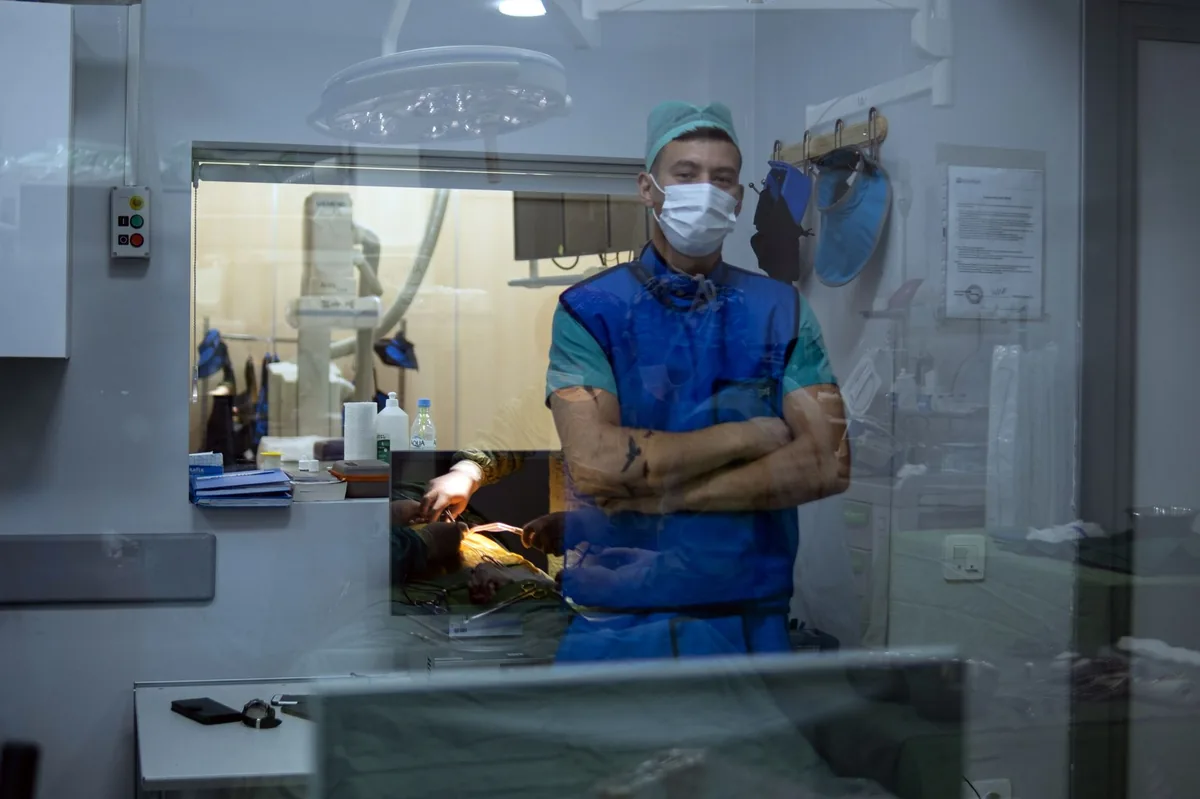
Surgical suites operate under continuous positive pressure (+25 to +40 Pa) relative to adjacent scrub rooms and corridors. This positive pressure ensures that clean HEPA-filtered air sweeps outward when doors open.
This airflow dynamic prevents airborne pathogens like MRSA and Aspergillus from entering the sterile surgical field. A leaky door frame collapses this pressure differential, compromising sterile patient outcomes.
Airborne Infection Isolation Negative Pressure
Infectious disease isolation rooms (AIIR) operate under negative pressure (-15 to -30 Pa) to treat patients with airborne illnesses such as Tuberculosis and viral pathogens. Negative pressure ensures all air flows inward into the room, where it is exhausted through dedicated HEPA filtration.
Operating Theatre Positive Pressure Hermetic Sliding Doors
Surgical operating suites require specialized hermetic door mechanics to maintain sterility:
The 45-Degree Drop-and-Slide Track Mechanism
Operating room doors utilize an overhead carriage track engineered with a 45-degree mechanical slope at the closing position. When the door reaches the fully closed point, carriage rollers drop the door leaf 15mm downward and 10mm inward toward the wall frame.
This dual motion compresses a continuous 4-sided non-porous EPDM or silicone rubber gasket firmly against the perimeter frame and finished floor slab. This design satisfies EN 12207 Class 4 airtightness (<0.5 m³/m²·h at 50 Pa).
Smooth Microprocessor Automation
Hospital doors utilize brushless 24V DC motors programmed for smooth acceleration and deceleration. This controlled movement minimizes air turbulence when opening, preventing air currents from disturbing sterile airflow curtains.
We manufacture custom hospital operating room hermetic doors, radiation-shielded lead-lined doors, and BSL-3/4 biocontainment systems. Direct factory export with certified EN 12207 and ISO 14644 compliance.
BSL-3 and BSL-4 High-Containment Inflatable Gasket Bio-Doors
High-consequence biological research laboratories demand absolute gas-tight containment:
Pneumatic Inflatable Silicone Seals
In BSL-3 and BSL-4 viral containment suites, doors utilize hollow elastomeric silicone gaskets. When the door latches, compressed air inflates the gasket to 2.5 bar, creating a hermetic seal capable of resisting pressure differentials exceeding 1,000 Pascals.
Vaporized Hydrogen Peroxide (VHP) Resistance
Containment facilities undergo periodic VHP bio-decontamination. Door skins constructed from marine-grade 316L stainless steel and fluorosilicone seals withstand aggressive sterilizing gases without corrosion or cracking.
X-Ray and Oncology Radiation Lead-Lined Shielding Standards
Medical imaging suites require integrated radiation shielding alongside airtight performance:
NCRP Report 147 Lead Shielding Thickness
In CT scan suites, X-ray rooms, and oncology linear accelerator vaults, doors incorporate continuous 1.0mm to 4.0mm pure lead (Pb) sheet cores. The lead sheet is bonded between high-density core materials to block harmful scatter radiation.
Eliminating Radiation Scatter Leaks
Radiation scatter can escape through minimal frame seams. Specialized medical doors feature a minimum 20mm lead-to-lead overlap between the door leaf, the structural subframe, and flush lead-glass vision panels.
For additional cleanroom barrier insights, explore our overview of clean room doors. To evaluate rolling door weights, consult our manual on aluminum rolling shutter weight. For door frame clearance rules, check our guide on how to measure a garage door opening.
Touchless Hands-Free Activation and Smart Airlock Interlocks
Eliminating physical touchpoints is critical for preventing cross-contamination in surgical suites:
Touchless Sensor Technologies
Surgical staff wearing sterile gloves must not touch physical door handles. Medical airtight doors utilize optical touchless wave sensors, foot-kick switches, and elbow push pads positioned outside the sterile threshold.
Programmable Airlock Interlocking
In personnel gowning airlocks, opening both entry and exit doors simultaneously breaches the cleanroom barrier. Smart PLC interlock controllers ensure Door B remains locked until Door A closes fully, with clear red and green LED status lights guiding staff.
Hygienic Materials: Antimicrobial HPL and Seamless 316L Steel
When selecting airtight doors in healthcare and laboratories, surface metallurgy determines clinical hygiene:
- Antimicrobial High-Pressure Laminate (HPL): Non-porous decorative facings containing silver-ion antimicrobial additives that kill 99.9% of surface bacteria within 24 hours.
- Seamless 304 and 316L Stainless Steel: Fully welded, satin-polished stainless steel face sheets that resist caustic chlorine wipe-downs and heavy hospital bed impacts.
- Flush Double-Glazed Vision Panels: Tempered safety glass integrated completely flush with both door faces to eliminate dust-collecting ledges.
- Budgeting Standards: While standard pharmacy cleanroom doors cost $1,800 to $3,600 per door set, surgical hermetic sliding doors range from $3,200 to $6,500, and BSL-4 inflatable seal gas-tight doors range from $8,500 to $18,000+ installed.
For essential hardware inspection guidelines, read our technical overview of essential garage door parts & accessories. For motor sizing guidelines, review our comparison of automatic vs manual garage doors.
Procurement and Compliance Guidelines for Hospital Engineering
When drafting healthcare architectural specifications, follow these clinical qualification guidelines:
Verify EN 12207 Class 4 Air Leakage Reports
Demand certified laboratory test reports confirming air leakage rates below 0.5 m³/m²·h under 50 Pa positive and negative pressure conditions across the entire door assembly.
Ensure NFPA 101 and ADA Accessibility Compliance
Confirm that all automatic operators feature emergency battery backups and instant magnetic lock release upon fire alarm activation to guarantee safe patient evacuation.
Always partner with an ISO 9001 certified manufacturer to guarantee certified metallurgical standards and dependable global export warranty coverage.
Need assistance calculating lead shielding thickness, sizing operating room hermetic tracks, or configuring airlock interlock wiring? Our engineering team provides complimentary CAD drawings, radiation calculations, and direct factory export pricing.
Frequently Asked Questions About Healthcare Airtight Doors
Why are airtight doors required in hospital operating theatres?
Airtight doors maintain positive pressure cascades (+25 Pa), preventing airborne bacteria from entering sterile surgical fields and causing infections.
How do hermetic sliding doors achieve an airtight seal?
Carriage tracks drop the door leaf 15mm downward and 10mm inward upon closing, compressing 4-sided EPDM gaskets firmly against frames and floors.
What lead thickness is required for X-ray room radiation doors?
Diagnostic X-ray and CT scan rooms typically require 1.0mm to 4.0mm pure lead sheet lining with a minimum 20mm lead-to-lead frame overlap.
How do BSL-3 and BSL-4 laboratories seal airtight doors?
High-containment laboratories use pneumatic inflatable silicone gaskets inflated with compressed air, holding gas-tight seals against 1,000 Pa pressure.
What hands-free activation options are available for hospital doors?
Surgeons utilize touchless optical wave sensors, foot-kick switches, and elbow push buttons to open doors without touching physical hardware.