When a forklift clips a high speed door, the damage is rarely limited to the curtain. The impact takes out the door, the frame, and the hinges in one hit, and the opening then stays blocked until a technician is scheduled. Full replacement of a damaged high speed door can run to $20,000 in the worst case, before counting the hours the route stood still.
That is the specific problem a self repairing zipper door exists to solve. The curtain releases from its side channels on impact instead of bending, and the next cycle zips it back in. That turns a mid-shift collision from an incident report into one wasted half-cycle, and the same full-height zipper edge pays five more dividends from sealing to service costs. Every RAX door is inspected before shipping, covering speed, noise, insulation resistance, and appearance, so the numbers below come from units we actually measure rather than brochure ranges.
Key Takeaways
- Impact recovery is the headline advantage: the curtain re-zips on the next cycle, so a forklift hit costs one wasted half-cycle, not a service call.
- The zipper edge seals the full opening height, holding temperature zones, dust, and exhaust where brush-sealed roll-ups leak at point contacts.
- Cycling at 0.8 to 2.5 m/s clears a 3-meter opening in 1.2 to 3.75 seconds, keeping forklift traffic moving.
- Hygiene audits get simpler: a smooth PVC curtain cleans down and traps nothing in brushes.
- The honest limits: higher upfront cost than a basic roll-up, no security role, and torn panels still need replacement.
Advantage 1: Near-Zero Downtime After Impact
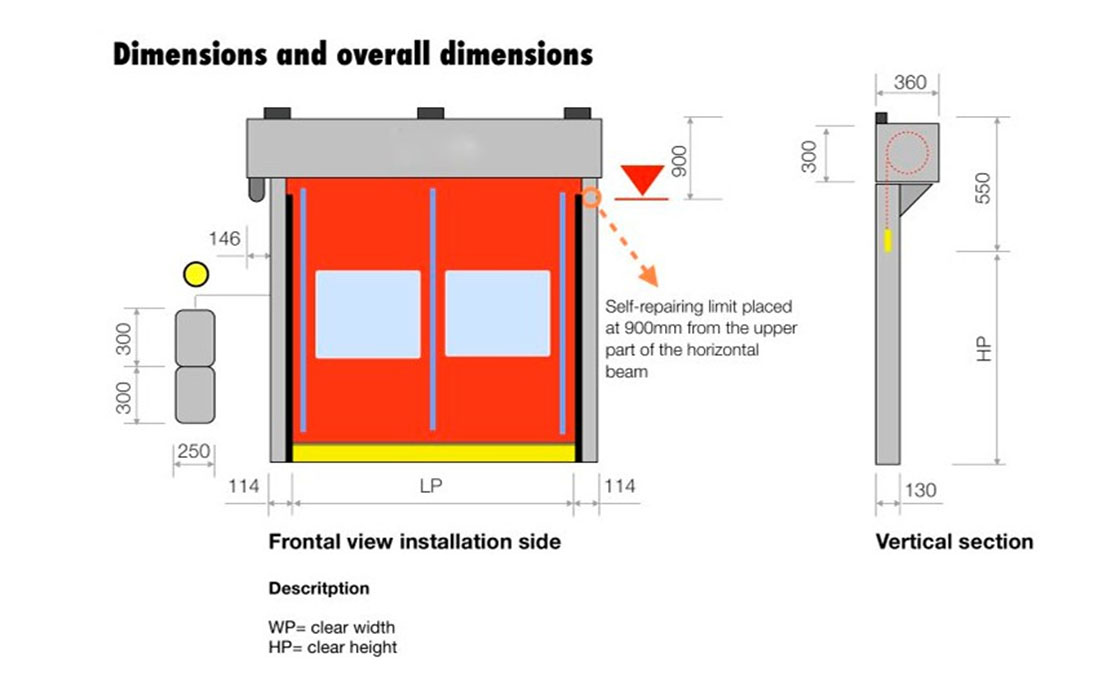
When a forklift or pallet load strikes the curtain, the zipper profile exits the side channel at the point of contact. The curtain swings clear, and the next open-close cycle feeds the profile back in. No sensors trip, no tools appear, and nobody on the floor makes a decision.
- Step 1. A moving load strikes the curtain anywhere between floor and header.
- Step 2. The profile exits the channel at the impact point and the curtain flexes clear.
- Step 3. The next cycle re-zips the edge, and the full-height seal is back.
Near-zero has an operational meaning, not a marketing one. There is no technician visit to schedule, no production hold while the opening sits blocked, and no temporary barrier procedure to write into the shift plan. A self repairing zipper door converts a mid-shift collision from an incident report into one wasted half-cycle.
The same event at a standard roll-up bends the guide, throws the curtain off its roll, or stalls the motor, and the opening then waits for a technician. UK Health and Safety Executive guidance on workplace transport safety documents how routine these encounters are around industrial doors. At openings that forklifts cross every few minutes, each avoided service call compounds all shift, every shift.
Verify this one before you buy. Ask the supplier for a live demonstration: strike the curtain at mid-height, run a full cycle, and watch the edge re-seat. A door that resets in front of you is a different decision from a datasheet claim. Mounting quality decides how the breakaway behaves, so pair the demo with the installation walkthrough for high speed PVC zipper doors.
Advantage 2: A Seal From Floor to Header
A standard roll-up seals with brush strips and a bottom seal, which are point contacts, and every point contact leaks. The zipper edge closes the same opening with one continuous engaged line from floor to header. That is the difference between an average seal and a boundary you can audit.
The reason point contacts lose is physics, not manufacturing quality. A pressure difference between the two sides drives flow through every gap it can find, and a brush-sealed edge is a row of gaps by design. One continuous engaged line gives the pressure difference nowhere obvious to work.
What the full-height line holds back depends on your facility: chilled air in a cold store anteroom, flour dust across a milling line, exhaust fumes at a dock face. The wearing parts are the profile and the channel, not brush bristles that lose contact height as they rub the curtain every cycle. The seal therefore holds its shape instead of aging into a gap. For deep-cold logistics, the cold chain integrity walkthrough applies this advantage to loading docks and airlocks in detail.
Curtain grade, vision panels, and material choices change how this advantage behaves in practice, and the trade-offs are covered in our PVC high speed door guide. Read it before specifying and you save a round of revisions later.
Advantage 3: 0.8 to 2.5 m/s Throughput
| Cycling speed | Clearance time, 3 m opening | Best-fit duty |
|---|---|---|
| 0.8 m/s | About 3.75 seconds | General interior traffic |
| 2.5 m/s | About 1.2 seconds | Airlocks, high-frequency aisles |
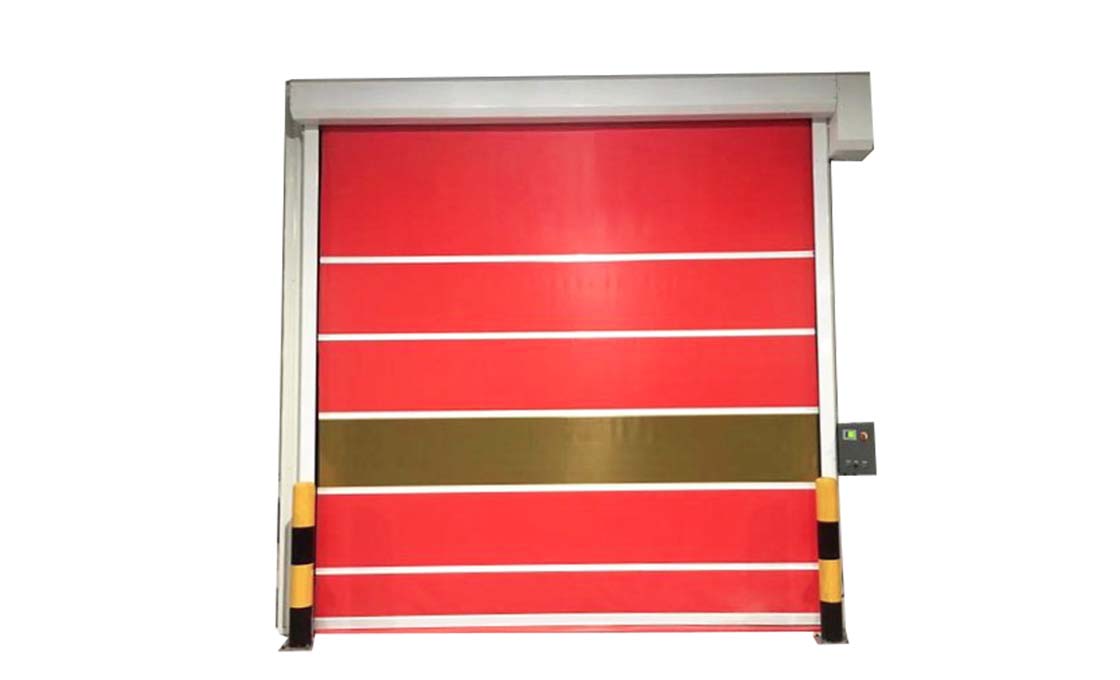
Speed turns into throughput arithmetic that facility managers can check. A door that saves a few seconds per pass, multiplied by hundreds of passes a shift, returns hours of forklift waiting per week. That is why fast doors pay on busy routes and not on quiet ones.
Speed also feeds the energy side of the ledger. Every cycle is a window where the two zones exchange air, and shortening that window per cycle cuts the exchange the HVAC system has to correct. Faster cycling thus compounds the sealing advantage above instead of competing with it.
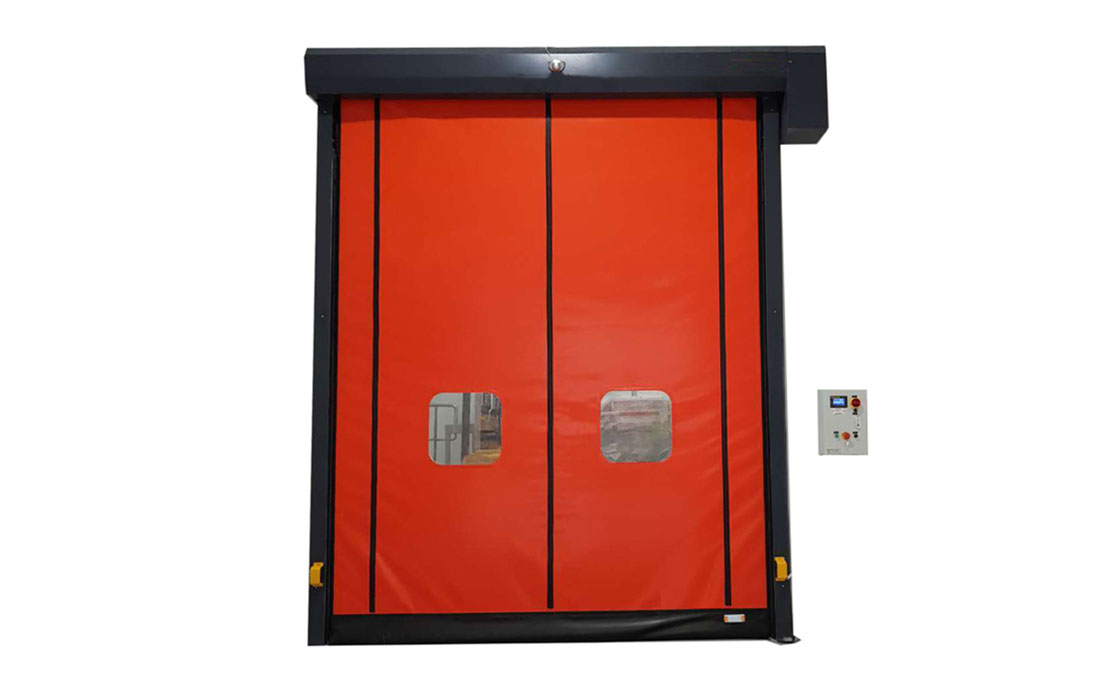
The top of the band suits cleanroom airlocks and picking aisles where the door is rarely fully closed. The bottom of the band still clears a typical interior opening before a forklift finishes its turn, at a gentler duty on the mechanism. Match the speed to the traffic count rather than buying the maximum number on the datasheet.
Advantage 4: Wind Load Spreads Across the Curtain
Because the edge stays engaged over the full curtain height, wind pressure enters the door as a distributed load instead of concentrating at a few fixings. That is why this design holds up on exposed dock faces and exterior walls where a plain curtain flaps or pulls out of its guides. The captive edge also stops gusts from lifting the curtain and opening a gap mid-height.
Exact wind ratings depend on curtain gauge, opening size, and channel reinforcement, so state your site wind load and require the rating in writing. A supplier quoting one universal wind number for every door size is guessing, and a written, size-specific rating belongs in the purchase documentation. On sheltered interior openings this advantage is idle, and paying for it there buys nothing.
Advantage 5: Hygiene Audits Get Simpler
The smooth PVC curtain washes down without trapping debris, because there are no brush strips to hold dust and no exposed rollers to collect residue. The full-height seal from Advantage 2 holds the boundary between hygiene zones during every closed minute. Auditors ask for consistent separation, and a door whose worst case still seals is easier to defend than a door whose average case does.
Cleaning time is part of the same gain. A smooth curtain face wipes down in one pass, with no crevices for residue to sit in and no brush strips to remove and wash. Shift cleaning routines get shorter, and the door stops being the item that slows the changeover.
This advantage is specific to food processing, pharmaceutical packing, and cleanroom-adjacent logistics. In a distribution warehouse it is worth little, which is the honest framing: the same door serves both sites, but only one of them is paying for this particular advantage. Where it applies, it removes a recurring audit argument rather than a recurring cost.
Advantage 6: Lifetime Service Spending Drops
Every impact that resets itself is a repair visit that never happens, and on multi-shift sites those avoided visits are the largest line in the door’s lifetime cost. Every maintenance budget tells the same story: nobody cares about the doors until one fails. The wearing parts concentrate in the profile and channel, which are designed replacements rather than structural repairs. Compare warranty structures when shortlisting. We cover the door for two years, operators and motors for three, and servo motors for five, with in-warranty parts dispatched within five to seven days.
The limit stays honest. A curtain torn beyond its design limit needs a panel replacement, not a reset, and impact recovery does not remove motor or electronics failures from the picture. The advantage is a lower frequency of service events, not the absence of them.
Budget for it the way you budget for tyres on a fleet. Ask shortlisted suppliers for a wear-part price list up front, covering profiles, channels, and panels, so the consumable cost of the zipper door is visible before the purchase order. Suppliers who cannot quote wear parts are telling you where the lifetime cost will land.
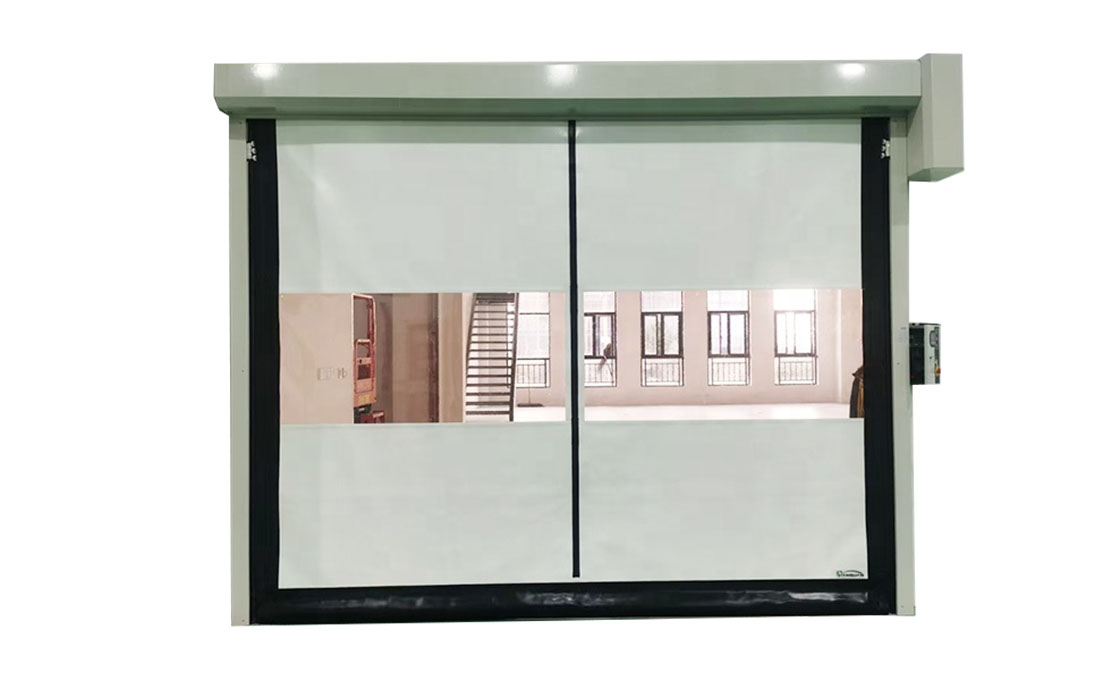
Trade-Offs and the Roll-Up Comparison
The advantages above cost more upfront than a basic roll-up, and at light-traffic openings that premium never pays back. Security is the second limit: a flexible PVC curtain stops air, dust, and water, not a determined intruder, so overnight security belongs to steel shutters used alone or in series. Choosing a zipper door is paying for the six advantages above, and nothing else. For openings where none of the six advantages apply, the types of high speed doors guide maps the alternatives.
| Decision point | Zipper design | Standard PVC roll-up |
|---|---|---|
| Impact recovery | Curtain resets itself on the next cycle | Manual re-seating or bent-guide repair |
| Seal construction | Full-height engagement, one line | Brush strips plus bottom seal, point contacts |
| Cycling speed | 0.8 to 2.5 m/s across the range | Same motor class, similar speeds |
| Best-fit traffic | Frequent forklift and pallet truck traffic | Light traffic, cost-first budgets |
| Service exposure | Low after minor collisions | Higher after any side impact |
Against other door families the comparison shifts again. The high speed door vs roller shutter comparison covers steel shutters, where security needs outweigh cycling speed.
Frequently Asked Questions From Specifiers
How does the door reset itself after an impact?
The zipper profile exits the side channel at the point of impact, and the next open-close cycle feeds it back in. Reset needs no tools and no service call.
Can the curtain survive repeated forklift hits?
Moderate impacts reset automatically on the next cycle. Damage beyond the design limit, such as a torn panel, needs a replacement curtain rather than a repair.
Is the zipper design better than a standard roll-up?
At openings with frequent collisions or strict sealing needs, yes. For light traffic on a tight budget, a standard roll-up is the economical choice.
What is the lead time for one custom door?
Sampling takes 7 to 15 days and a first order 20 to 35 days, shipped FOB Tianjin or Qingdao.
When the Advantages Pay Back
Advantages 1, 3, and 6 of a self repairing zipper door pay at any opening where something eventually hits the door or cycles it hundreds of times a shift. Advantages 2, 4, and 5 pay where the environment is the enemy: temperature zones, exposed walls, hygiene audits. Count your traffic, list which of the six apply, and the decision makes itself. Where none apply, a standard roll-up does the job for less, and saying so is part of the answer.