Three quotations for the same opening sit side by side, and each material line holds one word: steel, aluminum, stainless. No thickness, no alloy grade, no coating system. The price gap is real, and the reasons live in the slat itself.
This page compares roller shutter slat materials the way our factory specifies them: thickness band first, alloy second, corrosion environment third, money last. We roll slats from galvanized steel, 6063-T5 aluminum and SS304 or SS316 stainless. Material choice also has an ignition dimension: in zoned areas, slats and guides must not strike sparks. The zoning logic is covered in ATEX zones and explosion-proof industrial doors.
What a Slat Actually Does for the Door
A roller shutter is nothing but slats. Each slat carries wind pressure, resists impact, blocks weather and rolls around a drum thousands of times.
Three variables do the work. Thickness sets stiffness and dent resistance; our slats run from 0.4 mm light-gauge strip up to 1.5 mm heavy industrial gauge. Alloy grade sets intrinsic corrosion behavior. Core construction sets insulation, because a slat can be single-skin or formed around a PU foam core.
That one-word line deserves interrogation: one word covers a fourfold strength spread, and “stainless” covers two alloys for two environments.
Galvanized Steel Slats: Strength per Dollar
Galvanized steel is the default industrial answer. At equal thickness, suppliers across the industry agree it delivers the best structural strength and impact resistance of the three materials. A forklift glancing a steel curtain leaves a scuff; the same contact can fold a light aluminum profile.
Its weakness is that the zinc layer is the corrosion protection. Hot-dip galvanizing to ISO 1461, then electrostatic powder coating in any RAL color, gives years of service in ordinary industrial air. Cut edges, site damage and constant abrasion break that coating, and rust follows. Steel slats therefore carry a maintenance line item the other two materials mostly do not.
Aluminum Slats: The Corrosion-Proof Middleweight
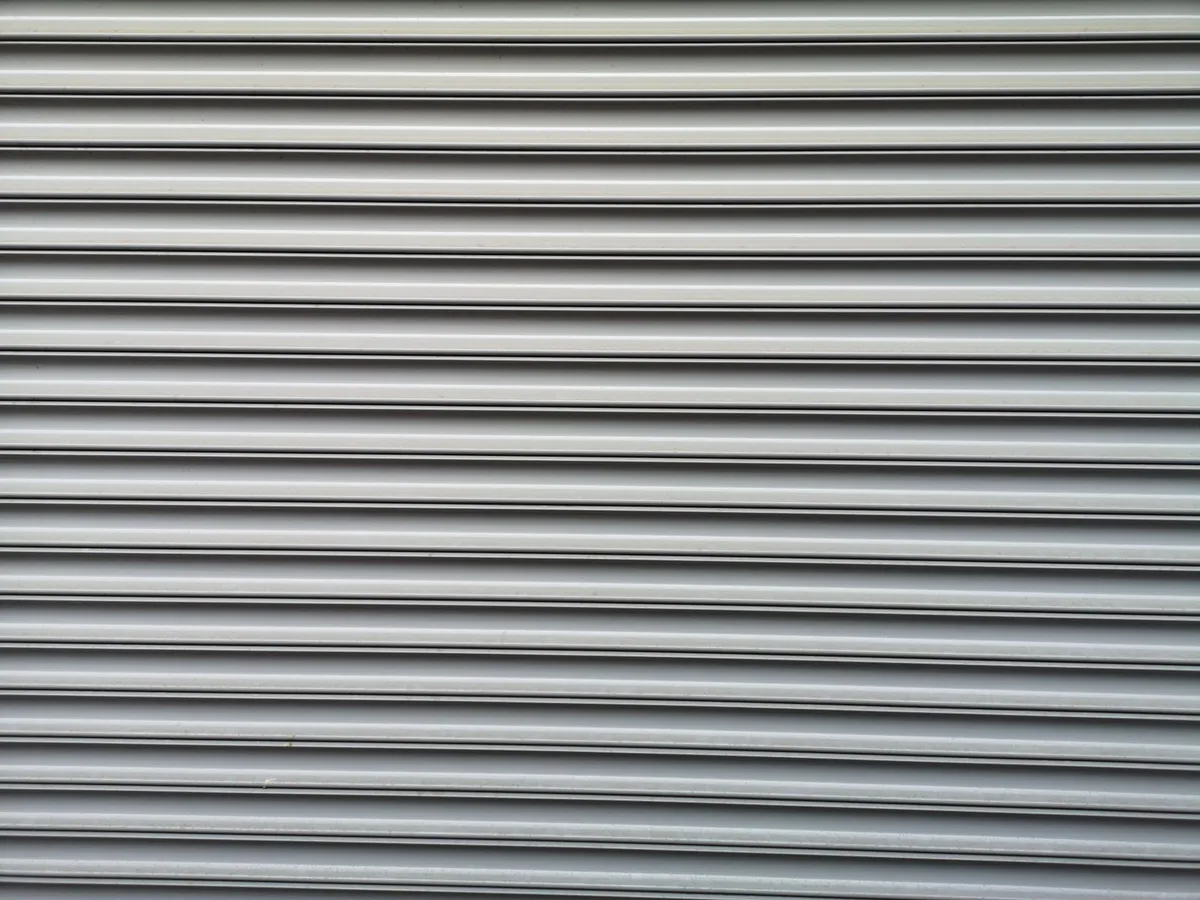
Aluminum slats, extruded from 6063-T5 alloy and usually anodized rather than painted, trade some stiffness for immunity to rust. The protection is the metal itself, not a coating, so scratches and cut edges do not start a failure. Suppliers consistently recommend aluminum for coastal sites and humid halls.
Weight is the second dividend: a lighter curtain loads the motor, springs and guide rails less, which is why aluminum shutters run quieter.
The trade is price and raw rigidity: aluminum costs more per kilogram and is the softer metal at equal thickness. Good slats compensate with deeper profiles and internal ribs, so grade and geometry belong on the quotation. Our aluminium roller door pros and cons walkthrough covers the door level; at slat level, the middleweight label fits.
Stainless Steel Slats: When Corrosion Is Mandatory
Stainless slats sit at the top of both axes: corrosion immunity and purchase price. The material is durable, wear-resistant and rust-free without any coating, and it takes the repeated washdown and chemical exposure that destroy coated steel within a few years.
The grade choice is the whole game. SS304 handles general food-plant humidity and washdown. SS316 adds molybdenum, which raises resistance to chloride attack, making it the grade for marine atmospheres and salt-heavy cleaning regimes. Quoting “stainless” without a grade invites paying 316 money for 304 performance, or the reverse.
Stainless is also the heaviest curtain of the three, so the motor, drum shaft and guide rails must be sized up accordingly.
Strength, Weight and Wind Load Compared
Roller shutter slat materials and thickness together set how wide an opening a shutter can span. Our roller shutters reach widths up to 12,000 mm, and at those spans the curtain is a structural element, not a sheet. Steel gets there with less thickness; aluminum gets there with deeper profiles and often a foamed core.
Weight drives the rest of the machine: a heavier curtain needs a bigger motor, stronger springs and heavier rails. Buyers comparing only slat price per square meter are pricing the cheapest component of a system whose cost is set by its heaviest choice.
Impact exposure works the same fork. Yards with trucks and reversing traffic favor the dent tolerance of steel. Clean corridors with light traffic can let corrosion resistance carry the decision.
Corrosion and Insulation Behavior Compared
On corrosion, the three materials sit on three steps. Galvanized steel is protected as long as its coating is intact, and inspecting that coating is part of its lifecycle cost. Aluminum is protected by its own oxide layer. Stainless additionally resists the chlorides and chemicals that defeat the other two.
Insulation runs on a separate axis: the core, not the face material, does the thermal work. A single-skin slat of any metal is a conductor with fins. A slat formed around a PU foam core breaks the thermal bridge, which is why foamed slats dominate temperature-controlled storage whatever the skin metal.
Inland dry warehouses run galvanized steel, coastal sites move to aluminum, and washdown areas move to stainless. Temperature-controlled buildings specify the foam core first and pick the skin second.
Cost Structure Beyond the Slat Price
We will not print prices, because shutter pricing moves with steel markets, dimensions and project volume. The structure of the cost, however, is stable, and it has four layers.
Layer one is the curtain: steel is cheapest, aluminum carries a premium, stainless sits well above both. Layer two is the drive train: heavier curtains push motor and spring specifications up, narrowing the real steel-versus-aluminum gap. Layer three is maintenance: steel may need coating repairs, the other two largely do not. Layer four is life: in a corrosive site, the cheapest first-cost curtain is often the most expensive to own.
Suppliers who price manual and electric stainless shutters in separate per-area bands are encoding this structure; compare layers, not totals.
Side-by-Side Comparison Table and Decision Rules
Here is the roller shutter slat materials comparison, using the six factors that decide real installations.
| Factor | Galvanized steel | Aluminum 6063-T5 | Stainless 304/316 |
|---|---|---|---|
| Strength at equal thickness | Highest of the three | Lower; deep profiles compensate | High, and hardest wearing |
| Weight | Heavy | Lightest | Heaviest |
| Corrosion resistance | Coating-dependent | Inherent, coastal-capable | Inherent; 316 handles chlorides |
| Insulation path | Via PU foam core | Via PU foam core | Rarely the driver |
| Relative cost | Lowest | Mid to high | Highest |
| Best-fit sites | Inland warehouses, security doors | Coastal, humid, wide openings | Food plants, washdown, marine |
Inland, dry and cost-driven: galvanized steel. Coastal, humid or weight-sensitive: aluminum. Washdown, chemical or marine-adjacent: stainless, grade matched to the chloride load. Temperature-controlled: choose the foam core first, then the skin by environment.
Which One Should You Choose for Your Facility
The roller shutter slat materials question should feel smaller than at the quotation stage. Our position, stated plainly: the environment and the duty choose the material. A logistics shed far from salt air wastes money on stainless, and a seafood plant that “saves” with galvanized steel buys its next curtain early.
Multi-door facilities do not need one answer. A common layout runs galvanized steel on the yard face, aluminum on the weather-exposed gables, and stainless only at the washdown line. Each curtain faces a different corrosion and impact reality.
One caution: the aluminum vs steel sectional door comparison is a different decision, hanging on whole panels and hardware. A roller shutter hangs on the slat curtain alone.
How Slat Choice Connects to the Full Door
The roller shutter slat material decision propagates through the whole machine. Curtain weight sets the motor and springs, stiffness sets the maximum width, and the corrosion environment sets the coating or grade.
When costing the aluminum route, our aluminium roller shutter cost guide shows where the premium lands. For curtain-level sourcing, the roller shutter slat page lists the slats we roll in all three materials. We have manufactured industrial doors since 1999, ship to more than 70 countries, build from one door with no minimum order, and work to CE EN 13241 conformity.
Frequently Asked Questions About Shutter Slat Materials
What is the strongest roller shutter slat material?
At equal thickness, galvanized steel. It offers the best structural strength and impact resistance of the three, which is why high-security and yard-facing shutters default to it.
Are aluminum slats weaker than steel slats?
At the same thickness, yes. Extruded 6063-T5 profiles with deeper ribs and foam cores close much of the gap, and in low-impact locations the weight and corrosion gains outweigh it.
Which slat material is best for coastal areas?
Aluminum 6063-T5 or SS316 stainless. Aluminum suits general coastal exposure; SS316, with its molybdenum content, is preferred where salt spray or chloride cleaning is severe.
Do slat materials affect insulation?
Less than the core does. Single-skin slats of any metal conduct heat; slats formed around a PU foam core provide the actual insulation for temperature-controlled openings.
Is stainless steel worth the extra cost for shutters?
Only where corrosion is mandatory. In washdown, food and marine service it outlasts coated steel repeatedly; in dry inland buildings the premium buys durability nothing will ever test.