
We have manufactured high speed doors at our Cangzhou factory since 1999. Over 27 years, 60+ engineers and 20+ R&D engineers have shipped 22 rapid door models to more than 70 countries, covering 5,000+ overseas projects. That experience taught us one lesson: there is no universal rapid door. A -30°C freezer passage, a robotic welding cell and an exterior dock opening each need a different construction. In this guide I will walk through the types of high speed doors we build, where each one belongs, and the numbers you should check before you buy.
What Counts as a High Speed Door?
A high speed door is a power-operated industrial door that opens at roughly 0.8 m/s or faster, so forklifts pass through before conditioned air escapes. Flexible PVC rapid doors typically open at 0.8 to 1.5 m/s, and leading manufacturers rate premium servo-driven models up to 2.5 to 3.0 m/s. Rigid spiral doors run slower, around 0.6 to 1.0 m/s, because aluminum panels weigh more than fabric curtains. Closing speeds are set lower, usually 0.5 to 1.0 m/s, for safety. Cycle life ranges from 100,000 to over 1,000,000 cycles depending on drive system and duty. In Europe the governing product standard is EN 13241, which sets requirements for mechanical and powered-door safety, wind load resistance, thermal transmittance and air permeability. Safety forces are covered by EN 12453. We run every door through a 100,000-cycle fatigue test before release.
The Main Types of High Speed Doors We Manufacture
The sections below cover the eight types we quote most often, based on real inquiries from logistics, food, pharma, cold chain and automation buyers.
1. PVC High Speed Roll-up Door: The Interior Workhorse
A 0.9 to 1.2 mm polyester-reinforced PVC curtain rolls up around a compact drum. It opens at 0.8 to 1.5 m/s, costs least per cycle, and suits interior partitions, food workshops and warehouse corridors. Clear vision panels are optional. Pick this type when the opening is indoors and wind pressure is low. For exterior openings we steer buyers toward spiral or stacking doors instead. See our high speed PVC roll-up door for full specifications.
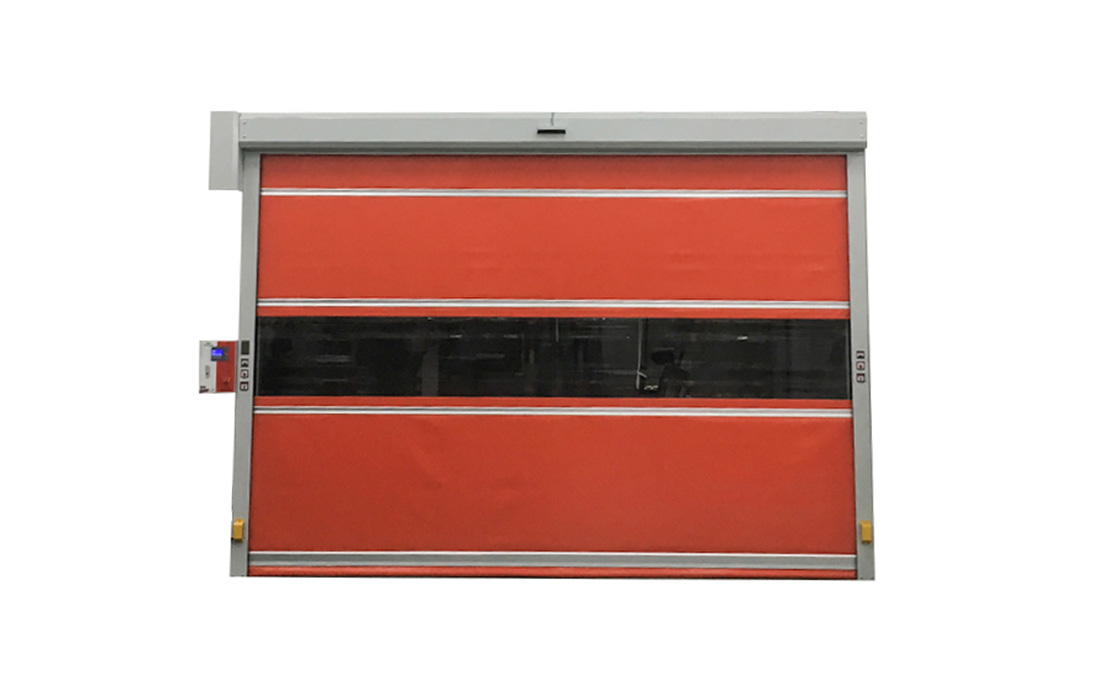
2. Zipper High Speed Door: Sealed and Self-Repairing
The curtain edges lock into zipper tracks, so the door seals tightly against dust, drafts and insects. After a forklift impact the curtain pops out of the track and re-feeds itself on the next cycle, which cuts repair downtime. Typical opening speed is 1.0 to 2.0 m/s. We recommend zipper doors for food processing, packaging halls and cleanroom buffers. Details are on the high speed zipper door page.
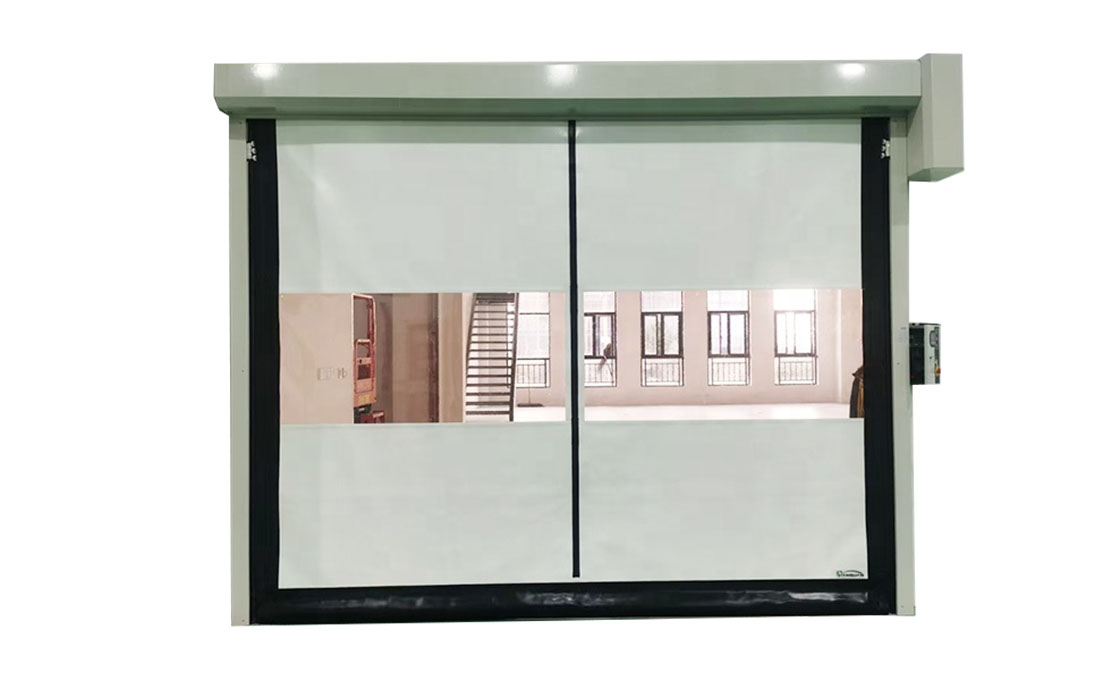
3. Spiral (Turbo) Rigid High Speed Door: Speed Plus Security
Double-skin 6063-T5 aluminum panels with a 40 to 50 mm PU foam core rise along a spiral track at 0.6 to 1.0 m/s. One door delivers rapid cycling, rigidity and insulation, so you do not need a separate security shutter behind it. Our spiral door is rated Wind Load Class 12 on RAX’s proprietary scale, where peers typically reach 8 to 10. Note that this is our internal scale, separate from the EN 12424 Class 0 to 5 system; if your tender cites an EN class and design pressure, we build to it. Specified U-value is as low as 0.33 W/m²K, which suits exterior docks and high-wind or coastal sites. Full data is on the spiral high speed door page.
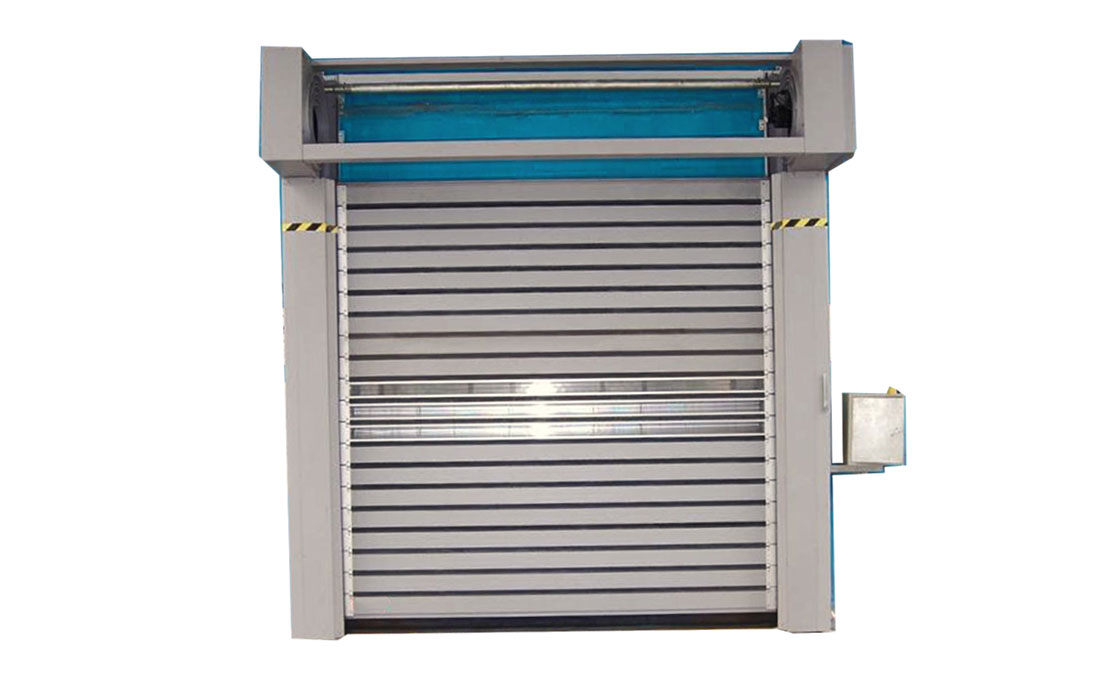
4. Stacking (Fold-up) High Speed Door
The curtain folds and stacks vertically, carried by horizontal braces. This construction handles very wide openings and sustained wind pressure better than a plain roll-up, at 0.6 to 1.0 m/s. We specify stacking doors for large exterior passages, hangar-style openings and sites where a rigid door is not required but wind load is.
5. Cold Storage and Deep Freeze High Speed Doors
Cold chain doors use heated frames and tracks to stop ice build-up, plus low-temperature curtains and seals. Industry benchmarks: cooler doors for above 0°C, fold-up freezer doors rated 0°C to -25°C, and deep-freeze roll-up doors down to -30°C. Every RAX door is validated from -30°C cold storage to +50°C desert conditions. Fast cycling matters here because each second the opening stands open, moist warm air enters and the compressors work harder.
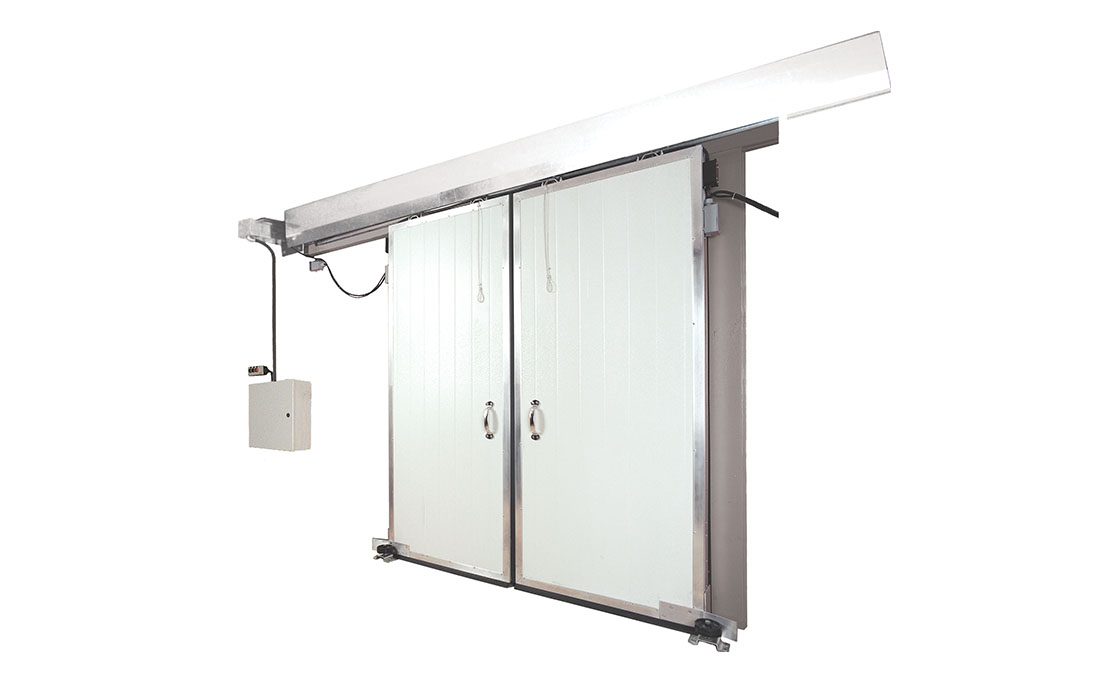
6. Cleanroom High Speed Door
Cleanrooms are classified under ISO 14644-1: ISO Class 5 allows 3,520 particles per m³ at 0.5 µm, ISO 7 allows 352,000 and ISO 8 allows 3,520,000. GMP grades C and D roughly map to ISO 7 to 8. A cleanroom rapid door does not create cleanliness; it protects the pressure differential. Zipper-sealed curtains, flush surfaces and interlocking with a second door (airlock logic) keep particle ingress down at 0.8 to 1.5 m/s.
7. Machine Protection High Speed Door
These doors enclose robotic cells, laser cutters and welding stations. They interlock with the machine safety circuit, open only in a safe state, and cycle in step with production. Common equipment includes light curtains, safety-rated edges and position feedback to the cell PLC. The goal is operator protection with zero added cycle time.
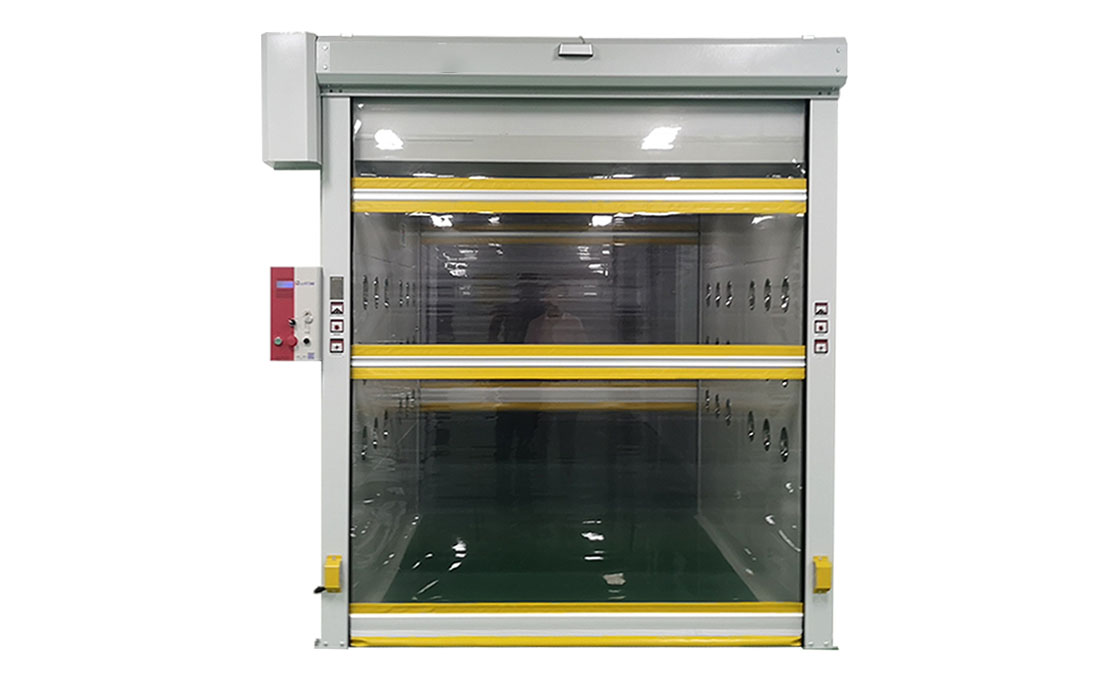
8. Explosion-Proof High Speed Door
Chemical, petrochemical and some pharmaceutical plants operate in ATEX hazardous zones where standard motors are not allowed. We fit Ex d IIB T4 explosion-proof motors and anti-static curtains on request, with the same sensing and safety suite as our standard rapid doors.
Types of High Speed Doors Compared: Speed, Environment and Features
The table below shows typical opening speeds and best-fit environments for each type, based on industry data and our own product lines.
| Door Type | Typical Opening Speed | Best-Fit Environment | Standout Feature |
|---|---|---|---|
| PVC roll-up | 0.8–1.5 m/s | Interior logistics, food workshops | Lowest cost per cycle |
| Zipper (self-repairing) | 1.0–2.0 m/s | Food, packaging, cleanroom buffers | Sealed tracks, impact recovery |
| Spiral rigid | 0.6–1.0 m/s | Exterior docks, high-wind sites | Insulated aluminum panels, security |
| Stacking (fold-up) | 0.6–1.0 m/s | Wide exterior openings | Wind resistance at large widths |
| Cold storage / deep freeze | 0.8–1.5 m/s | Coolers to -30°C freezers | Heated frame, low-temp curtain |
| Cleanroom | 0.8–1.5 m/s | ISO 14644-1 Class 5–8 rooms | Air-tight curtain, door interlock |
| Machine protection | 0.6–1.2 m/s | Robotic cells, laser, welding | Safety interlock with machine PLC |
| Explosion-proof | 0.6–1.0 m/s | ATEX zones, chemical plants | Ex d IIB T4 motor, anti-static curtain |
How to Choose the Right Type of High Speed Door
When a buyer sends us an inquiry, we ask for five engineering inputs:
- Opening size: width × height, plus available headroom and side room.
- Duty cycle: passages per day and traffic type. High forklift impact risk points to a zipper or breakaway curtain.
- Temperature range: anything below 0°C calls for a dedicated cold storage build with heated tracks.
- Wind load: exterior doors need an EN 12424 class (0–5) or a design pressure in Pa.
- Hygiene class: cleanroom ISO class or food-grade washdown requirements decide the sealing and surface finish.
Send these five items and we reply with a proposal and technical layout, normally within 24 hours. You can browse all 22 models in our high speed door catalog. Every order ships with installation drawings, wiring diagrams and English manuals, so your local team can install without our engineers on site; backup guidance is described on the installation support page.
Get the Right Type of High Speed Door From One Factory
Most of the types of high speed doors above share one production line in our 11,000 m² plant, which keeps spare parts sourceable for years after delivery. We hold CE to EN 13241 and EN 12453, ISO 9001:2015, and SGS material reports, and we accept a 1-unit minimum order in any size and any RAL color. Warranty runs 2 years on the door body, 3 years on the operator and 5 years on the servo motor. If you are not sure which construction fits your opening, send us the site conditions and we will recommend the type that lasts longest there. Request a quote or read more about our factory on the About Us page.