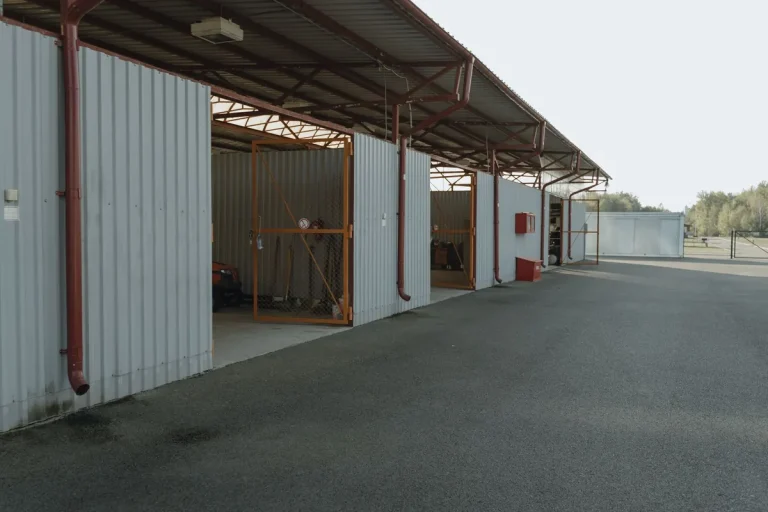
For facility managers and general contractors, buying industrial high-speed doors is often fraught with hidden traps. When trying to trim upfront construction budgets, many procurement teams inadvertently purchase under-specified systems. Within six months of heavy daily operation, under-built doors suffer severe motor overheating and track jamming. Slat blowouts during storm events quickly turn an apparent initial bargain into a recurring, costly maintenance nightmare.
Selecting the right entrance barrier requires looking beyond surface paint and initial price tags. In over two decades of manufacturing commercial entrance equipment and servo drive systems, our engineering team has analyzed hundreds of factory door failures. Knowing what mechanical specifications, safety systems, and structural wind ratings to demand from manufacturers is the only way to ensure reliable, decade-long performance.
1. Choosing the Right Motor for High-Traffic Bays
The electric motor is the mechanical heart of any fast-acting industrial barrier. Low-cost suppliers frequently install generic rolling shutter motors equipped with basic mechanical contactors to cut production costs. When buying aluminium high-speed doors, verifying drive motor specifications ensures the barrier survives intense logistics traffic.
Variable-Frequency Servo Drives vs Standard Motors
Industrial logistics bays require continuous door cycling throughout busy shifts. Standard single-speed motors generate massive internal heat during frequent startups. This thermal buildup triggers internal overload shutoffs after just 20 to 30 consecutive operations, paralyzing warehouse traffic. Quality entrance systems utilize high-frequency servo drives with integrated vector inverters capable of handling continuous operation exceeding 1,500 cycles per day without thermal derating.
S-Curve Kinetics That Protect Mechanical Gears
Sudden mechanical jolts destroy gearboxes, drive belts, and counterbalance hardware. Advanced servo controllers execute a smooth S-curve acceleration profile. The door starts gently, accelerates rapidly across the opening zone, and decelerates softly milliseconds before reaching full open limit. This smooth kinetic control prevents structural vibrations and extends operating lifespan past 500,000 cycles.
2. Door Slat Strength and Thermal Insulation
The construction of the door curtain directly dictates structural rigidity, wind tolerance, and monthly heating or cooling bills. When purchasing commercial high-speed doors, reviewing profile cross-sections prevents purchasing flimsy panels that bend under air pressure.
Extruded 6063-T5 Aluminium vs Thin Roll-Formed Sheet
Insist on heavy-gauge 6063-T5 architectural aluminium alloy slats with wall thicknesses between 1.5 mm and 2.0 mm. Thin roll-formed sheets under 0.8 mm easily dent during daily forklift operations. These thin profiles lack the structural stiffness required for clear openings wider than 4 meters, leading to permanent panel deflection and track binding.
Polyurethane Foam Cores and Perimeter Weatherseals
For temperature-controlled warehouses and cold storage facilities, slats should feature double-walled construction filled with high-density polyurethane foam (40 to 50 kg/m3). Paired with continuous EPDM rubber seals between panel hinges, these insulated slats achieve overall thermal U-values down to 0.33 W/m2K, blocking exterior heat infiltration.
3. Wind Resistance Ratings for Exterior Openings
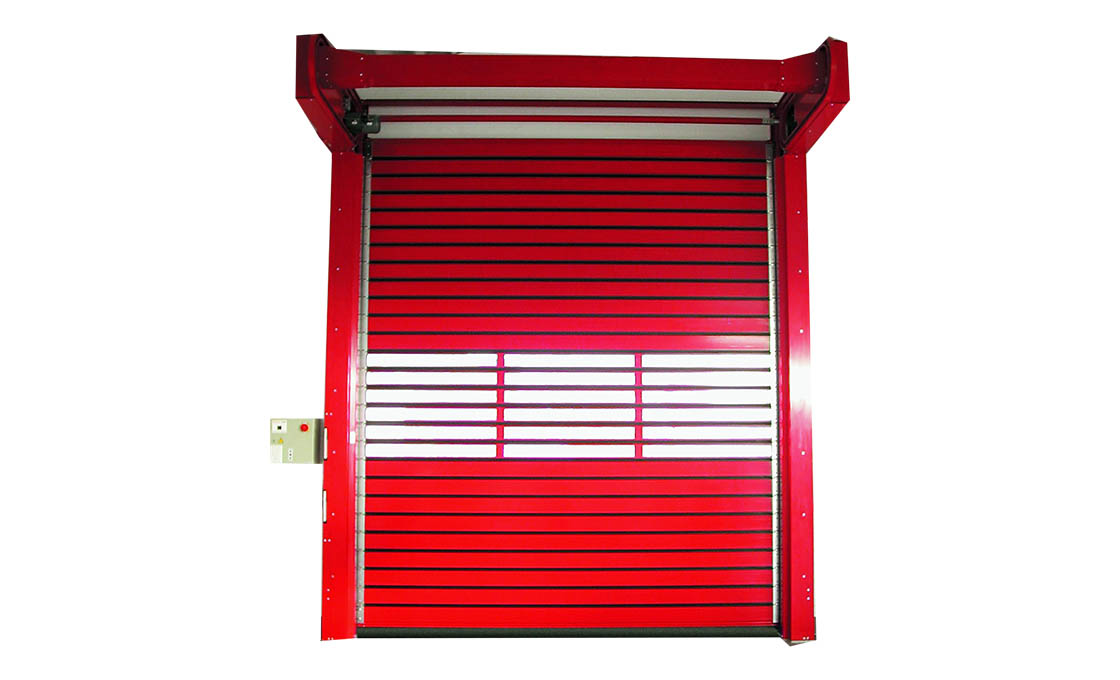
Exterior doorways in coastal regions, high-wind corridors, and wide logistics bays must withstand significant positive and negative wind pressures. When buying aluminium high-speed doors for building envelopes, wind engineering is the single most critical structural factor.
Why EN 12424 Class 4 and Class 5 Ratings Matter
Always demand independent laboratory test reports certifying wind resistance under European standard EN 12424. For exterior openings, doors should achieve at least Class 3 (up to 700 Pa) or Class 4 and Class 5 (exceeding 1,000 Pa). Avoid uncertified supplier claims such as “typhoon proof” that lack formal test documentation.
Heavy-Duty Wind Locks and Deep Guide Channels
Under heavy storm gusts, broad door curtains experience extreme lateral deflection. Commercial-grade aluminium high-speed doors incorporate integrated steel wind end-locks and deep structural guide channels that keep the slats firmly locked inside vertical tracks during 120 km/h wind gusts.
Need a Factory-Direct High-Speed Door Quotation?
Send your clear opening dimensions, wind load criteria, and control preferences directly to our engineering team for custom CAD layout drawings and pricing.
4. Active Safety Sensors for Personnel Protection
Because rigid aluminium doors travel at speeds up to 2.5 m/s, active safety protection is mandatory under workplace safety regulations such as CE EN 13241 and EN 12453.
Full-Height Infrared Safety Light Curtains
Rather than relying on a single optical point sensor near the floor, premium speed doors embed dense infrared light curtains directly inside the side tracks. Projecting multiple beams up to 2.5 meters high, the system detects approaching forklifts or pedestrians and halts downward movement in under 0.2 seconds.
Wireless Reversing Bottom Safety Edges
In addition to optical light grids, the bottom profile should house a wireless pressure-sensitive pneumatic or resistive safety edge. If the bottom seal encounters any physical resistance during travel, the drive immediately halts downward motion and reverses to full open.
5. Non-Contact Spiral Tracks vs Standard Roll-Up Barrels
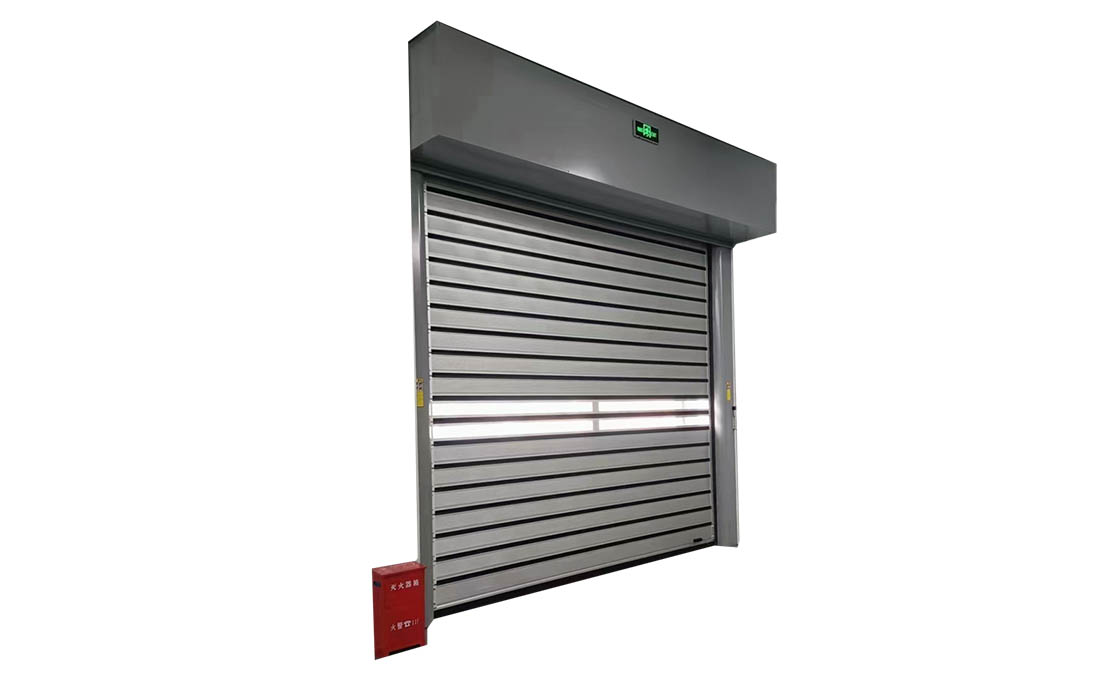
When buying aluminium high-speed doors, examine the header winding mechanism carefully. Conventional rolling doors coil the curtain around a central drum, causing slats to rub together and scratch painted surfaces.
High-performance rigid doors utilize a precision circular or oval spiral track. The nylon rollers guide each slat into a dedicated spiral channel where panels never touch one another. This non-contact geometry eliminates slat abrasion, lowers operating noise below 60 dB, and allows reliable travel velocities past 2.0 m/s.
6. Four Costly Sourcing Mistakes to Avoid
When evaluating bids from multiple door suppliers, look out for common cost-cutting shortcuts that lead to unexpected operational downtime:
Mistake 1: Specifying Undersized Motors That Overheat
Low-cost vendors frequently quote motors running near 100% continuous electrical capacity. Under intensive forklift traffic, these undersized motors overheat rapidly, resulting in thermal motor burnout and costly emergency service calls within the first operating year.
Mistake 2: Skipping the Manual Emergency Release
In the event of a facility power outage, warehouse operations cannot grind to a halt. Always verify the door assembly includes an integrated manual emergency release chain or counterbalance release lever allowing workers to push the door open by hand without power.
Mistake 3: Relying on Slipping Mechanical Limit Switches
Traditional cam-operated limit switches slip over time due to building vibration and thermal expansion. Specify multi-turn absolute encoders that measure shaft rotation electronically, maintaining millimeter-precise open and close limits without ongoing manual recalibration.
Mistake 4: Accepting Uncertified Wind Claims
Avoid accepting vague marketing claims such as “high wind resistant” without documented laboratory test certificates. International workplace standards enforced by the Health and Safety Executive require documented equipment safety testing to ensure structural integrity under extreme weather.

7. Commercial-Grade vs Cut-Corner Doors: Quick Comparison
Use the technical comparison table below to cross-examine supplier quotations before placing a binding purchase order:
| Specification Component | Commercial-Grade Fast Spiral Door | Low-Cost Cut-Corner Alternative |
|---|---|---|
| Motor Technology | Servo Drive + Vector Inverter (1,500+ cycles/day) | Standard Contactor Motor (<100 cycles/day) |
| Slat Construction | 6063-T5 Extruded Alloy (1.5–2.0 mm wall) | Thin Roll-Formed Sheet (<0.8 mm wall) |
| Thermal Core | 40 mm Injected Polyurethane Foam | Hollow Slat or Low-Density Styrofoam |
| Wind Load Rating | EN 12424 Class 4 or Class 5 (Certified) | Unrated / Class 1 (Prone to blowouts) |
| Track Geometry | Non-Contact Spiral Track (Zero Slat Wear) | Direct Contact Barrel Coiling (Slat Scratching) |
| Safety Systems | Full-Height Light Curtain + Safety Edge | Single Optical Photocell Only |
According to machinery quality directives from the ISO International Organization for Standardization, sourcing fully certified automated equipment with documented lifecycle testing dramatically reduces operational safety liabilities.
8. Your Factory Pre-Order Checklist
When buying aluminium high-speed doors, verify these essential site parameters before approving production CAD drawings:
Accurate Daylight Opening and Lintel Clearances
Measure clear opening width and height at three distinct locations (top, middle, and bottom) to account for structural masonry variations. Non-contact circular spiral tracks generally require between 600 mm and 900 mm of lintel headroom above the clear opening height to house the track spiral.
Site Voltage and Power Compatibility
Confirm electrical voltage on site prior to ordering. While smaller doors operate on 220V single-phase supplies, heavy-duty commercial speed doors typically require 380V three-phase electrical connections for optimal servo acceleration.
Traffic Activation Triggers and Access Controls
Select appropriate activation triggers based on traffic flow. Fast-moving forklift bays benefit from overhead microwave motion radar or buried induction loops, while pedestrian doorways utilize push buttons, pull cords, or badge readers. For exterior perimeter openings, pairing speed doors with heavy-duty industrial roller shutter doors ensures comprehensive facility security.

Frequently Asked Questions About Buying Speed Doors
What motor type should I specify for high-traffic doorways?
Always specify an intelligent variable-frequency servo motor paired with an absolute encoder. Servo motors provide soft-start and soft-stop kinetics and can handle over 1,500 continuous daily cycles without overheating.
How do I verify wind resistance before purchasing?
Request independent laboratory test certificates demonstrating compliance with European standard EN 12424. For exterior commercial openings, choose doors rated at Class 4 or Class 5.
What headroom clearance is needed for a spiral track?
Non-contact circular spiral tracks generally require between 600 mm and 900 mm of lintel headroom above the clear opening height, depending on the total door height and slat thickness.
How often do commercial speed doors require preventative maintenance?
High-duty servo speed doors typically require visual inspections every 150,000 cycles or every 6 months. Key inspection points include track cleanliness, safety light curtain alignment, and bottom seal wear.
Can aluminium speed doors be opened manually during power failures?
Yes. Commercial-grade installations must incorporate an integrated manual emergency release lever or hand chain, allowing facility staff to open the door manually in under 10 seconds without power.
>